Environmental Sentencing: Its Bark Is Worse Than Its Bite — Should We Care?

I have a new paper on SSRN about the sentencing of environmental offenders.  The title is “Bark and Bite: The Environmental Sentencing Guidelines after Booker.”  Using date collected by the United States Sentencing Commission, I show that judges sentence below the range recommended by the federal sentencing guidelines in an unusually high percentage of environmental cases, approaching sixty percent in some years.

Many environmentalists are apt to bristle at the apparent demonstration that federal judges are “soft” on environmental crime.  Given how little the government must prove to get an environmental conviction, however — prosecutors need not show either harm to the environment or an intent to harm the environment — I am not convinced that judges really are devaluing the environment through their sentencing decisions.  Still, I think the data warrant a rethinking of the environmental guidelines in order to give them more credibility with judges.

Here is the abstract: 
Continue ReadingEnvironmental Sentencing: Its Bark Is Worse Than Its Bite — Should We Care?

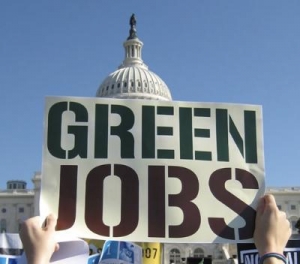
Wisconsin, the Stimulus Package, and Green Jobs

Some legal commentators in recent months have questioned whether the Obama Stimulus Package will truly create green jobs for the American economy. See, for example, Morriss et. al., Green Job Myths.

Here is some indication how to use those dollars so that they will actually create those jobs.  The following is a press release from the Center on Wisconsin Strategy (COWS), a nonprofit, nonpartisan “think-and-do tank,” dedicated to improving economic performance and living standards in the state of Wisconsin and nationally:

A new report from the Center on Wisconsin Strategy encourages the state to embrace the green-collar potential of a clean energy economy. Greening Wisconsin’s Workforce: Training, Recovery and the Clean Energy Economy looks at how Wisconsin might best use its Recovery Act dollars and first-rate technical college system to ensure that the emerging green economy benefits Wisconsin’s working families. 

Continue ReadingWisconsin, the Stimulus Package, and Green Jobs

Environmental Crime and “Real” Crime

I just got back from a couple days at the University of Utah, where I was participating in a national conference on environmental crimes at the S.J. Quinney School of Law.  It was a terrific conference, and I was honored to be included among the many distinguished speakers.  But it was also among the more contentious academic conferences I have attended, with a marked divide among speakers and audience members as to whether the criminal liability provisions of the major federal environmental statutes have grown too expansive.  The basic critique — roundly rejected by some in attendance — was that the statutes (and the federal environmental sentencing guidelines) do not recognize important distinctions among environmental violations, but, rather, lump together offenses of greatly varying culpability.  The debate thus centered on the question of whether environmental criminal law respects the principle of proportionality in punishment.

In retrospect, it strikes me that the proportionality debate has a lot to do with how environmental criminal enforcement is framed: as an aspect of environmental law, or as an aspect of criminal law. 

Continue ReadingEnvironmental Crime and “Real” Crime