
Updates on the Latest High-Profile Tesla Crash
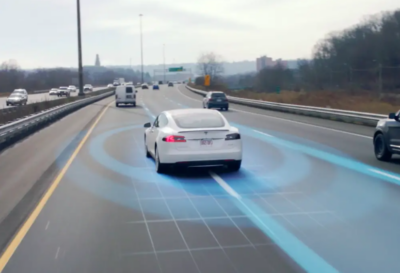
A few weeks ago I wrote about the latest high-profile crash involving Tesla’s level 2 automation system, in which a car drove into a two-story brick house on a quiet residential street in Katy, Texas, killing a woman who was standing in her living room. Some developments since then merit an update.
Both the NTSB and the NHTSA have opened investigations into the incident. The NTSB has preliminarily confirmed Tesla’s initial reaction to the event: the driver had “overridden” the automation system by pressing the accelerator, in this case to 100%, causing the car to accelerate to a speed of 73 miles per hour before it hit the house.
The driver, meanwhile, has been charged with manslaughter. To my knowledge, this is only the second time a driver has been criminally prosecuted for a crash resulting from misuse of an automated driving system. In the previous case, the driver was using Autopilot when he ran a red light, killing two people.
The above facts will likely cause many to conclude that this crash was not Tesla’s fault. A bit more context complicates the picture. First, it is worth noting the similarities to Benavides, last summer’s blockbuster verdict against Tesla. In that case, the driver also “overrode” Autopilot by putting his foot on the accelerator. As the evidence showed at trial, accelerating with Autopilot engaged does not completely disable the system; rather, it overrides “traffic aware cruise control” (the system that adjusts the car’s speed in response to traffic in the lane ahead) but not “autosteer,” automatic emergency braking, or forward collision warning. I am not certain how Tesla’s latest system, which it calls “Full Self Driving (Supervised)” responds in these situations, but to say that the automation system has been “overridden” by a foot on the accelerator is probably at least somewhat misleading.
My sense is that the involvement of criminal law is a welcome development here. Crashes like these implicate complex questions of responsibility. To what extent do we expect drivers to understand the nuances of the automation systems they use and take responsibility for maintaining vigilance on the roads? To what extent do we expect manufacturers to design their systems to mitigate the effects of known human imperfections, which products liability law would call “foreseeable misuse”? The driver in Benavides, George McGee, who killed a young woman and caused permanent injuries to her boyfriend, got little more than a slap on the wrist (he was fined $1,000 and settled a tort suit for an undisclosed sum).
It will be interesting to watch how criminal and tort law develop in this area.
 In Ethics and Infinity, philosopher and Nazi prison survivor Emmanuel Levinas is asked about responsibility for “the Other” and says, “You know that sentence of Dostoyevsky: ‘We are all guilty of all and for all men before all, and I more than the others’. This is not owing to such or such a guilt which is really mine, or to offenses that I would have committed; but because I am responsible for a total responsibility, which answers for all the others and for all in the others, even for their responsibility. The I always has one responsibility more than all the others.”