
How Do Judges Decide Which History Counts?
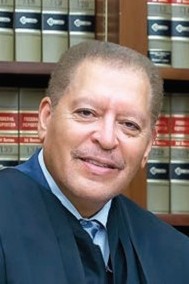
Hon. James A. Wynn
Hon. James A. Wynn

This essay is a guest contribution to the Marquette Law School Faculty Blog by the Hon. James A. Wynn, L’79, judge of the U.S. Court of Appeals for the Fourth Circuit.

Originalism has quietly transformed one of the judiciary’s central responsibilities. Judges are no longer asked merely to interpret constitutional text and precedent. Increasingly, they are asked to resolve contested questions of professional history—and their historical judgments often determine the scope of constitutional rights.

That transformation raises institutional questions that deserve far more attention than they have received. In particular: How do judges decide which history counts? Or how should courts go about determining relevant history?

Two Supreme Court decisions this past summer, in June 2026, highlight the crux of the problem.

In the birthright citizenship case, Trump v. Barbara, Justice Clarence Thomas penned a dissent which ostensibly presents an extensive historical argument supporting its interpretation of the Fourteenth Amendment’s citizenship clause as one narrowly tailored to restoring the rights of former slaves. But Justice Ketanji Brown Jackson’s concurrence surveyed that same history and rejected it as a “narrow vision of the Fourteenth Amendment [that] bears little relationship to the history of its ratification.”
Continue ReadingHow Do Judges Decide Which History Counts?

Collecting Posts on Seventh Circuit Day

It was a great privilege for Marquette University Law School to host the U.S. Court of Appeals for the Seventh Circuit in Eckstein Hall earlier this semester (September 25, 2025). The following blog posts form a now-complete series seeking to capture some aspects of the day:

  1. Seventh Circuit Day, Part 1: The Cases and Arguments (Nov. 3, 2025) by Joseph D. Kearney
  2. Effective Appellate Advocacy: Advice from the Bench (Nov. 5, 2025) by Melissa Love Koenig
  3. Appellate Judges Give a Window into How They Do Their Work (Nov. 7, 2025) by Alan J. Borsuk
  4. Praise for an Exemplar of the Marquette Lawyer—and of a Judge (Nov. 11, 2025) by Alan J. Borsuk
  5. “Behind the Scenes” of Organizing a Visit by an Appellate Court (Nov. 13, 2025) by Anna Fodor
  6. Seventh Circuit Day at Eckstein Hall “Felt Like This ‘Event’” and Offered Valuable Lessons (Nov. 18, 2025) by Alan J. Borsuk

Sincere thanks to all—the Court and its staff, those at the Law School, and members of the Milwaukee legal community—who contributed to this inspiring educational experience.

Continue ReadingCollecting Posts on Seventh Circuit Day

Seventh Circuit Day at Eckstein Hall “Felt Like This ‘Event’” and Offered Valuable Lessons (Part 6)

Seventh Circuit 6
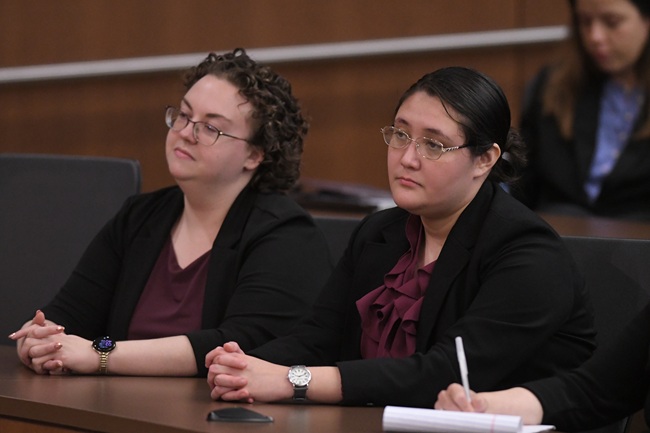
Marquette law students at a question-and-answer session with Seventh Circuit judges, in Eckstein Hall’s Lubar Center, on September 25, 2025.

Did people walk a little taller at Marquette Law School on September 25, 2025? Was there more electricity in the air? Was there an almost tangible sense that something important was taking place? None of this was quantifiable, but it certainly seemed true during what became known within Eckstein Hall as Seventh Circuit Day.

“It felt like this event,” said Mariana Calvo Argus, a second-year student originally from El Paso, Texas. This sixth and final blog post in the Seventh Circuit Day series seeks to capture a bit of the feeling.

Kaya Dreger, a first-year student originally from Idaho, said, “I was super-excited.” The court’s visit furthered her interest in career paths involving advocacy in court. Observing arguments before three federal appellate judges underscored for Dreger how cases involve “real, tangible people” and how an aspect of the U.S. Constitution comes alive in proceedings such as these.

It was a very full day for four judges of the U.S. Court of Appeals for the Seventh Circuit and for the Marquette Law School community as a whole. In the morning, the Law School’s Lubar Center was the setting for oral arguments in six cases before then-Chief Judge Diane S. Sykes, L’84, and Judges Frank H. Easterbrook and Michael B. Brennan. Judge Michael Y. Scudder joined his colleagues for programs for afternoon programs (see Part 1). The day came as Sykes was within days of finishing her term as chief judge and moving to senior status and as Brennan, another Milwaukeean, prepared to become chief judge of the Chicago-based circuit encompassing Wisconsin, Illinois, and Indiana.

Continue ReadingSeventh Circuit Day at Eckstein Hall “Felt Like This ‘Event’” and Offered Valuable Lessons (Part 6)