Imagining the Reasonable Jury

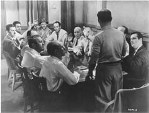
As has already been noted here, Dan Kahan dropped by the law school earlier this week and gave three fascinating presentations to the law school community. One, which Michael commented on earlier, was on his paper (co-authored with David Hoffman and Donald Braman) criticizing the Supreme Court’s decision in Scott v. Harris, entitled “Whose Eyes are You Going to Believe? Scott v. Harris and the Perils of Cognitive Illiberalism.”

In brief, Kahan and his co-authors argue that the Supreme Court went awry in Scott by refusing to credit the views of “an identifiable subcommunity” as being within the realm of those held by “reasonable jurors.” This refusal to credit such beliefs with reasonableness, they argue, is potentially destructive of the legitimacy of the justice system.

It’s a fascinating argument, backed by a novel empirical approach to assessing the views of “reasonable jurors” in a use of force case like Scott. But I’m left with a question about the theory, and a question about Scott: Today, I want to focus on the theory: How are judges to tell when the views of “an identifiable subcommunity” are at issue, making summary judgement less appropriate? Monday, I’ll focus on Scott: I’m not certain that the Scott holding is as Kahan et al. describe it, which way may mute their concern.
Continue ReadingImagining the Reasonable Jury

Priorities for the Next President: Securities Regulation

The current crisis our nation faces on Wall Street and in the broader economy will be the primary focus of the next President. The crisis is complex, with many facets, and any solution will be equally complex. Issues such as the effectiveness of regulatory oversight versus deregulation, the transparency of specific types of financial transactions and market actors under current law, and the proper accounting rules to ensure an accurate depiction of a banking institution’s financial health will all be part of the debate over how to resolve the present crisis and how to prevent a future recurrence. However, my advice to the next President is that he should not overlook the beneficial role that private civil lawsuits under the securities laws can play in deterring risky market behavior.

Much has been made of the greed and speculative fervor that gripped the investment professionals on Wall Street. Clearly bets were being made with borrowed money that risked the very existence of institutions that are necessary to preserve the liquidity of capital in our markets. Expanding the oversight of the Treasury Department, increasing the transparency of transactions that involve derivatives and hedge funds, and re-examining accounting rules may all be necessary components of a plan to avoid such risk-taking in the future, but they will not be sufficient in and of themselves. From personal experience in the boardroom, I can vouch that nothing deters executive approval of speculative investment strategies as much as the prospect of a potential civil lawsuit if the deal goes sour.

Continue ReadingPriorities for the Next President: Securities Regulation

When Police Officers Use Deadly Force, Can Judges Ever Be Trusted to Judge Them?

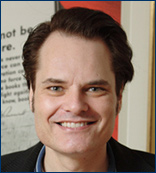
That is the question that lurks behind a fascinating new paper by Dan Kahan, David Hoffman, and Donald Braman. The paper responds to Scott v. Harris, 127 S. Ct. 1769 (2007), in which the Supreme Court held that summary judgment was properly granted to a police officer in a § 1983 lawsuit challenging the officer’s decision to ram his police car into the car of a fleeing motorist. One of the paper’s authors, Dan Kahan (pictured at left), is visiting the Law School today to present the paper at a faculty workshop. (Dan will also be delivering the Boden Lecture here late this afternoon.) The paper begins by taking issue with a particular, case-specific assertion by the majority in Scott, but then opens up some much deeper questions about the roles of judge and jury in a culturally diverse democracy.

The majority in Scott relied on a videotape of the fleeing motorist, which purported to show that he was driving in such a dangerous manner as to justify the use of deadly force to stop him. The majority found the videotape sufficiently compelling that, in its view, no reasonable juror could find in favor of the motorist on his claim that the police officer had acted unreasonably in violation of the Fourth Amendment–thus, warranting a grant of summary judgment. Kahan and his coauthors, however, showed the same videotape to a diverse sample of 1,350 Americans, and found evidence of some disagreement with the majority’s view of the case. Thus, had the case been permitted to go to a jury, there is a statistically sound basis for expecting that one or more of the jurors would have had a considerably less positive view of the officer’s conduct than did the members of the Supreme Court.

Continue ReadingWhen Police Officers Use Deadly Force, Can Judges Ever Be Trusted to Judge Them?