
Examining the “System” in Criminal Justice Reform, Part I: Cleveland and the Milwaukee County Community Justice Council

Roscoe Pound
Roscoe Pound

“Welcome to Cleveland” is the famous sign that airline passengers approaching Milwaukee Mitchell International Airport from the north have spotted since 1978, when Milwaukee’s Bayview resident Mark Gubin painted the greeting on the roof of his Delaware Avenue studio apartment.

To the weary descending traveler, the two post-industrial cities on the shore of a Great Lake share enough superficial similarity to induce panic in the first-time visitor, but Cuyahoga County, Ohio, and Milwaukee County, Wisconsin, also share a more profound legacy. They both exemplify a historical theme in American criminal jurisprudence: a recurring (if episodic) commitment to reforming and improving imperfect systems of social control in a democratic republic.

I believe that my laying a historical foundation can help me present reforms attempted in Milwaukee in the past 20 years. I also intend, in a subsequent post, to link those efforts to reform efforts around the country.

The groundbreaking 1922 Cleveland Crime Survey and the creation of the Milwaukee County Community Justice Council in 2007 are separated by 85 years but motivated by similar social forces and dynamics challenging the fair administration of justice. The persistence of these challenges and of the efforts to do better reflect the hope that citizens place in the genuine and perceived power of the state to regulate a complex society. Yet it also raises a question about the limitations of the law as the primary vehicle of that regulation.

Over 100 years ago, Felix Frankfurter, Harvard law professor and future U.S. Supreme Court justice, wrote the preface for a report titled Criminal Justice in Cleveland. This was a detailed 700-page examination of Cleveland’s justice process, commissioned by the non-government Cleveland Foundation, which had invited leading national legal experts and scholars to conduct an independent examination of the inner workings of the scandal-ridden Cleveland justice system. The incident itself seems strangely contemporary, as it involved reckless intoxicated driving, a fatal shooting, and compromised witnesses. What made it exceptional was that a perpetrator was the judge of the Cleveland Municipal Court, responsible for adjudicating criminal matters.

Frankfurter wrote:

For some time previous to this survey Cleveland had been restive under a growing feeling of insecurity of life and property. The fifth largest city in the country entertained a wide-spread conviction of its failure in the most primitive function of government. In the spring of 1920 this feeling was brought to a head. An atrocious and sordid crime, implicating the chief judge of the city’s municipal courts, stirred to action dormant civic pride. With rare self-restraint and self-knowledge the leaders of the community realized that the city had the feeling, but not the understanding, for action. They had the insight to realize that this sensational case was but symptomatic of deeper causes. In a word, a problem in social sanitation and social engineering was presented. Therefore, in the winter of 1920, a number of civic organizations, headed by the Cleveland Bar Association, requested the Cleveland Foundation to undertake a survey of the administration of criminal justice in Cleveland.

The yearlong examination resulted in a report: Criminal Justice in Cleveland. Samuel Walker, in Popular Justice: A History of American Criminal Justice, described the entity that prepared the report as “the single most important crime commission” in American history. “It established the model of examining a complete criminal-justice system and was copied by numerous state and federal crime commissions,” Walker explained. “The co-directors of the Cleveland survey were two of the most significant figures in the history of American law: Roscoe Pound and Felix Frankfurter.”

In fact, the now-reflexive habit of speaking of the criminal justice process as a system arguably dates from this 1922 report. As Walker has noted, the report also had the salient effect of unmasking for the first time the reality and pervasiveness of plea bargaining in the justice system.

The Cleveland study broke down and examined the critical decision points of the city’s justice apparatus progressively: closely examining police, prosecutors, judges, defense bar, corrections, juvenile justice, forensic sciences, and even the role of the press. It then made constructive recommendations on how to improve the system.

Roscoe Pound’s ending summation in the report is titled “Criminal Justice in The American City” and is fascinating reading that would be instructive for every participant in criminal law administration today. What stands out in the 1922 examination is how many of the dynamics present at that time are with us today. Hear Pound:

We may say that the three chief factors in the administration of justice are—(1) the men by whom it is administered; (2) the machinery of legal and political institutions by means of which they administer justice; and (3) the environment in which they do so. One who surveys the workings of a legal system with these three things in mind will not go far wrong.

[¶] Yet his picture will not be complete nor wholly accurate. He must take account also of certain practical limitations and practical difficulties inherent in the legal ordering of human relations, at least by any legal institutions thus far devised. The purposes of law, as we know them, and the very nature of legal institutions as we have received and fashioned them, involve certain obstacles to our doing everything which we should like to do by means thereof, and even to our doing well many things which we have been trying to do thereby for generations. These practical limitations on effective legal action explain much that, on a superficial view, is ascribed to bad men or bad legal machinery.

[¶] Hence a fourth factor must be added, namely, (4) the bounds within which the law may function effectively as a practical system.

The report exposed an overburdened criminal docket, chaotic court environment, uninterested and disengaged prosecutors, inadequately trained police, an unprofessional defense bar, and a lack of any objective rigor in the forensic sciences. The report’s approach enhanced awareness of the criminal justice process as an ecosystem, where each component of the system influenced, and in turn was influenced by, the system’s other parts.

The problems in Cleveland were not unique. The system troubles examined in Cleveland were also present in the Milwaukee Municipal Court system of the era: consider a 1922 grand jury investigation involving corrupt practices in the district attorney’s office and the court systems. The proliferation of crime commissions following the Cleveland survey demonstrate that many other cities shared similar attributes.

Fast forward, if you will, to 2007. The convening and creation of the Milwaukee County Community Justice Council that year was similarly driven by experienced community and system participants who shared, in Frankfurter’s words, “the feeling, but not the understanding, for action.”

To be more precise, there was a generalized understanding that Milwaukee County’s criminal justice system needed to change in four important ways:

  1. How we treated the drug-addicted
  2. How we treated the mentally ill
  3. How we treated traumatized people
  4. How we treated people in our detention facilities

Unifying those four areas of concern was the strong perception that Black Milwaukeeans were disproportionately present in the system as defendants and victims.

Three significant events of the time helped form that “feeling.” First was the savage off-duty police beating of Frank Jude in 2004; second, a court’s ruling that the Milwaukee County Sheriff’s Office was noncompliant with a consent decree requiring improved jail conditions (the Christensen decree); and, finally, the pending release of a national study showing that Wisconsin had the second highest incarceration rate for Blacks in the nation.

There was less understanding of how to accomplish change. While Milwaukee justice leaders certainly would have benefited from a review of Cleveland’s historical template, the path to reform is perhaps better described as a confluence of several organic relationships with events that occurred in 2006, merging in 2007 to support the creation of what is now known as the Milwaukee Community Justice Council (CJC).

For one thing, 2006 was a transitional year, with Milwaukee County’s first open-seat election for district attorney since 1968. During that year as a candidate, I spent significant time talking to practitioners such as Tom Reed, the regional manager of the State Public Defender’s Office; criminal defense attorney Craig Mastantuono; and community members including Kit McNally, Reverand Joe Ellwanger, and members of the Community Brainstorming Conference such as Dr. Pam Malone.

So much was flowing together. My colleague Jeff Altenburg was working in the D.A.’s office as a community prosecutor, and my soon-to-be Chief Deputy Kent Lovern was on the boards of both the National Alliance on Mental Illness and Sojourner Family Peace Center (as it is now known). E. Michael McCann, in his last year as district attorney, invited me to join him in a discussion with the Vera Institute of Justice about conducting the first internal review of data from a D.A.’s office focused on racial disparity. In addition, in 2006 the Milwaukee County Circuit Court found that the Sheriff’s Office was not in compliance with the Christensen consent decree requiring improvement in jail conditions for pretrial detainees.

All these streams—and any number of others—came together after the election, in 2007, when we gathered system leaders ostensibly to address the problems in the jail through regular convening. The Milwaukee County Community Justice Council (here’s an early profile in 2011) could have been a limited-term, narrowly focused exercise to reduce jail overcrowding and improve jail conditions. In fact, in part because of the relationships formed during those crucial months, the CJC instead was converted into a vehicle for data-informed, practical, best-practice reform even beyond taking on the need for improved conditions in the jail.

The succeeding years saw the CJC deliberately invite numerous external academic and public policy groups to help examine and implement better policy in the Milwaukee County judicial system. The list is impressive and continues to this day. Some examples: The Wisconsin Policy Forum helped us envision a screening process for everyone arrested and brought to jail; a visit by the chief judge of the Buffalo (New York) drug treatment and veterans’ court resulted in the launching of a Milwaukee program shortly afterwards. The National Institute of Corrections accepted us in a competitive bid to implement an evidence-based decision-making (EBDM) framework to inform us of our intake procedure to deflect people with drug, alcohol and mental health issues. The Arnold Foundation helped develop a risk-assessment tool, and the Homicide Review Commission was brought into the CJC. The District Attorney’s Office completed a first in the nation study in a D.A.’s office of race and charging, with the Vera Institute, and was enrolled in the MacArthur Foundation’s Safety and Justice Challenge. (The list goes on, to include such developments as convening the Emergency Operation Center for COVID, which transformed into the current Violence Reduction Public Health and Safety Team, and the opening of Sojourner Family Peace and the Alma Center, etc.)

The linkage among the four problem areas I described above seems obvious today. We have come a long way as a community and nation to understand that trauma, mental health, addiction, and poverty are all closely correlated. We still have a long way to go in implementing effective solutions outside the criminal justice system. In subsequent posts, I hope to expand in more detail upon the reforms initiated by the CJC and examine what worked, what didn’t work and what the future may hold.

Any report prefaced by Felix Frankfurter and concluded by a summary from Roscoe Pound should, I believe, at least occasionally be dusted off and revisited. My colleagues have often heard me say that stored energy—the energy that comes from analysis, deliberation, and review—is important, but kinetic energy, even if imperfectly released, creates change. The 1922 Cleveland report is the kind of stored energy that the academy expertly creates so that practitioners can release the energy of reform in a focused, purposeful, examined manner. The Community Justice Council—at its best—is the mechanism for kinetic change.

Continue ReadingExamining the “System” in Criminal Justice Reform, Part I: Cleveland and the Milwaukee County Community Justice Council

Witnesses—and Recalling Michael Ash and Jo Kolanda

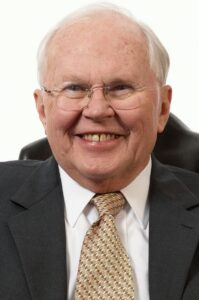
Michael Ash, ca. 2008 (courtesy Godfrey & Kahn)

Now that I have introduced myself in my first blog post, let me make good on some of my promises to look back on—and forward to—the criminal justice system in this region and beyond. This is an appropriate place to do so: Marquette University and the Milwaukee County District Attorney’s Office played a significant yet mostly unknown role in improving how witnesses in criminal cases have been treated in our country during the last 50 years.

The heart of the adversarial justice system in the United States is the direct involvement of citizens in a structured process that peacefully resolves conflict by balancing the rights of individuals with the collective needs and responsibilities of the community. People reluctantly encounter the criminal justice system in four general categories: as defendants, victims, witnesses, and jurors. Each category shares one thing in common: almost no one volunteers or wishes to be so identified. And while the resources directed toward victims and witnesses and defendants have improved over time, a strong need persists to reexamine and refresh how we treat our community members in the contemporary court system. A new generation of lawyers should embrace that challenge, because how we treat people in our justice system is among the clearest mirrors of who we are as a community.

In 2008 Professor Dan Blinka moderated a panel at the Law School that discussed criminal plea bargaining in Wisconsin and asked about the role of victims in that process. One of the panelists, recently retired Milwaukee County District Attorney E. Michael McCann, answered a question about the victim’s role in plea negotiations and how much things had changed in his 38 years as District Attorney, by saying, “I recommend that you read an article out of the Notre Dame Law Review from about the early 1970s.”

Mr. McCann was referring to an article authored by then Milwaukee County First Assistant District Attorney Michael Ash in 1972, when Ash was only five years out of law school. On Witnesses: A Radical Critique of Criminal Court Procedures, 48 Notre Dame L. Rev. 386 (1972), was a scathing assessment by Ash that, despite longstanding calls for reform of how witnesses were treated in criminal court systems, “the witness, especially the witness in criminal courts, is more abused, more aggrieved, more neglected, and more unfairly treated than ever before.” Id. at 388 (footnote omitted).

Ash called for action and focused on seven possible areas of reform, many of which are now standard practice in court systems and district attorney offices throughout the country—and arguably others that should be. They included:

  • First, Ash advocated for what he called “witness’ appearance-control projects,” which emphasized reducing unnecessary court appearances by collecting demographic information that would allow witnesses to be placed on call and to come to court only when needed. He also recognized the need to provide witnesses with information in appropriate languages.
  • Second, he proposed the creation “witness liaison and support squads,” with dedicated specialists to act as information bridges between victims and the court process. This suggestion is now directly embodied in dedicated victim/witness advocates who work in every district attorney’s office in the country.
  • Third, he promoted the concept of “early screening and diversionary devices,” predicated on the idea that many of the cases presented to prosecutors for charging could be better handled by deflection to rehabilitative processes rather than the criminal court system—what is now called the “early intervention” process in the Milwaukee County District Attorney’s Office.
  • Fourth, this young lawyer argued for mandatory pretrial conferences between prosecutors and defense attorneys within a short time after the first appearances in court. The idea was that prosecutors would offer one-time best deals for quick acceptance of responsibility. The hope was to dramatically reduce the number of appearances by witnesses and victims in overcrowded trial dockets.
  • Finally (in this list), Ash argued for justly compensatory witness fees and creating facilities for the comfort and convenience of the witnesses and victims—what we would now refer to as witness waiting rooms.

Michael Ash’s analysis, critique, and call for action came at a unique and opportune time. The Federal Law Enforcement Assistance Administration (LEAA) focused on the conditions of witnesses in the criminal courts around the country in the early to mid-1970s. Influenced by Ash’s article, LEAA funded the first victim/witness pilot programs in the district attorney’s offices in Brooklyn and Milwaukee. Titled “Project Turnaround,” the express purpose of the funding was to create model assistance programs for victims, encourage victim cooperation, and improve prosecution.

Like most great ideas that catch fire, Mike’s focus was a confluence of factors, and it still needed someone with passion and drive to make the abstract a reality. Here, Mike Ash’s great idea was blessed not just by the confluence with LEAA but by a friendship formed at Marquette University.

In 1975, Jo Kolanda, a Marquette University graduate and a social worker in the Milwaukee County welfare department, heard about Project Turnaround from Ash, who encouraged her to apply but recused himself from the hiring process because of their friendship. In her 2002 oral history interview, Kolanda recounted her experience forming the first victim-coordinator program in the country. She related the challenges that she initially experienced in piercing the courthouse culture that centered around the judges and the attorneys—but not the people brought into that environment.

Kolanda’s perseverance paid off because when the three-year demonstration project ended, she had objectively demonstrated the value of the program, which Milwaukee County adopted at the urging of District Attorney McCann. Her contribution was not finished there. In 1980, she and others convinced the Wisconsin Legislature to pass the country’s first statutory crime victim bill of rights—what is now Chapter 950 of the Wisconsin Statutes.

The success of the Milwaukee and Brooklyn projects led to widespread adoption of the concept of dedicated victim/witness assets within district attorney’s offices in the country. The focus on the citizen has led to a gradual evolution in improving conditions and services for witnesses that continues to this day.

Recent examples of continued innovation from the Milwaukee District Attorney’s Office include the creation of the first restorative justice component in a DA’s office in the 1990s; the development of an in-house dedicated witness-protection program in 2008 to address intimidation and dissuasion of crime witnesses and victims; and helping envision and advocate for the creation of the Sojourner Family Peace Center, with comprehensive services for victims in a dedicated facility devoted to therapeutic intervention. And arguably the state’s adoption of Marsy’s Law into a constitutional protection is an extension of the work pioneered by Ash and Kolanda in the ’70s.

I started by saying that Marquette played an outsized role in changing how victims are treated in the country. A core value of a Jesuit education is aspiring to uplift human dignity and being a courageous voice for the powerless, the oppressed, and the dispossessed. Michael Ash was a polio survivor. He lost the use of his legs when he was a sophomore at Marquette University High School but fought his way back to graduate as his class president and then to graduate from Marquette University and, thereafter, from Harvard Law School. Jo Kolanda was a single mother who graduated from Marquette University and was working as a social worker in Milwaukee County’s welfare department when she got the call from Mike.

Treating people with dignity and compassion was not an abstraction for either; it was a core part of their identity and values they advanced with humility and courage. The network of relationships that Marquette undergraduates and Marquette law students make is not just a transactional advantage. It is a recognition that your friend, your colleague, your alum shares your calling to devote a part of his or her life to making communities better.

If Ash and Kolanda were here today and spent a day in the Milwaukee County Circuit Court, they would see some of the same challenges they saw in the late 1960s and early 1970s. But they would also acknowledge (modestly, because they were profoundly humble, generous people) that their vision for change had an impact, even if their contribution is mostly hidden, forgotten, or taken for granted today. They should be remembered and uplifted as models of young professionals, one a new lawyer and one a new social worker—who overcame challenges in their personal lives, and perhaps because of those challenges, helped make the quality of justice better for millions.

Here is an article about Ash from the Milwaukee Journal Sentinel and an interview of Kolanda available on YouTube.

Continue ReadingWitnesses—and Recalling Michael Ash and Jo Kolanda

Senior Lecturer John Chisholm Introduces Himself

John ChisholmI first entered public service in 1986 when I was a senior at Marquette University. After concluding (rashly, my physician father no doubt believed) that medical school was not my next step in life, I walked down to the Reuss Federal Building and enlisted in the United States Army. It was one of many inflection points in my life, and there is for me a sense of symmetry that I am returning to private life at Marquette University. Transitions are an opportunity for reflection, growth, and challenge. Ideally, the process is unified by a core identity rooted and formed by past and present connections to family, friends, colleagues, and community—and driven forward by meaningful purpose.

I am now the former Milwaukee County District Attorney, an identity and title I share with only one other living person—E. Michael McCann, the man who welcomed me as a prosecutor over 30 years ago. My roots in the community are deep. I was born at St Joseph’s Hospital, the same place my parents met. Dad was a Marquette medical student and mom was a Marquette nursing student. I attended Marquette High, as did three brothers, and graduated from Marquette University, joining a brother and sister who preceded me. I sadly missed the distinction of being “3M” (MUHS, MU, and MULS)—the allure of in-state tuition combined with the GI Bill proved irresistible, and I graduated from UW Law School in 1994.

I served as a line prosecutor then Team Captain in the DA’s Office from 1994 until the end of 2006, when I was elected to office, serving as the Milwaukee County DA from 2007 until January 5, 2025. Which brings me to the really important point—my excitement and gratitude for being welcomed into the Marquette Law School community by Dean Kearney.

I first introduced myself to the dean in 2006 when I was running for election—a true political novice. We had an excellent discussion in his office at Sensenbrenner Hall—prefaced by the clear understanding that he did not endorse candidates. What he did do was much more practical and useful—he introduced me to “Bob the Barber,” who plied his trade in the basement of Straz Hall. For the first-time candidate, Bob was connection gold. He knew just about everyone in the city, at least everyone who had a Marquette connection.

On the surface, the relationship between the Milwaukee District Attorney’s Office and Marquette Law School is self-evident. If you regard the DA’s office as a law firm, then it is one of the largest firms in the state (averaging 125–135 attorneys and 170 support staff), and it has a long and distinguished lineage of attorneys who graduated from MULS and entered the DA’s Office as a first career choice. For many this resulted in lifelong service to the office and community. Others matriculated to equally important jobs and careers in all branches of the public sector as well as distinguished careers in private law firms and academia.

What might not be as obvious is how influential Dean Kearney’s and the Marquette law faculty’s commitment to convening nationally respected criminal justice thought leaders at the Law School has been on the development of policy within the DA’s Office and the Milwaukee County justice system. That influence began almost immediately in 2008, when the Law School started planning for the 2009 Public Service Conference focusing on the future of community justice.

The keynote speaker was Jeremy Travis, president of John Jay College of Criminal Justice in New York City. His remarks on “The Tyranny of the Funnel”—how society’s default response of classifying people with mental health, addiction, and behavior problems as criminals created profoundly harmful structures and results—had a profound impact on the thinking of the then-nascent Milwaukee County Community Justice Council as we endeavored to remake the front end of our criminal justice system. What is now taken for granted as our “early intervention program” was heavily influenced by this moment. The remarks also formed the foundation for the 2014 National Academies report, The Growth of Incarceration in the United States: Exploring Causes and Consequences, that Travis chaired.

The following years brought other renowned speakers and seminars to address an array of issues critical to our efforts to understand and improve the quality of our criminal justice system. These led to lasting friendships and relationships, which often resulted in substantial resources coming to our community as we modeled how practitioners could work with and learn from academic partnerships. The Law School hosted conferences on improving the juvenile justice system, explaining the Community Justice Council, and allowing practitioners, students, and the community to hear from renowned thought leaders such as Robert Weisberg, Robert Sampson, Rachel Barkow, Bruce Western, Patrick Sharkey, Paul Butler, and many more. Each had an influence in furthering my personal education about this complex world that we oversimply reduce to describing as the criminal justice system.

One lasting example that influences the Marquette community today is the Near West Side Partnership. Nurtured by Marquette University and advanced by collaborators whose connections often formed in the Law School, NWSP has become a national model for private/public partnership. The partnership focuses the resources of business, law enforcement, and the university to leverage greater safety, health, and prosperity for the people and neighborhoods surrounding Marquette University. It embodies my strong belief that prosecutors should be principled problem solvers in addition to skilled criminal litigators.

I opened by saying that I hoped my transition from public service to serving the Marquette Law School community would be driven forward by purpose. I have practiced criminal law for 30 years. Much of that time was spent leading fellow public servants whose charge was to maintain the social compact with integrity and fairness. I think I’ve learned a thing or two, but the thing I’ve learned most is to value learning more deeply and to approach the intersection of law and its application to society with humility and a predisposition for constructive collaboration. I hope to share my experiences, particularly with this next generation of servants of the law, but also with the broader legal community and always with my fellow citizens in mind.

I envision a good deal of work in my new position as senior lecturer at Marquette University Law School. Focusing here only on this blog, I anticipate writing about a variety of issues, including some reflective of my growth as a prosecutor and as a system leader. Yet I hope not to be merely retrospective: I approach this work with the express intent of helping kindle in a new generation the fire to serve the nation as thoughtful, courageous, and committed legal servants.

I have been privileged throughout my life by being given the opportunity to serve others. I hope to continue that work here at Marquette University Law School.

Continue ReadingSenior Lecturer John Chisholm Introduces Himself