Exciting Term Ahead at Supreme Court for Labor and Employment Law

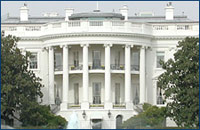
4united_states_supreme_court_112904 There are not quite as many cases as last year, but 2008-2009 could be a blockbuster year for Supreme Court labor and employment law cases.

BNA Daily Labor Report provides some context:

The U.S. Supreme Court is scheduled to open its 2008-2009 term Oct. 6 with six labor and employment law cases awaiting oral argument.

Continue ReadingExciting Term Ahead at Supreme Court for Labor and Employment Law

Of Speeches and Sermons

Last week saw another round in the ongoing legal battle between the University of Wisconsin and the Madison campus’ Roman Catholic Foundation. In Roman Catholic Foundation v. Regents, 2008 U.S. Dist. LEXIS 72980 (W.D. Wis., September 24, 2008), the court addressed the University’s refusal to allow segregated fees (that portion of a student’s tuition reserved for the funding of student organizations) to be used for certain RCF activities that the University regarded as worship, proselytizing, or sectarian instruction. These activities involved programs such as spiritual counseling, training RCF student leaders, the purchase of a drum shield to be used by the RCF’s praise band, and the printing of instructional pamphlets on praying the Rosary.

District Judge Lynn Adelman of the Eastern District of Wisconsin, sitting by designation, entered a declaratory judgment “stating that the University may not categorically exclude worship, proselytizing or sectarian instruction from segregated fee funding unless it does so pursuant to a rationale that is reasonable in light of the purposes of the forum and viewpoint neutral.”

As far as this goes, it seems to me to be consistent with recent decisions of the United States Supreme Court holding that even highly sectarian religious speech may not be excluded from a public forum if is otherwise within the forum’s purpose.

Continue ReadingOf Speeches and Sermons

What Is an “Offense”?: Another ACCA Puzzle for the Courts

I’ve posted a few times on recent Armed Career Criminal Act cases (e.g., here).  With several Supreme Court decisions last term on the scope of the ACCA, this has been an especially dynamic area of federal sentencing law.  The cases nicely illustrate one of the fundamental problems with the ACCA, which is that Congress sought to single out certain categories of prior state convictions as triggers for the ACCA fifteen-year mandatory minimum, when each state criminal justice system has its own idiosyncratic structure, terminology, and practice norms.  Congress did not, and could not, take into account the particularities of fifty different systems when drafting the ACCA.  As a result, the courts have faced a steady stream of difficult cases requiring them to determine which types of prior convictions from which states actually count as a “violent felony” or a “serious drug offense” (three of which trigger the fifteen-year minimum).  The Supreme Court’s May decision in United States v. Rodriquez provides a good example of the difficulty.

Continue ReadingWhat Is an “Offense”?: Another ACCA Puzzle for the Courts