The ABA’s Pro Bono Publico Award to the Law School
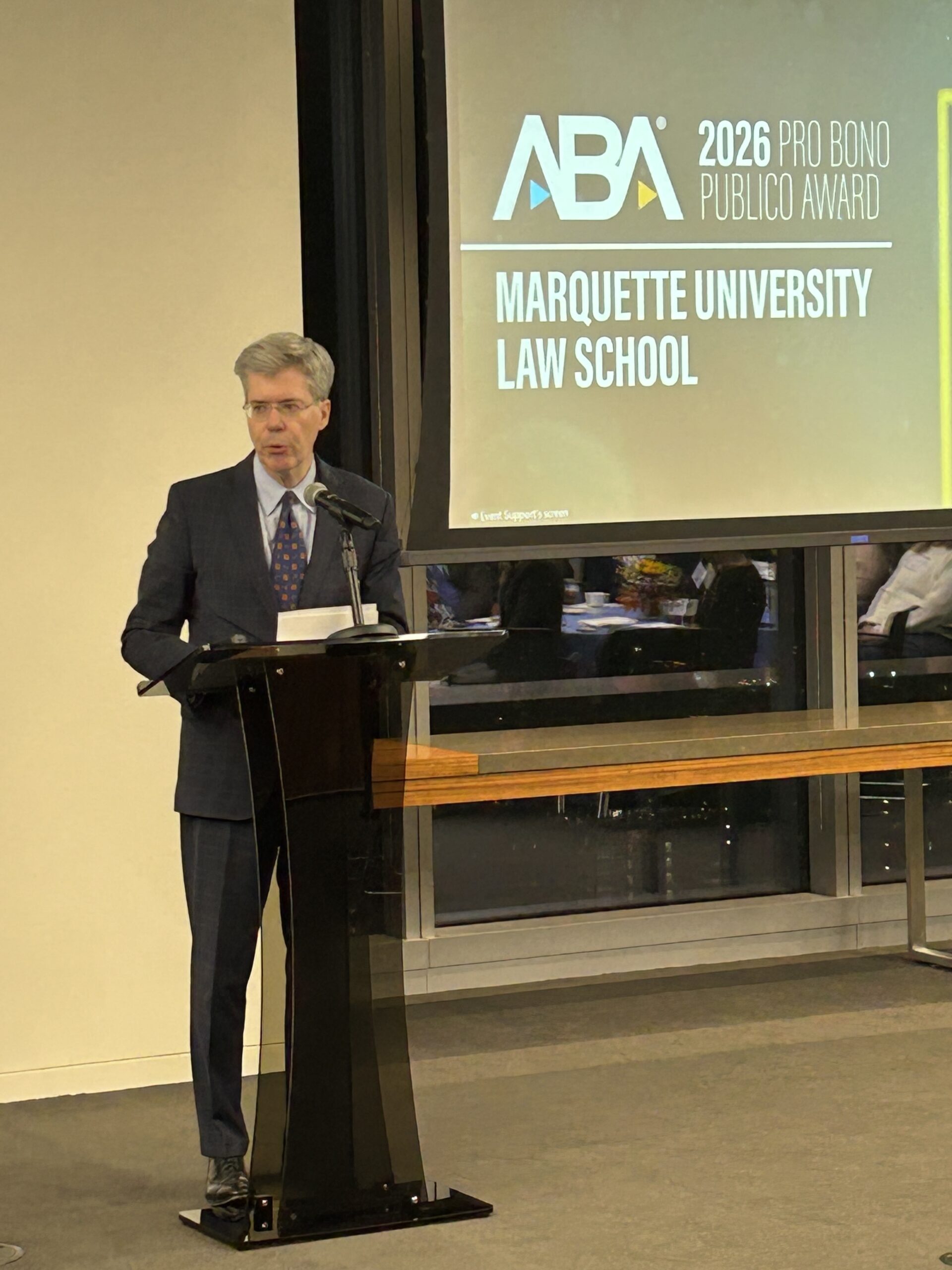
 Yesterday evening I had the privilege of accepting, on behalf of Marquette University Law School, the American Bar Association’s 2026 Pro Bono Publico Award. The award, as announced this past summer, honors the work of the Marquette Volunteer Legal Clinics (MVLCs). Hon. Bryant Yang, a judge in Los Angeles, presented the award.
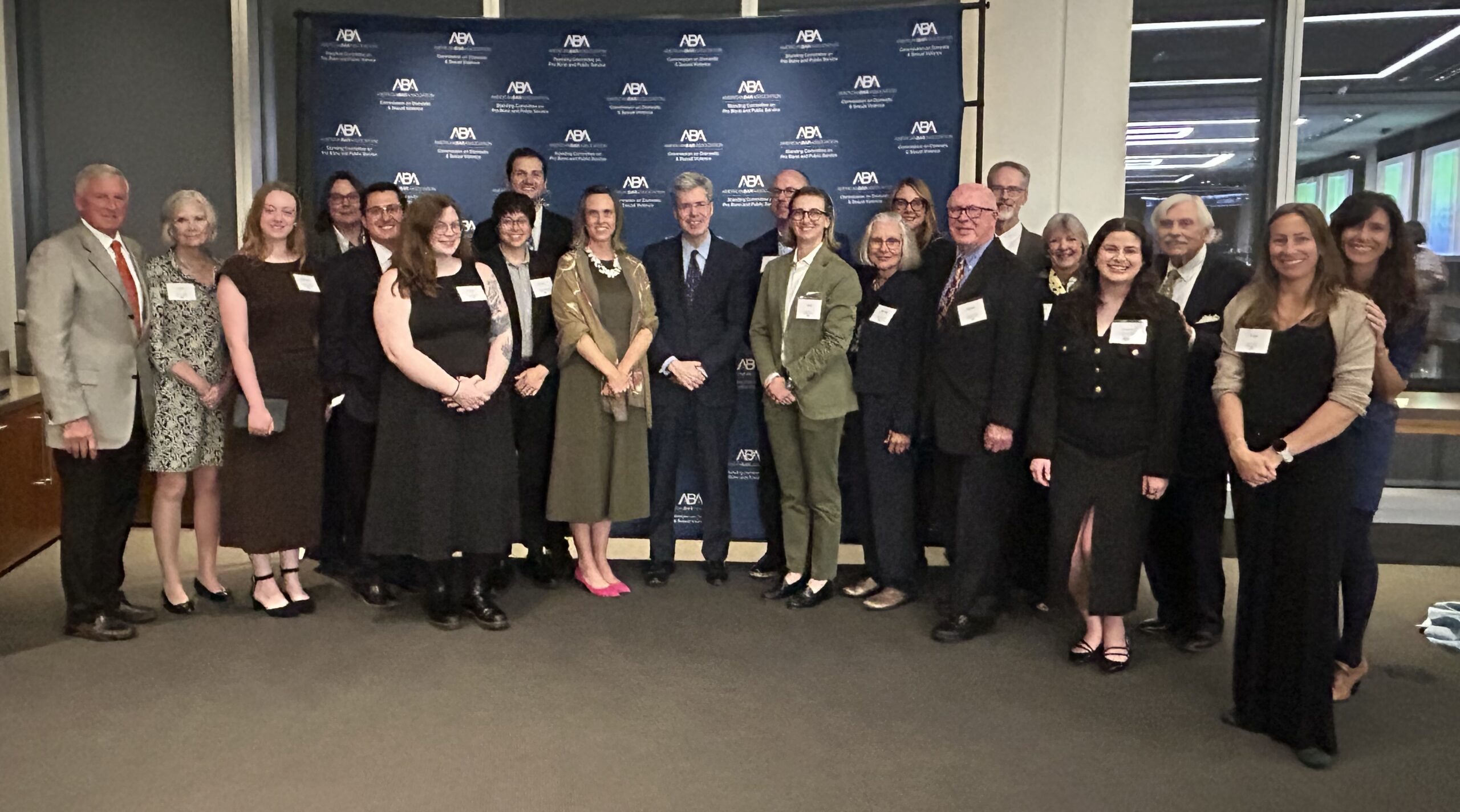
A delegation of some twenty-one of us—including students, alumni and other volunteers and benefactors, staff, and faculty—went to Chicago for the occasion. In light of the award’s being a recognition of widespread work in our legal community, I post here my remarks in accepting the award on behalf of all who have been involved in the MVLCs during the past twenty-five years.
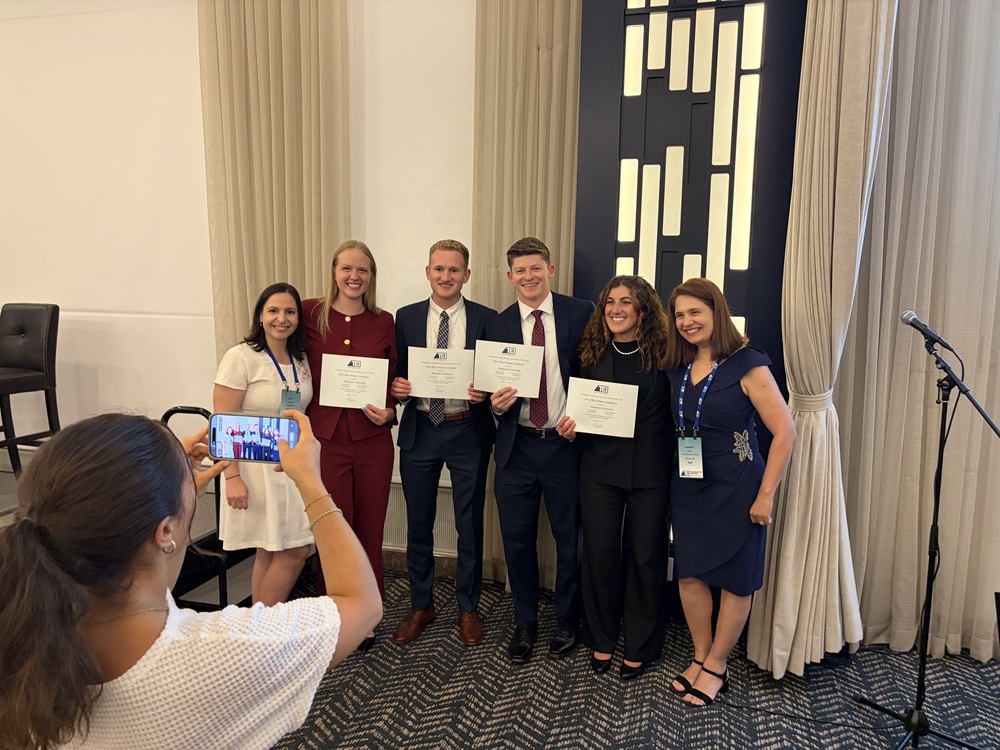
Thank you, Judge Yang. This is a great honor for our community. I want to thank the American Bar Association and, in particular, the Standing Committee on Pro Bono and Public Service for this recognition of Marquette University Law School. It enhances the honor for us to be recognized alongside Bill Boies, Jonathan Britt, Becky Kondkar, and Toni King: The work of all of you is so impressive.
As dean of Marquette Law School, I am here in a representative or official capacity. The story of the Marquette Volunteer Legal Clinics can be told in perhaps just one sentence: The MVLCs consist of people who saw a need; decided to do something about it; and have remained resolved, always, to do yet more.
To elaborate briefly: Just about twenty-five years ago, Marquette law students began planning (plotting?) to work with volunteer lawyers so as to create a small legal-services operation for people who might otherwise have nowhere to turn for help. One of those attorneys (Julie Darnieder, a Marquette lawyer) is here with us tonight to celebrate. In its first year, that clinic assisted 106 clients. In 2025, the Marquette Volunteer Legal Clinics served more than 6,000 clients.
The clients are the ratio entis for the MVLCs, but on this occasion, involving a great bar association, you will permit me to focus on those involved in providing the service. This means, foremost, the hundreds of lawyers who have given their time and expertise to the MVLCs, year after year. It means, foremost, the law students who sit next to these lawyers and across from the clients, actively participating in the counseling and advising—and not there for any academic credit or to fill some requirement. It means, foremost, our community partners who have welcomed us into legal services organizations, government offices, private social-service agencies, neighborhood spaces, the courthouse—just about all manner of places where people may go for help. And if those places aren’t attractive or accessible enough, we’ll come to them in our Mobile Legal Clinic (the brainchild more than a decade ago of other Marquette lawyers also here this evening, Frank Daily and Julie Ebert). And among “those involved in providing the service” are, foremost, my colleagues at the Law School, in our Office of Public Service, led by Angela Schultz, our long-time assistant dean for public service, and including, in a variety of critical roles, Katie Mertz, Maggie Klatt, Mindy Schroeder, and, most recently, Joshua Hernandez. So this award belongs to so many people whom I am privileged to represent.
Now some might think it strange that I would describe multiple things as “foremost.” How can that be? They might be inclined to think that this reflects casuistry or sophistry—maybe even Jesuitical reasoning. In fact, I learned the rhetorical device from my predecessor as dean of Marquette Law School. Howard Eisenberg may have associated the approach with Talmudic reasoning—the proposition that multiple things could all be “foremost.”
There is a specific point in my remembrance of Dean Eisenberg. In our society, with its many people in need, there should be no religious, partisan, or ideological divisions on the importance of pro bono work. Some may come to the work substantially out of their Catholic faith; others such as Howard may tend to regard such work as a mitzvah; and still others may simply understand that this work is of the sort expected of all lawyers and reflects the best traditions of the legal profession.
When Howard died in Milwaukee in 2002, I eulogized him as Jewish, more liberal, and, rather importantly to him, a Chicago Cubs fan, whereas I, his friend and successor, am Catholic, more conservative, and, quite importantly to me, a Chicago White Sox fan. (We are all prisoners of our past.) Yet more bound us together than separated us.
Today, all of us should have as entire common ground two things: First is the value and continuing imperative of pro bono work. The second is not much, if at all, less important: With apologies (of an insincere sort) to Judge Yang, the Los Angeles Dodgers must lose, and the Milwaukee Brewers must advance to the World Series. Thank you to the ABA, and Go Brewers!