
Tort Law and Fake News
 This Friday, January 24, 2020, hundreds of thousands of people will gather in Washington D.C. for the 47th annual March for Life. This year’s theme for the March for Life is “Pro-Life is Pro-Woman.” Last year’s March for Life invited additional news coverage thanks to a video that depicted Nick Sandmann, a high school student, smiling at a Native American elder as the elder beat a drum in front of the student. This initial video made it seem as if the student was mocking the elder. In the wake of this viral video and the news coverage that ensued, there was an immense backlash against the student and his high school. I recall seeing posts on social media listing the email addresses of the school’s administrators encouraging people to flood their inboxes with less than courteous emails expressing disapproval of their student’s behavior.
However, later video evidence revealed that a group of Black Hebrew Israelites had been yelling racial slurs at Sandmann and his peers, and that the Native American elder approached Sandmann as a way of diffusing the situation between the Black Hebrew Israelites and the students. Moreover, it became clear that neither Sandmann nor his peers were at fault in the confrontation.
Sandmann filed a defamation suit against CNN seeking $250 million dollars for its inaccurate coverage of the confrontation and the emotional distress that he endured as a result. Earlier this month it was released that Sandmann had agreed to a settlement with CNN for an undisclosed amount.
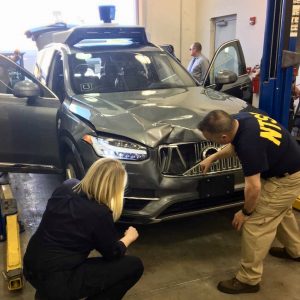 NTSB’s Final Report on Pedestrian Fatality Involving an Uber AV Highlights Obvious Programming Missteps
 Several years ago, the Wisconsin veterinary state convention focused on the legal standard of informed consent in the profession. Lawyers explained that this meant that veterinarians needed to provide all options to owners and that owners make the decision as to what options to pursue. Although this seemed simple enough, and certainly some veterinarians already practiced some degree of informed consent, some veterinarians were understandably concerned about discussing a “no treatment” option and some veterinarians practice in situations where discussions with owners may be difficult (e.g., production medicine) or the time involved would defeat the purpose of their services (e.g., high-volume spay/neuter clinics). But the take-home message was that veterinarians are not the responsible parties for making the decisions for clients and that veterinarians need to provide all of the options, and all of the information that clients need to make decisions. Informed consent protects both parties to the transaction.