“When You Go To Tearing the Lights Off My Jesus … You Just Don’t Do That”
So says Daniel Long of Muncie, Indiana, who put a statue of Jesus outside the patio door to his apartment. Mr. Long placed a spot on the statue that casts His shadow on the apartment building, which apparently overlooks a polling place.
The manager of the complex asked him to remove the statue and, when Long refused, tried to remove it himself, causing a near altercation and the observation that titles this post.
What I find interesting is the manager’s claim that he is required to remove the statue because of the Fair Housing Act, which prohibits any “notice, statement or advertisement that indicates a preference, limitation or discrimination based on religion” in the sale or rental of housing.
That argument seems to be a non-starter.
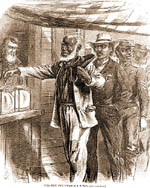 In November, 1868, the newly freed slaves in South Carolina turned out to vote in the first presidential election they had ever been allowed to participate in. It was a momentous occasion; hundreds of thousands of persons who had been deprived of their rights for centuries were now finally able to enjoy all of the privileges of citizenship, including the right of suffrage. Voting in the 1860s meant travelling long distances to the county seat to cast a ballot, often requiring an overnight stay; it was an arduous process, but they were eager to make the attempt.