Copyright and the Restatement of Torts

In my first post, I discussed the emergence of the Gershwin test and how it’s run into trouble from a combination of rigid interpretation and novel fact patterns. In my second post, I argued that this problem was made worse with the Supreme Court’s Grokster decision, which cited Gershwin and referred to contributory infringement, but discussed only intentional inducement.

The Cox case brings the contributory liability question back before the Supreme Court for the first time since Grokster. That makes it an ideal opportunity for the Court to straighten out some of the confusion, but there is always the danger that a generalist, textualist court could instead make things worse. (See, e.g., Star Athletica v. Varsity Brands.) Doing my bit to try to avoid that result is part of the reason I spent the 100-plus hours to submit an amicus brief in this case, but not the entire reason. After all, the court gets dozens of amicus briefs in a case like this, so the marginal impact of an additional brief is near zero. (One oddity of the Supreme Court rules is that every brief, even a pro se amicus brief, is required to be filed by a “counsel of record.” So I filed the brief as counsel to myself.)

The other reason I bothered to write my brief is because I spotted a connection that I don’t think has been fully presented by anyone else. I’ve been pondering the relationship between indirect copyright liability and tort law for over a decade, so it captured my attention at the cert. stage in this case when both Cox and the Solicitor General relied heavily on Twitter v. Taamneh, decided in 2023. Taamneh had nothing to do with copyright law. Instead, the case involved claims against Twitter, YouTube, and Facebook under the Justice Against Sponsors of Terrorism Act (JASTA) for “knowingly providing substantial assistance” to persons engaged in international terrorism. The Taamneh complaint alleged that the platforms knew members of ISIS were using their services, but did nothing to remove them. The Supreme Court held that that was insufficient for liability under JASTA. Otherwise, the Act “would effectively hold any sort of communication provider liable for any sort of wrongdoing merely for knowing that the wrongdoers were using its services and failing to stop them,” a conclusion that would “run roughshod over the typical limits on tort liability.”

Aha, Cox and the Solicitor General said in their cert. briefs, that’s exactly like Cox! Sony Music and some amici, on the other hand, argued that Taamneh was decided under a completely different statute, and therefore of dubious applicability to a copyright infringement claim, particularly one with more compelling facts about the defendant’s involvement.

I don’t think either side of this debate has it quite right. Cox and its amici are correct that there’s a deep connection between civil aiding and abetting liability, the subject of a lengthy analysis in Taamneh, and contributory liability in copyright law. But that connection has to do with the legal doctrine and how it’s applied. Sony Music and its amici are correct that factually, this case is far different from Taamneh, in a way that justifies sending it to a jury — which it was, and the jury had all the tools it needed to decide the case under a civil aiding and abetting framework. I’m a bit ambivalent about the use of juries to decide complicated copyright policy questions, but the Supreme Court for the most part isn’t, and this case went to a well-informed and properly-instructed jury that decided against Cox.
Continue ReadingCopyright and the Restatement of Torts

Knowledge, Intent, and Knowledge of Someone Else’s Intent

As yesterday’s post explained, contributory copyright liability emerged in the nineteenth century, but was not given a determinative test until 1970, in the Second Circuit’s opinion in Gershwin Publishing Corp. v. Columbia Artists Management, Inc. Under that test, a secondary actor could be held contributorily liable for someone else’s infringement if the actor had knowledge of the infringing activity and materially contributed to it.

That test was difficult enough to apply consistently on its own. But in 2005, the Supreme Court threw a further monkey wrench into the works when it resurrected Gershwin’s use of the term “inducement.” In a case involving the distribution of filesharing software to a group largely consisting of infringers, the Court stated the test for contributory liability as follows:

One infringes contributorily by intentionally inducing or encouraging direct infringement, see Gershwin Pub. Corp. v. Columbia Artists Management, Inc., 443 F.2d 1159, 1162 (C.A.2 1971)…. [T]hese doctrines of secondary liability emerged from common law principles and are well established in the law, [Sony Corp. v. Universal City Studios, 464 U.S.,] at 486 (Blackmun, J., dissenting); Kalem Co. v. Harper Brothers, 222 U.S. 55, 62–63 (1911); Gershwin Pub. Corp. v. Columbia Artists Management, supra, at 1162; 3 M. Nimmer & D. Nimmer, Copyright § 12.04[A] (2005).

MGM v. Grokster, 545 U.S. 913, 930–31 (2005).

For the past two decades it’s been unclear what the Grokster Court meant to do here. Was it reformulating the traditional test for contributory infringement to focus only on intentional inducement, rather than knowledge and material contribution? If so, then why the unqualified citations to Gershwin? If not, did this passage just add inducement as an additional form of indirect liability, or did it change Gershwin somehow?

Lower courts, for the most part, read Grokster the last way—inducement was not a complete substitution for the traditional material contribution test, but the traditional test didn’t come through unscathed either. If Grokster was just resurrecting “inducement” as a way of satisfying the second element of Gershwin, then why does Grokster talk about intent? There’s no mention of intent in Gershwin, only knowledge. If Grokster instead intended to add a third form of indirect liability to copyright law, why does the Court call it “contributor[y]” infringement?

Continue ReadingKnowledge, Intent, and Knowledge of Someone Else’s Intent

Contributory Copyright Liability Back Before the Supreme Court

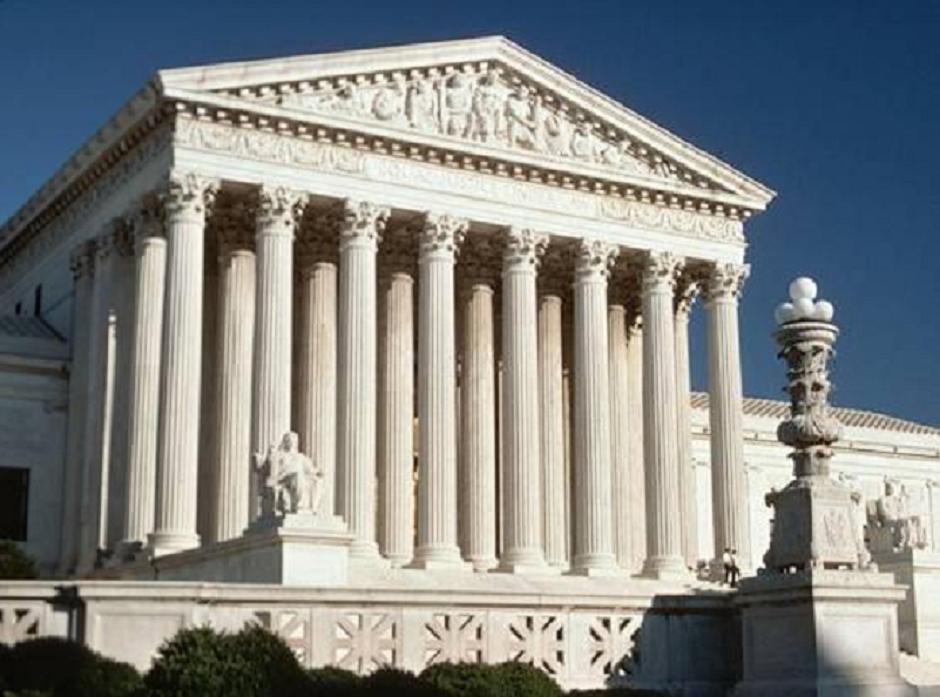
The exterior of the U.S. Supreme Court building with white stone columns and a white facade.

On Monday, the Supreme Court is going to hear oral argument in a significant copyright case, Cox Communications v. Sony Music Entertainment. The issue before the Court is the extent of contributory copyright infringement liability, something the Court has considered twice in recent decades, in the famous Betamax case (Sony v. Universal) in 1984, and in MGM v. Grokster in 2005.

I’m interested in almost any appellate case on copyright law, but I was interested enough in this one that I submitted an amicus brief to the Court arguing how it should come out. This post will introduce the dispute in Cox case and how it emerges from the history of contributory liability; tomorrow I’ll explain how the Supreme Court’s prior intervention in Grokster has added to the doctrinal confusion; and finally on Sunday I’ll explain why I decided to take the time to write an amicus brief. Hopefully on Monday I’ll have time to do a quick review of the argument.

The Cox case represents yet another battle between content owners and technology companies over the extent of indirect liability for copyright infringement, that is, liability internet service providers might have for the infringing acts of their users. For the past two decades, much of that fight has been over the conditional immunity for ISPs provided in 1998’s Digital Millennium Copyright Act, but the Cox case returns the debate to the underlying obligations imposed by copyright law itself: when does an intermediary like Cox have to stop infringers from using its service, and when can it safely regard those infringements as Somebody Else’s Problem?

The legal question here quickly enters some deep policy waters. Intermediary liability is recognized in many areas of the law, from torts to securities fraud to criminal law to all areas of intellectual property. To be effective, intermediary liability needs to strike a careful balance. First, the direct wrongdoers have to be, in some way, difficult to pursue—if they aren’t, then there’s no need to impose liability on someone else. And second, the intermediary has to have both the knowledge and the ability to narrowly target the bad acts without causing unnecessary spillover harms to beneficial activities.

Part of the problem in achieving that balance in the modern era is that the very notion of case-by-base balancing—by courts, by regulators, by almost anyone—has gotten a bad name. As I argued in my recent article The Grapes of Roth, that style of decision-making has faded, replaced by attempts to limit judicial discretion by rigidly following the text of either statutory provisions or multi-part tests.

Recently, however, I thought I detected some inclination by some of the justices to cut back against that trend and instead emphasize that the overall balance of intermediary liability emerges from the interplay of various considerations. So I decided to give that inclination whatever additional nudge I could with my brief.

Continue ReadingContributory Copyright Liability Back Before the Supreme Court