Connick v. Thompson: Both Answers Are Right — What Was the Question Again?

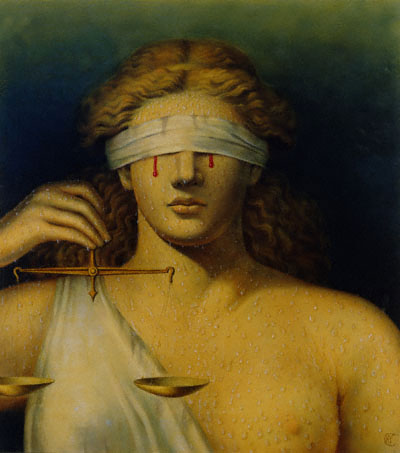
In Supreme Court cases, the majority and dissent sometimes talk right past one another, framing the question for decision so differently that they almost seem to be writing about different cases.  See, e.g., the dueling opinions earlier this week in Connick v. Thompson (No. 09-571).  Thompson was convicted of attempted armed robbery and murder, and then sentenced to death.  A month before his execution, a bloodstained swatch of cloth came to light that proved Thompson was not the perpetrator in the robbery prosecution.  The murder charge was eventually retried, and Thompson was acquitted.  In all, he served 18 years in prison based on his wrongful convictions.  Moreover, it turns out that an assistant district attorney who was part of the team that prosecuted Thompson deliberately withheld the swatch.  The District Attorney’s office now concedes that Thompson’s constitutional rights were violated under Brady v. Maryland.  The question now is whether the DA’s office should be civilly liable to Thompson for this violation.

Prior cases interpreting 42 U.S.C. § 1983 (the federal civil rights law Thompson invoked in his lawsuit) reject vicarious liability for the government when a government employee violates consitutional rights; in order to recover, as matters unfolded, Thompson was obliged to show that the District Attorney had been deliberately indifferent to a need to train his subordinates regarding their Brady responsibilities.  Prior cases also establish that a “failure to train” claim must ordinarily be based on multiple violations of constitutional rights; a single violation, such as that suffered by Thompson, would require extraordinary circumstances to justify relief.

So much everyone agreed on. 

Continue ReadingConnick v. Thompson: Both Answers Are Right — What Was the Question Again?

Fallone v. Esenberg: Round Two

On this morning’s Joy Cardin show on Wisconsin Public Radio, I continued my debate with Professor Esenberg over whether the collective bargaining bill has become law, and on the ongoing litigation over the effectiveness of the bill before Circuit Judge Sumi.  You can find the audio of the program here:

  http://www.wpr.org/webcasting/audioarchives_display.cfm?Code=jca

Rarely have two experienced lawyers read the same statutory language in such a diametrically opposed manner.

Continue ReadingFallone v. Esenberg: Round Two

Published and Effective: Another View

In an interview with Fox Cable News this morning, reporter Mike Tobin asked me if what we were seeing in Wisconsin was “lots of politics and little law.” While I began my answer in disagreement, I concluded by saying there was a sense in which he was right. The heat generated by the budget repair bill has caused people to behave in ways that are unusual and without substantial precedent.  For a profession that often relies on precedent to resolve textual ambiguities and conflicts, this creates not inconsiderable difficulty.

My own view on whether the budget repair bill is different than that offered by Professor Fallone. My best answer is that it is “probably” in effect. Here’s why.

Continue ReadingPublished and Effective: Another View