
Copenhagen Conundrum
We are only a week away from the beginning of the highly anticipated global climate summit in Copenhagen. I recently took part in a mock negotiation session (I represented Mexico), and I can attest to just how difficult it will be to reach any agreement at the summit – even, as has been suggested lately, an agreement in principle without a formally binding treaty. World leaders recognized as much at the recent Asia Pacific Economic Cooperation (APEC) meeting, and admitted that it was unrealistic to expect that a legally binding international treaty could be negotiated at Copenhagen. From the basics of climate science to poverty abatement, the issues that divide the parties are vast. Those issues have been discussed extensively, so I will instead point out three recent events that may affect the likelihood of a deal:
November 20, 2009: An electronic break-in at the University of East Anglia reveals documents and e-mails that appear to show intent to withhold or manipulate certain data; quickly dubbed “Climategate” by climate skeptics, the leaks are at best embarrassing for prominent climate scientists.
November 25, 2009: President Obama announces that the United States will commit to emissions cuts of 17 percent by 2020 and about 83 percent by 2050; Obama also announced that he will personally attend part of the summit. The pledges are expected to break a logjam of countries that had been waiting for a United States commitment.
November 29, 2009: India and China indicate that they may walk out of the negotiations if the developed countries do not agree to the sharing of “green” technology and massive economic transfers for a variety of climate change mitigation and abatement purposes, such as stopping deforestation and forest degradation.
No matter what your position is, the challenges are daunting and the stakes are high. Whatever happens, the Copenhagen summit will be a fascinating opportunity to observe international diplomacy in the environmental context.
 Some years ago, when I was on the Marquette Law Review editorial board, my responsibilities included obtaining a rudimentary copyright release from authors whose articles we had agreed to publish. In fact, I signed the form myself when I published my Note. If we did not obtain the release, we would not publish the article. I presume this is still the Review’s policy, although current members can confirm or deny it, and I also suspect that many journals have a similar procedure. If the “open access” movement continues to gather steam, however, one can wonder how long this and similar practices will continue. For example, Professor Steven Shavell recently posted a
 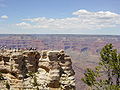 Many people value certain environmental resources even if they have never actually visited or “used” those resources. For example, a person might assign what economists call “nonuse values” to the Grand Canyon, the Great Barrier Reef, or a particular endangered animal species even if she has never hiked the Canyon, gone scuba diving on the Reef, or personally encountered that endangered species. Some scholars have categorized nonuse values into three types: the “option value” is the value a person places on preserving an environmental resource so that she has the option of using it in the future; the “bequest value” is the value the person places on being able to preserve the resource for the enjoyment of future generations; and the “existence value” is the value the person places on the mere knowledge that the resource exists.