
Sykes, Sotomayor, and Women Judges
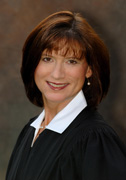 I had the opportunity last week to attend Women Judges’ Night, an event that the Association for Women Lawyers presents annually (indeed, this year’s dinner was the thirtieth such). The Hon. Diane S. Sykes, L’84, of the United States Court of Appeals for the Seventh Circuit, delivered what was billed as a keynote but was also in the nature of after-dinner remarks. The speech was a very good example of either form, for reasons related to its warmth, its willingness to take on a substantive and even somewhat contentious topic, and the speaker’s self-awareness and humor.
Judge Sykes began with a “confess[ion]”:
[T]the idea of a “Women Judges Night” has always made me vaguely uneasy. I’m uncomfortable with the implications and consequences of gender-identity politics—or any identity politics, for that matter. When we celebrate Women Judges Night every year, what is it precisely that we’re celebrating? If we’re celebrating the appointment or election of women judges just because they are women, then I think we are making a mistake about the qualities necessary in a good judge, which of course are not gender-specific. If we’re celebrating the appointment and election of women judges because they subscribe to a gender-based brand of judging, then we are making an even bigger mistake about the nature of the judicial role. I don’t think we’re celebrating either of these things, but I do think it’s important for us to be careful not to diminish the contributions of women judges by emphasizing their gender as if it had something to do with their qualifications for judicial office or has substantive significance in their work.
She would conclude with her own assessment of what the event celebrates, along the way touching upon matters from Madison to Washington, D.C.—from her former court, a majority of whose justices were in attendance (viz., Chief Justice Shirley S. Abrahamson, Justice Ann Walsh Bradley, Justice Annette K. Ziegler, and Justice Patience D. Roggensack, the last of whom introduced Judge Sykes), to the United States Supreme Court and, in particular, last year’s confirmation of Justice Sonia Sotomayor.
 Yesterday, the Senate Judiciary Committee held a hearing on President Obama’s nomination of a Marquette lawyer—the Hon. James A. Wynn, Jr., L’79—to a seat on the United States Court of Appeals for the Fourth Circuit. Judge Wynn is a longtime member of the North Carolina Court of Appeals, and he has retained strong ties to Marquette Law School. In particular, he was our Hallows Judicial Fellow in 2002, delivering our Hallows Lecture (logically enough); received the All-University Alumni Merit Award in 2004; and spoke at the Law School’s commencement ceremony in 2007. I admire Judge Wynn very much, as I wrote in