 A few months ago, I pulled the Norton Anthology of English Literature from my bookshelf—an old friend to read on a cold winter day. The page fell open to Keats, and a reference to Richard Woodhouse, barrister and friend of Keats, caught my eye.
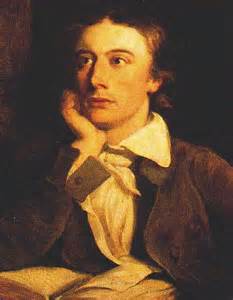
John Keats (1795-1821) was an English Romantic poet. Keats wrote for six years before he died of tuberculosis in Rome at age 25. During that short time, he created some of the most beautiful verse, such as his sonnet, “On First Looking into Chapman’s Homer” (1816):
Much have I travell’d in the realms of gold,
And many goodly states and kingdoms seen;
Round many western islands have I been
Which bards in fealty to Apollo hold.
Oft of one wide expanse had I been told
That deep-brow’d Homer ruled as his demesne;
Yet did I never breathe its pure serene
Till I heard Chapman speak out loud and bold:
Then felt I like some watcher of the skies
When a new planet swims into his ken;
Or like stout Cortez when with eagle eyes
He star’d at the Pacific–and all his men
Look’d at each other with a wild surmise–
Silent, upon a peak in Darien.
Richard Woodhouse was an English barrister who represented Keats’ publisher, Taylor and Hessey. Keats and Woodhouse became friends, and Woodhouse encouraged Keats in his writing. Keats was to receive an inheritance when he turned 21, but he did not know of the inheritance. As such, Keats struggled for want of money, and his publisher gave him an advance on his second book. To me, Woodhouse had a unique view of Keats that came in part from Woodhouse’s work as a lawyer: Woodhouse, as a lawyer, was able to evaluate Keats both professionally and personally, and he recognized Keats’ talent.