
The Mayflower Compact
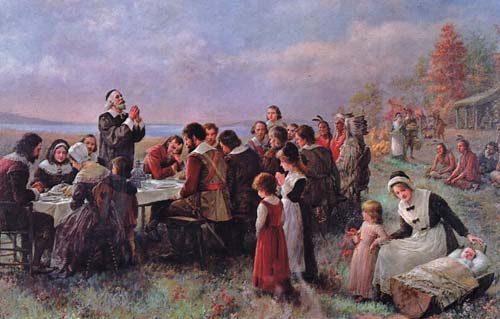 About a year before the first Thanksgiving, in early November 1620, the Pilgrims landed in Cape Cod. In Mayflower Nathaniel Philbrick recounts how before landing in Provincetown Harbor, the Pilgrims drafted and signed the Mayflower Compact. The Mayflower Compact states in full:
Having undertaken, for the glory of God and advancement of the Christian faith and honor of our King and country, a voyage to plant the first colony in the northern parts of Virginia, do these present solemnly and mutually in the presence of God and one of another, covenant and combine ourselves together into a civil body politic, for our better ordering and preservation, and furtherance of the ends aforesaid; and by virtue hereof to enact, constitute and frame just and equal laws, ordinances, acts, constitutions and offices, from time to time, as shall be thought most meet and convenient for the general good of the colony, until which we promise all due submission and obedience.
The Pilgrims fashioned this secular covenant to have an agreement for governance when they disembarked from the Mayflower.
 Congratulations to the students in Appellate Writing and Advocacy, who are turning in their final briefs today. This moment is a good one to reprint an article that Emily Lonergan, the Chief Justice of the Moot Court Board, wrote for the most recent De Novo newsletter. De Novo is the publication of the State Bar of Wisconsin’s Appellate Practice Section. The Appellate Practice Section is active, and De Novo is a good source for news, information, and tips about appellate practice. This article is reprinted with permission.