Why Does Wisconsin Arrest Twice as Many People for Marijuana Possession as Minnesota?

In 2010, Wisconsin law enforcement agencies reported 16,111 arrests for simple possession of marijuana, including both adult and juvenile offenders. The same year, Minnesota agencies reported only 7,453. With this one glaring exception, Wisconsin is not otherwise noticeably more aggressive about making drug arrests. Wisconsin also made more possession arrests for other drugs than did Minnesota, but the gap was much less pronounced (4,807 to 3,737), while Minnesota actually outstripped Wisconsin by a considerable margin when it came to arrests for drug trafficking (6,382 to 4,832). So, it is not as if our neighbors to the west have declared a general truce in the War on Drugs, while we have doggedly fought on. Rather, there seems something specific about marijuana possession that is differentiating the two states.

It seems unlikely that differences in marijuana use could account for such a large difference in the arrest rates. Indeed, based on the National Survey of Drug Use and Health, it appears that marijuana use in Minnesota is, if anything, slightly higher than in Wisconsin. So, the differences in arrest rates probably result to a significant degree from differences in police behavior. What drives those differences is not immediately apparent from any data that I have seen.

As I have observed in earlier posts, differences in criminal-justice outputs between the two states cry out for justification because the two states are so similar in population size and crime rate. 
Continue ReadingWhy Does Wisconsin Arrest Twice as Many People for Marijuana Possession as Minnesota?

Money, Art and Crime

Crime often pays, and sometimes pays very well. Both the drug dealer with a pile of cash in the basement and the insider trader with a huge portfolio in an off-shore account face a common problem: How to use the cash without being targeted by law enforcement or tax collectors. The solution is “money laundering,” a banal phrase that accurately conveys how illegitimate wealth is cleaned and pressed to appear lawful – and hence useable.

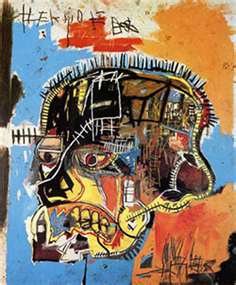
On September 5, 2012 the Law School hosted a packed lecture, “Money Laundering Perfected by Art,” presented by the Hon. Fausto Martin De Sanctis, a leading federal judge from Brazil, and Karine Moreno-Taxman, an assistant United States Attorney in the Eastern District of Wisconsin. Currently a fellow at the Federal Judicial Center in Washington D.C., Judge De Sanctis has been in the forefront of Brazil’s efforts to crackdown on international and domestic money laundering. Judge De Sanctis described the myriad forms that money laundering can assume, especially through the use of museum-quality art. Paintings and sculptures, for example, leave no money trails. Art dealers jealously guard the confidentiality of their patrons, which only facilitates stealth transactions. Judge De Sanctis talked about the legal battles involving Jean Michel Basquiat’s “Hannibal” (see image), an $8 million painting smuggled from Brazil to the U.S. by persons implicated in the Banco Santos financial scandal (Brazil’s answer to Bernie Madoff). 

Attorney Moreno-Taxman, who translated for Judge De Sanctis, also talked about gaps in domestic (U.S.) and international law which make these crimes hard to detect and complicate the recovery of tainted art, like “Hannibal.” An interesting subtheme was Brazil’s efforts to implement the rule of law since 1988, when it abandoned its military dictatorship and adopted a written constitution.

Continue ReadingMoney, Art and Crime

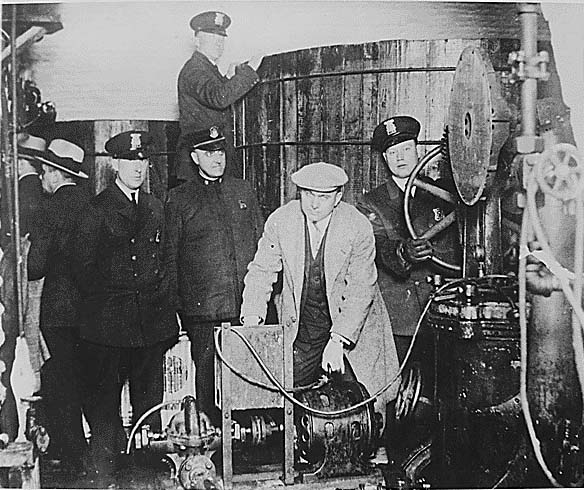
Federal Criminal Cases, 1928-1930: Surprisingly Similar to Today, But Also Very Different

In anticipation of the conference here next month on the Wickersham Commission, I’ve been reviewing the thirteen voluminous reports the Commission issued in 1931 on various aspects of the criminal-justice system.  One that holds some interesting surprises is the “Progress Report on the Study of the Federal Courts.”  The heart of this report is a fascinating, detailed statistical analysis of the criminal cases in the District of Connecticut for fiscal years 1928-1930.

One thing that strikes me as remarkable is the almost complete absence of trials — the system was dominated then, as now, by guilty pleas.  Old-timers today will sometimes tell you about a golden age of trials in the federal system in the 1970′s.  In that decade, guilty plea rates hovered between 77% and 82%.  After 1981, the rate climbed steadily, reaching more than 96% of adjudicated cases in 2009.  But this, apparently, is not a new phenomenon.  Among 740 criminal cases filed in the District of Connecticut between 1928 and 1931, only nine went to trial.  That’s right, only nine trials in three years, or 1.5 criminal trials per judge per year.  (Eight of these trials, by the way, took less than one full day to try.)  The guilty plea rate in adjudicated cases was over 98%.

After doing some digging for national data, I discovered that the guilty plea rate rose steadily between 1916 and 1933, reaching a peak of 91%.  (See Ron Wright’s helpful data compilation here.)  So, Connecticut seems not to have been terribly atypical.

The Connecticut data are, in fact, quite reminiscent of a modern“fast-track” plea-bargaining system.  

Continue ReadingFederal Criminal Cases, 1928-1930: Surprisingly Similar to Today, But Also Very Different