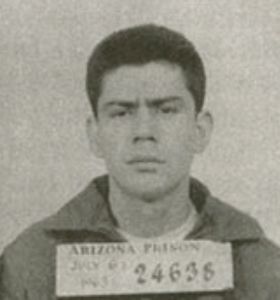
The New Miranda Warning

I never thought the Miranda warning was all that useful.  In fact, it actually raises more questions than it answers.  For example, the warning tells a suspect that anything he says can be used against him in court.  But asking for an attorney is saying something, isn’t it?  Could the prosecutor later use such a request against him?  (After all, television teaches us that only guilty people “lawyer-up.”)  And what if the suspect wants to remain silent?  Could his silence be used against him in court?  The Miranda warning fails to answer these and many other questions.

 Making matters even worse for the would-be defendant is Berghuis v. Thompkins, 130 S. Ct. 2250 (2010).  In a confidence inspiring 5-4 split, the Court ruled that a suspect cannot actually exercise the right to remain silent by remaining silent—even if that silence lasts through nearly three hours of interrogation.

 In response to all of this chaos, I’ve drafted a new and improved Miranda warning.

Continue ReadingThe New Miranda Warning

What’s the Difference Between Grimm’s Fairy Tales and Postal 2?

The question about the difference between Grimm’s Fairy Tales and Postal 2 sounds like the set-up to a corny joke.  In fact, it was a subject discussed yesterday at the U.S. Supreme Court, where the justices heard oral argument on a first Amendment challenge to a California statute banning the sale of violent video games to minors.  The New York Times reports on a spirited question and answer exchange between the justices and attorneys for each side in the dispute. 

According to the report, the law imposes a $1,000 fine for selling violent video games to anyone under the age of 18.  Violent video games are defined as those “in which the range of options available to a player includes killing, maiming, dismembering or sexually assaulting an image of a human being” in a “patently offensive way,” or a way that appeals to “deviant or morbid interests” while lacking “serious literary, artistic, political or scientific value.” 

Justice Scalia’s comments and questions made it seem like he is leaning against the law, since he pointedly questioned both the definition of a “deviant violent video game,” and queried whether, since Grimm’s Fairy Tales are indeed grim, whether they, too should be banned. 

Continue ReadingWhat’s the Difference Between Grimm’s Fairy Tales and Postal 2?

The Most Important Supreme Court Case in Copyright Law: Sony Corp. v. Universal City Studios (1984)

[Editors’ note: This is the fifth in our series, What Is the Most Important U.S. Supreme Court Case in Your Area of the Law? The first four installments are here, here, here, and here.]

There have been several important copyright cases before the Supreme Court since the first, Wheaton v. Peters, in 1834 (over, appropriately enough, the copyright in the Supreme Court’s reports). But the most important to me personally is Sony v. Universal, also known as “the Betamax case.” The Sony case, as is widely known, held that recording a program at home in order to watch it later—”time-shifting”—is a fair use. It also devised a very influential test for determining the liability of manufacturers and service providers for infringement committed by users, one that asked only whether the product or service was “capable of substantial noninfringing uses.” Undeniably Sony is an important case, but then so are Bleistein v. Donaldson Lithographing, Baker v. Selden, CCNV v. Reid, Burrow-Giles v. Sarony, Campbell v. Acuff-Rose and countless others. What pushes Sony over the top is the fact that the Sony case marks the boundary between two copyright worlds: a world where copyright is solely a regulation of a particular industry sector—publishing—and a world where it regulates everyone.

Continue ReadingThe Most Important Supreme Court Case in Copyright Law: Sony Corp. v. Universal City Studios (1984)