
Ozanne v. Fitzgerald: Haste Makes Waste
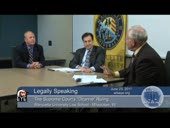
On June 23, I participated in a discussion concerning the Wisconsin Supreme Court’s decision in Ozanne v. Fitzgerald, 2011 WI 43, on the Wisconsin Eye public affairs show “Legally Speaking.”  Rick Esenberg and I continued our ongoing difference of opinion regarding this litigation, which seems to generate an endless supply of novel and contentious legal questions.  You can view the program at this link.

My criticisms of the unusual procedural posture of the case, and of the lack of wisdom exhibited by the four member majority’s rush to resolution, are fully stated in the video.

For the remainder of this post, I would like to expand on my criticism of the majority’s legal conclusion that the legislature lacks the power under the State Constitution to submit itself to the jurisdiction of the courts under the Open Meetings Law.

Continue ReadingOzanne v. Fitzgerald: Haste Makes Waste

Unoriginal Thoughts on Appellate Procedure

Earlier this week, the Wisconsin Supreme Court issued its decision in State ex rel. Ozanne v. Fitzgerald and State ex rel. Huebsch v. Circuit Court for Dane County.  The decision has rightly generated a good bit of commentary about open government, separation of powers, etc.  My goal here is to clarify a very limited but important point of Wisconsin appellate procedure.

The issues in the decision came to the court in two ways: an appeal from a temporary order that had been certified by the Wisconsin Court of Appeals and a petition for a supervisory writ filed by Secretary Huebsch.  The two cases were combined for briefing and oral argument.  The majority’s order denied the certification, granted the petition for a supervisory writ, and then decided the issues contained in the petition for the writ.

In the court’s order, the majority refers to the writ request as a “petition for supervisory/original jurisdiction” (¶ 2) and a “petition for original action” (¶7).  In his concurrence, Justice Prosser refers to the writ request as an “original action” which “satisfies several of the court’s criteria for an original action publici juris” (¶19).

Chief Justice Abrahamson, in her writing, will have none of this (¶¶97-101).  She notes that the majority order “mistakenly asserts” that a “’petition for supervisory/original jurisdiction” was filed by Huebsch “pursuant to Wis. Stat. §§ (Rules) 809.70 and 809.71,” when in fact the Huebsch petition only references 809.71. 

Continue ReadingUnoriginal Thoughts on Appellate Procedure

The Constitutionality of the Open Meetings Law

During oral argument this past Monday in Ozanne v. Fitzgerald, the Wisconsin Supreme Court was asked to rule that the Open Meetings Law violates the Wisconsin Constitution to the extent that the law grants authority to the Wisconsin circuit courts to void legislative enactments passed in violation of its provisions.

This is not a novel argument.  Over the years, opponents of state “sunshine laws” have filed legal challenges to public records and open meetings laws around the country.  Sometimes, these challenges have been based on First Amendment claims.  At other times, they have attempted to argue that the judicial enforcement of sunshine laws violates the doctrine of separation of powers.

In 1992, the Supreme Court of Florida considered and rejected this exact argument. 

Continue ReadingThe Constitutionality of the Open Meetings Law