
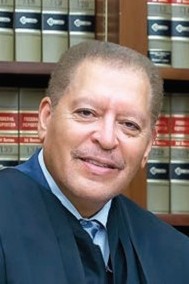
This essay is a guest contribution to the Marquette Law School Faculty Blog by the Hon. James A. Wynn, L’79, judge of the U.S. Court of Appeals for the Fourth Circuit.
Originalism has quietly transformed one of the judiciary’s central responsibilities. Judges are no longer asked merely to interpret constitutional text and precedent. Increasingly, they are asked to resolve contested questions of professional history—and their historical judgments often determine the scope of constitutional rights.
That transformation raises institutional questions that deserve far more attention than they have received. In particular: How do judges decide which history counts? Or how should courts go about determining relevant history?
Two Supreme Court decisions this past summer, in June 2026, highlight the crux of the problem.
In the birthright citizenship case, Trump v. Barbara, Justice Clarence Thomas penned a dissent which ostensibly presents an extensive historical argument supporting its interpretation of the Fourteenth Amendment’s citizenship clause as one narrowly tailored to restoring the rights of former slaves. But Justice Ketanji Brown Jackson’s concurrence surveyed that same history and rejected it as a “narrow vision of the Fourteenth Amendment [that] bears little relationship to the history of its ratification.”
And in United States v. Hemani, the Court held that a federal law barring an occasional user of marijuana from owning a firearm violated the Second Amendment because the government could not point to any Founding Era historical analogue for such prohibitions. In her concurrence, Justice Jackson spoke plainly: thrusting such historical research on judges had become “unworkable”: “It imposes on judges the unfamiliar and difficult tasks of sifting through centuries-old evidence in order to answer contested historical questions, and applying those answers to resolve contemporary problems.”
I am no originalist. But if modern originalism is here to stay, the increasing reliance on contested historical narratives requires us to confront a problem the judiciary has largely avoided: When the historical record is extensive and capable of supporting competing interpretations, by what method should judges determine which account governs?
Consider how the judiciary treats contested facts. We begin with a trial. Adversarial advocates present competing evidence. Expert witnesses may be challenged. Judges assess whether expert methods are reliable. Fact finders weigh competing accounts. And appellate courts ordinarily defer to factual findings unless the fact finder clearly erred.
None of those safeguards necessarily governs historical claims that decide constitutional cases. There may be no trial-level fact-finding, no examination of competing experts, no settled standard for determining whether a historical methodology is reliable, and no findings to which an appellate court owes deference. Appellate judges may instead begin anew, confronting historical sources selected by advocates seeking particular legal outcomes.
Inevitably, judges must decide not only what the Constitution means but which historical sources deserve emphasis, which deserve less weight, and how conflicting evidence should be reconciled. Yet we have developed remarkably little law governing how judges should make those choices. Indeed, even to when we should look often remains a mystery—for example, in Hemani, the Court again declined to decide whether courts should interpret the Second Amendment through historical sources adjacent to the Founding (the time of the Bill of Rights) or to the Reconstruction Era (because of the incorporation doctrine under the Fourteenth Amendment).
The central institutional question is not whether Justice Thomas or Justice Jackson can unearth the right morsels of history to support their legal conclusions. They can.
The harder question is methodological: What obligation does a court have to identify materially competing historical evidence, to confront it, and to explain why one historical methodology is more persuasive than another?
For example, a substantial body of scholarship examines Reconstruction and birthright citizenship through a broader constellation of evidence than did Justice Thomas’s dissent. This includes the repudiation of Dred Scott v. Sandford (1857), the Civil Rights Act of 1866, debates surrounding the Fourteenth Amendment before its ratification in 1868, post-ratification governmental practice, and subsequent constitutional precedent. Of course, merely invoking those sources does not automatically defeat Justice Thomas’s account. But their existence creates the very problem a court must resolve.
If one historical account emphasizes particular statements from congressional debates, while another places greater weight on common-law background, legislative enactments, broader Revolutionary and Reconstruction purposes, and subsequent practice, a judge cannot resolve the conflict merely by accumulating more quotations for one side. The court must decide which sources are relevant, how representative they are, what level of generality is appropriate, and why one method of reconstructing constitutional meaning should prevail.
Those are methodological judgments. Yet they can determine constitutional rights.
This is not a criticism unique to any particular justice. It is a structural feature of modern originalism. Judges across the ideological spectrum can select historical evidence congenial to their conclusions.
The difficulty does not simply involve “cherry-picking.” It is that courts lack a sufficiently developed process for distinguishing legitimate historical selection from result-oriented historical selection.
We should consider creating more structure.
First, courts should develop procedures for assessing competing historical methodologies, not merely competing historical conclusions. In medicine, engineering, economics, and science, courts routinely ask whether experts are using reliable methods. As constitutional history assumes a more determinative role, historical methodology deserves comparable scrutiny.
Second, that process should begin more often in trial courts. Trial judges are institutionally better positioned to examine experts, test methodologies, and develop records. Appellate courts could then review constitutional questions independently while giving appropriate respect to properly developed historical findings.
Finally, courts should consider greater use of neutral historical expertise, including court-appointed experts or, in exceptional cases, special masters. Party advocacy has obvious value, but a neutral expert may help a court in identifying significant evidence or data points that neither side has an incentive to emphasize and in distinguishing genuine historical consensus from selective advocacy.
Originalism has changed the work of judging. The modern constitutional judge is increasingly an arbiter of competing historical narratives.
The recent historical debates at the Supreme Court demonstrate both the promise and the challenge of that transformation. The ultimate question is not simply whether any particular advocate’s reading of history is right or wrong. It is whether constitutional adjudication has a sufficiently disciplined method for deciding why one contested historical account should govern over another.
As history assumes an ever-greater role in constitutional law, that may become one of the judiciary’s most consequential challenges. The future of constitutional interpretation may depend not simply on what history says but on how courts decide which history counts.