Appreciating Our Professors: Dean Howard Eisenberg
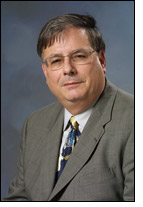 Francis de Sales, the bishop of Geneva in the early 1600’s, said “the measure of love is to love without measure.” The late Dean Howard Eisenberg embodied this message. Dean Eisenberg gave his love without measure to the Law School, the legal community, and the pro bono clients he served.
I met Dean Eisenberg shortly after I graduated from college. At the time, I was teaching high school English. Dean Eisenberg talked to me about the legal profession as a helping profession — that lawyers are uniquely situated to protect and aid the individuals and entities they serve. Dean Eisenberg’s comments so inspired me that I decided to apply to law school. Dean Eisenberg’s presence at the Law School also convinced me that it was the right place to go to school. Any place, I thought, that had the good sense to have him at the helm was a place where I wanted to be.
In my second year of law school, Dean Eisenberg again influenced my life when I took his appellate advocacy course. That class turned me onto advocacy. I remember the thrill when I found the key case for my side in the Wisconsin reporter stacks. As I drafted the brief, I felt the joy of crafting language that would persuade a court. In that class, we also had to make an oral argument. I enjoyed turning my brief into an oral argument and observing how my use of language changed from its presentation in written form to oral form. I was hooked on advocacy, and I decided to go into litigation.
The last memory I have of Dean Eisenberg came two weeks before his untimely death.
 I’m never any good at these questions. I’m always stumped whenever I’m asked, “Who is your hero?” Similarly, although I enjoyed many of my classes, I don’t recall too many “ah-ha” moments in law school that didn’t come from reading a book or an article. For whatever reason, I’m more inspired by ideas than people.