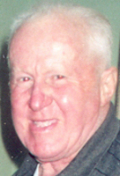
 On May 22, Walter Joseph Kowalski of Red Hook, New York passed away at age 88. Few in the world of sports or sports law noted his death. Those who did note his death felt compelled to explain that the he was Walter Kowalski, the minor league baseball player who once sued Organized Baseball and not the famous professional wrestler, Walter “Killer” Kowalski (who died in 2008), or Walt Kowalski, the angry Korean War vet played by Clint Eastwood in the recent film, Gran Torino.
Kowalski was born in Brooklyn, New York, in January 1923. His older brother Thad was a star semi-pro baseball player in Brooklyn in the late 1930’s, and Walter grew up dreaming of following in his brother’s footsteps. Initially, it looked like he was going to do just that.
In the fall of 1942, he signed a professional contract with the Lockport White Sox of the Class D Pennsylvania, Ontario, and New York League, more commonly known as the PONY League. Although the Lockport team was affiliated with the American League’s Chicago White Sox, it appears that Kowalski signed with the Lockport team, rather than the White Sox.
Unfortunately for Kowalski, he was not able to begin his professional baseball career as planned in 1943.
Realizing that he was almost certain to be drafted into the military, he enlisted in the Army Air Corps in 1943, and served through the end of the 1945 baseball season.
He began his professional career in 1946 with Lockport, now an unaffiliated PONY League team called the Cubs. Kowalski was Lockport’s starting third baseman throughout the 1946 season, and the 23-year old compiled a respectable batting record, clubbing 27 doubles, 8 triples, and four home runs while batting .254. He showed enough in 1946 that at the end of the season, his contract was purchased by his hometown team, the Brooklyn Dodgers.
(It appears that Kowalski may have shaved a year off his actual age when he began his professional baseball career, as many baseball sources report him as born in 1924. References to age here refer to his actual age.)
Under the reserve rule of Organized Baseball (an alliance that included both major leagues and most of the professional minor leagues), Kowalski did not have the right to become a free agent after the expiration of his Lockport contract and to sign with a team of his choosing. Because his reserve rights had been assigned to the Dodgers, his only option for the following year was to play for the team selected for him by the Dodgers.
Under the direction of team president Branch Rickey, the Brooklyn Dodgers were locking up the services of literally dozens of promising young players in the postwar years. With 24 different minor league teams spread Class D to Class AAA, the Dodgers operated the largest farm system in the major leagues in the late 1940’s, and the team had approximately 500 players under contract at any given time (as opposed to the 150-200 today). Making it through such a system to the AA or AAA levels, let alone the Major Leagues, was a major accomplishment.
For the 1947 season, Kowalksi was returned to Class D where he played for the Kingston Dodgers of the North Atlantic League. Kowalski was again his team’s starting third baseman, and he blossomed into a star for the pennant winning Kingston team. The third oldest player on the team, he flourished as a hitter, batting .318 with 11 home runs and a league leading 24 triples. (The 24 triples were apparently the most hit by any professional baseball player in 1947, at any level of play.)
After the end of the season, Kowalski was promoted to the Dodgers’ Pueblo, Colorado affiliate in the Class A Western League, a promotion that appeared to indicate that he would by-pass the Class C and Class B levels of minor league play.
Under the rules of that era, minor league players were subject to an unrestricted player draft held each fall. Eligibility for the draft was determined by the number of professional seasons played and the level at which a player was currently assigned, and player who were eligible for the draft could be drafted by any other team—for a fixed fee determined by level of classification–so long as the drafting team was of a higher classification than the drafted player’s current team.
Because Kowalski had two years of professional experience, he would have been eligible for the unrestricted draft, had he been assigned to a team in a Class B, C, or D league. However, because Class A players were eligible for the draft only if they had three years of professional experience, Kowalski’s promotion to Pueblo meant that he could not be drafted by another team in the 1947 amateur draft, and therefore was guaranteed to remain the property of the Dodgers for the following season (unless the Dodgers decided to trade or release him).
Kowalski began the 1948 Spring Training season with Pueblo, but before the regular season began he was demoted to the Class B Asheville Tourists of the Tri-State League. Because minor league players were paid according to a fixed scale–$150 month for Class D; $235 month for Class C; $250 for Class B; and $265 for Class A, for example—any demotion also amounted to a cut in pay.
Unfortunately for Kowalski, while playing an exhibition game with Asheville, he seriously injured his ankle and was unable to start the season with the team. When he was able to play, he was demoted an additional level to the Trois-Riveres Royals, the Dodgers’ Class C team in the Canadian-American League.
As a member of the Quebec province-based Royals, Kowalski split his time between third base and the outfield while again putting together a stellar year at the plate. He finished the season hitting a team leading .352 with 26 doubles, 12 triples, and 10 home runs. He led the Can-Am League in base hits and finish fourth in batting average, and at the end of the season he was selected to the league’s all-star team.
At the end of the 1948 season, Kowalski was again promoted to a Class A team, this time to Greenville of the South Atlantic League. Now that he was a three-year veteran of minor league baseball, Kowalski was eligible for the draft, but because he was on a Class A roster, he could only be drafted by a team in a Class AA or Class AAA league (or by a major league team). In that year’s draft, none of the 16 AA, 24 AAA, or 16 Major League teams chose to select him.
For a second consecutive year, Kowalski failed to make the opening day roster of the Class A team to which he was assigned. (The Greenville third baseman in 1949 was future major league all-star Don Hoak who would finish second in the voting for the National League Most Valuable Player in 1960.) Instead, in 1949, Kowalski was assigned to the Newport News Dodgers of the Class B Piedmont League, a team that included seven future major leaguers.
Kowalski, now 26, was shifted to second base, but the change in position did not seem to affect his hitting as the 5’11,” 185 pound slugger came through with another exceptional season, belting out 31 doubles and 15 home runs, while batting a solid .280 in what was clearly one of the strongest Class B leagues in the country. (The league’s six teams in 1949 included 28 players who would eventually reach the major leagues.)
Unfortunately, by 1950, Kowalski was now a 27 year old minor league veteran who was still playing in the “low minors.” He went undrafted after the 1949 season, after again being promoted to the Dodger’s Class A Greenville team. In 1950, he made the Greenville roster in spring training, but his opportunities were limited by a slow start as his hitting was not up to the level of his previous performances. After 42 at bats in 17 games, he was batting only .205 with only two extra-base hits (both doubles). At that point, he was demoted to the Lancaster (Pa.) Red Roses of the Class B Interstate league where he batted an unexceptional .257 with two home runs in 47 games.
Given that he was one of the three oldest players at Lancaster, the Dodgers at this point appear to have given up on Kowalski, and his contract was assigned to the independent Johnstown Johnnies who were mired in last place in the Class C Middle Atlantic League. The fortunes of the Johnnies did not markedly improve after Kowalski’s arrival, but that was in no way due to the team’s new outfielder. In 55 games with Johnstown, Kowalski tore up Class C pitching, batting .344 with 12 home runs and a .632 slugging percentage.
Presumably because of his age, Kowalski was again not drafted at the 1950 season in spite of his impressive numbers at Johnstown. To make matters worse, the Johnstown team folded after the 1950 season. However, Kowalski was able to catch on with another Mid-Atlantic League team, the independent New Castle (Pa.) Indians.
During his long sojourn through the lower ranks of the Brooklyn Dodgers farm system, the increasingly frustrated Kowalski had come to believe that his access to the higher minor leagues and perhaps even the major leagues had been blocked by the talent-rich Dodger organization. That was, of course, not an unreasonable view.
Between 1947 and 1950, the years that Kowalski played for Brooklyn minor league teams, the major league Brooklyn Dodgers finished in first place in National League on two occasions and finished second and third in the other two seasons. The team’s AAA affiliate in the International League, the Montreal Royals, finished first once, second twice, and third once in their league, while the Dodgers’ other AAA team, the St. Paul Saints, won the American Association pennant in 1949 and finished only six games off the pace in 1950. In other words, the Dodgers’ system was top-loaded with talent as well as being stocked with young, talented players in the lower minors.
Kowalski also came to believe that the Dodgers had in 1947 and 1948 promoted him to Class A teams at the conclusion of the season, not because they expected him to play at that level the next year (which they didn’t), but solely because they wanted to prevent another team from drafting him. Had another team been able to draft him for an affordable price, Kowalski believed he would have been able to ascend the baseball ladder more quickly.
While still under contract with the Dodgers, he formally protested what he viewed as his unfair treatment by the Brooklyn club to Minor League president George Trautman, to National League president Ford Frick, and finally to Baseball Commissioner Happy Chandler. However, neither they, nor anyone else, was willing to intervene on his behalf. In fact, Kowalski came to fear that he had been informally blacklisted by minor league teams that were affiliated with major league organizations because of his willingness to file a complaint against his team.
It was at this point that Kowalski began to contemplate filing suit against the Dodgers and Organized Baseball.
From a purely legal perspective, the obvious course of action for someone in Kowalski’s position was to file an individual action against the Dodgers and Organized Baseball under the federal antitrust laws. Organized Baseball was clearly a combination of independent economic actors (teams and leagues) which adopted rules that restricted the operation of the labor market in ways that would clearly be illegal in any other industry.
Because of baseball’s reserve rule a team could always “reserve” the services of a current player for the following year, and no other team within Organized Baseball could bid for the services of that player, even if his contract had expired. Even players who signed with teams not affiliated with Organized Baseball faced the prospect of being blacklisted from ever playing in Organized Baseball again.
The problem with filing such a claim was the fact that almost thirty years earlier (in 1922), the United States Supreme Court had ruled in the Federal Baseball case that baseball competition was not a form of interstate commerce and thus not an activity to which the federal antitrust laws applied. However, the United States Second Circuit Court of Appeals had recently (in 1949) ruled that the Federal Baseball decision was no longer binding because of changes that had occurred since the early 1920’s in both the baseball industry and in the Supreme Court’s understanding of the meaning of the United States Constitution’s Commerce Clause.
The Second Circuit ruling had come in a case involving former New York Giants outfielder Danny Gardella who had challenged Major League Baseball’s decision to blacklist him for playing in the independent Mexican League. Gardella had left the New York Giants after the expiration of his contract following the 1945 season and had signed a new contract with a professional team in Mexico.
Under baseball’s private rules, this could be done only if Gardella’s previous team, the Giants, waived its right to renew his services. If he joined a team outside of Organized Baseball without the permission of his previous team, he could be forever barred from playing for any Organized Baseball team in the future.
Gardella’s case had been argued by New York lawyer Frederic Johnston, and after his victory before the Second Circuit, he had settled his case with Organized Baseball before the 1950 season for money damages and the reinstatement of his eligibility. The settlement notwithstanding, Gardella’s case obviously had implications for players like Kowalski who felt that they were stuck in the minor leagues because of the restrictive labor rules of Organized Baseball..
The first post-Gardella lawsuit by a professional baseball player was filed in April 1951 by minor league pitcher Jim Prendergast. Prendergast’s career as a minor league pitcher had begun in 1936, and except for four years in the military during World War II and three months with the 1948 major league Boston Braves, his entire regular season career had been spent in the minor leagues.
At the end of the 1950 season, Prendergast’s team, the Syracuse Chiefs of the AAA International League, insisted that he take a pay cut for the 1951 season—unlike players in the low minors, some AAA players were able to negotiate their own individual salaries. However, when Prendergast refused to sign the new contract the team offered him, Syracuse traded him to the Beaumont Roughnecks of the AA Texas League. Under minor league salary rules, the transfer to a lower classification team which would have automatically required Prendergast to take a further pay cut. When Prendergast refused to report to Beaumont, he was placed on the Organized Baseball blacklist.
At the same time, New York lawyer Frederic Johnson, having second thoughts about Gardella’s settlement, was looking for other players who were willing to challenge the labor practices of Organized Baseball in court, and it was only a matter of time until he and Prendergast found each other. In late April, Johnson filed an antitrust action on Prendergast’s behalf in federal district court in Syracuse. The complaint requested $150,000 in damages ($50,000 in actual damages, multiplied by three pursuant to the treble damages provisions of the antitrust laws).
The following month a similar lawsuit was filed suit in federal court on the west coast by a New York Yankee farmhand, pitcher George Toolson, who was represented by a Santa Barbara, California law firm. Like Prendergast, Toolson wanted to be able to negotiate his own deal with a team of his own choosing, and he too filed an antitrust action against the major league New York Yankees, the team that held his reserve rights, the Pacific Coast League (in which he wished to play), and the minor league teams in Los Angeles and Hollywood which had refused to negotiate with him because his rights were held by the Yankees.
More specifically it was the Yankees decision to demote him from AAA Newark to Class A Binghampton that prompted him to file suit against his employers that claimed antitrust damages of $375,000.
Toolson, like Kowalski, was a career minor leaguer who had never played in the major leagues, but unlike Kowalski, Toolson had spent almost his entire professional career playing at the highest level of the minor leagues (as had Prendergast). After debuting in 1942 as a 19 year old Boston Red Sox minor leaguer, he had, with two years off for military service, pitched the next six years at the AAA level. Like Prendergast, he faced a substantial pay reduction if he accepted the assignment to a lower league.
The same month that Toolson filed his lawsuit in federal court in California, Cincinnati lawyers Maurice H. Koodish and Morse Johnson filed a separate antitrust suit in federal court in Cincinnati on behalf of Jack Corbett. Corbett was not a player, but was the owner of a minor league team in El Paso, Texas, who had been blocked by Organized Baseball when he tried to sign former Mexican League players after a Mexican labor court had ruled that the Mexican League’s reserve clause was illegal under Mexican law.
In order to make peace with the Mexican League and to prevent future player raids like the one that snared Danny Gardella, Organized Baseball had agreed in 1949 to honor the reserve clause in Mexican League contracts. When Corbett signed four Mexican League players, he was threatened with expulsion from Organized Baseball. In his lawsuit, he claimed $100,000 in damages which, when trebled, totaled $300,000.
Corbett’s lawsuit was filed in Cincinnati because it was the headquarters of Major League Baseball and the location of the office of Commissioner Happy Chandler.
With these examples before him and seeing no future for himself within the ranks of Organized Baseball, Kowalski contacted Corbett’s lawyer Maurice Koodish. In June, 1951, Koodish filed a second lawsuit in Cincinnati, this time on behalf of Kowalski, who like Prendergast, asked for a total of $150,000 ($50,000 in actual damages times three). In Kowalski’s complaint he asserted that he had been wronged by both the Dodgers and Organized Baseball and that the officials of minor league and major league Baseball had failed to provide him with the relief to which he was entitled. Because Kowalski was no longer under contract with the Dodgers, the suit was filed directly against Organized Baseball and Commissioner Chandler, and not against his former employer.
Sometime after Koodish filed suit on Kowalski’s behalf in June, responsibility for arguing his case was transferred to Frederic Johnson whose Prendergast case appeared to be stuck at the bottom of a lengthy backlog of cases in upstate New York. At the same time Koodish and Morse continued to represent Corbett, and the two cases were officially consolidated by the court for purposes of trial.
Ironically, 1951, the year in which he sued Organized Baseball, turned out to be Walter Kowalski’s best year ever in professional baseball, at least from a statistical point of view. Playing the outfield for New Castle, Kowalski clubbed 24 home runs and drove home 134 runners while hitting .375 with a .632 slugging percentage. He led the Mid-Atlantic League in almost every offensive category, including batting average, slugging percentage, runs, hits, and runs batted in while earning a spot on the league’s All-Star team.
Although Prendergast’s lawsuit was stalled in the U. S. District Court for the Northern District of New York, Toolson’s case came to trial in California in November 1951. Unfortunately for the minor league hurler, the district court judge ruled that Federal Baseball was still the controlling precedent and that the Second Circuit had erred in determining that the decision was obsolete. Consequently, Organized Baseball was still not subject to the antitrust laws, thus the court lacked jurisdiction to hear Toolson’s claim.
A month later, on December 6, 1951, the federal district court judge in Cincinnati reached a similar conclusion and simply dismissed the lawsuits filed on behalf of Corbett and Kowalski. However, all three of the plaintiffs responded to their respective setbacks by filing appeals to the appropriate United States Circuit Court of Appeals.
Unlike Prendergast and Toolson, neither of whom ever pitched in Organized Baseball after filing their lawsuits, Kowalski was not finished with baseball career. Although the Middle Atlantic League went out of business after the 1951 season, Kowalski’s spectacular performance in 1951, enabled him to catch on with the Reading Indians of the Class A Eastern League, a Cleveland Indians farm team.
Whether his ongoing litigation was a factor in Cleveland’s decision to acquire his services is a question that is difficult to answer. If Kowalski was arguing that he was being blacklisted by Organized Baseball, it would have looked incriminating if he had been unable to find a job in professional baseball after a season in which he batted .375 (even if it was in Class C.)
However, once again, Kowalski failed to stick with a Class A team during spring training. He ended up being one of the last two players released from the team. However, rather than release him, the Indians organization assigned Kowalski to another of their affiliates, the Class B Spartanburg (S.C.) Peaches of the Tri-state League.
Although Kowalski briefly thought about retiring rather than reporting to Spartanburg, he joined the team in time for the start of the season. Although he hit reasonably well at Spartanburg (.293 with a .431 slugging percentage), his sudden loss of power cost him his spot in the team’s starting line-up. In mind-season, his contract was assigned to the independent Lakeland Pilots of the Class B Florida International League. (It appears that Kowalski became expendable when future major league slugger Rocky Colavito was promoted to Spartanburg.)
Kowalski’s stint at Lakeland was unexceptional, as he appeared in only 33 games and batted just .233 without hitting a single home run.
At the conclusion of the 1952 season, Kowalski decided to retire from professional baseball, although at age 32 and coming off a year in which he had a combined batting average of only .263 with two home runs in two Class B leagues, it is not at all clear that he would have had any real options in professional baseball in 1953.
In seven minor league seasons, Kowalski compiled a life-time batting average of .308 and a .489 slugging percentage in just under 3000 career at bats.
In the meantime, Toolson’s appeal to the Ninth Circuit was argued in the late fall of 1952, and the Court’s decision, affirming the district court’s decision, was handed down on December 12. Kowalski’s appeal reached the Sixth Circuit Court of Appeals two months later, and in February, 1953, the Sixth Circuit, like the federal district court, ruled that Kowalski’s claim should be dismissed on the grounds that Organized Baseball was immune from the federal antitrust laws, as held in Federal Baseball.
However, retirement from baseball did not mean the end of his lawsuit as Johnson appealed the Sixth Circuit’s decision on Kowalski’s behalf to the United States Supreme Court, a step already taken by George Toolson. The Supreme Court accepted both appeals on May 25, 1953—as well as one from Corbett, the minor league owner—and the cases were scheduled to be argued together on October 13 and 14, 1953.
Of course, it is well known that the Supreme Court ruled against the three appellants on November 9, 1953, by a vote of 7-2, thus prolonging baseball’s exemption from the federal antitrust laws for the rest of the twentieth century. None of the three cases ever went to trial, and Prendergast’s case, along with five other actions filed after Kowalski began his lawsuit, were all dismissed by lower courts on the basis of the ruling.
Because the Supreme Court styled its ruling, Toolson v. New York Yankees, Inc., et al., the name of Walter Kowalski immediately disappeared from the sports pages and law reviews. While the issue of baseball exemption from the antitrust laws has been heatedly debated on a regular basis since 1953, the case that affirmed the exemption is universally known as Toolson. The only mention of Kowalski and Corbett in the court’s opinion came in a footnote that explained that the court’s decision also applied to those cases as well.
Of course, had the Court instead chosen to style the case Kowalski v. Chandler, Kowalski’s would be a name known to all students of baseball history.
It is difficult to know how baseball would have been affected had the Supreme Court ruled differently in Toolson/Kowalski/Corbett. To have held that Organized Baseball was subject to the antitrust laws was not necessarily the same as ruling that the challenged practices would have been found to be antitrust violations. It seems fairly certain, however, that such a decision would have ushered in an era of free agency at the major league level and likely would have expedited the creation of an effective players’ union, particularly once the owners grasped that the only way to avoid the harsh lash of antitrust law was to convince the union that certain labor restraints should be included in the collective bargaining agreement. Minor league baseball almost certainly would not have survived in its traditional form.
The defeat before the Supreme Court was in some ways anti-climatic for the players involved in the challenge to the antitrust exemption. The baseball careers of Walter Kowalski, George Toolson, and Jim Prendergast were already over by November of 1953, and the three men had moved on with the rest of their lives. Toolson was working as a film printer for a Hollywood studio, and Prendergast had gone into the beer distribution business in Syracuse, and would later run unsuccessfully for Congress.
How Walter Kowalski spent the years immediately following his retirement from baseball does not appear to be recorded, but in 1955, he accepted a job with IBM in Kingston, New York, the town in which he had starred as a hard hitting third baseman in 1947. (Somewhat ironically, the minor league career of Kowalski outlasted that of Kingston by one year. Minor league baseball had been revived in the New York village in 1947, and it ended, apparently forever, in 1951.)
At some point Kowalski moved to the IBM office in nearby Poughkeepsie where he worked until his retirement in 1993. For the final 50 years of his life, he resided in Red Hook, New York, where he and his wife raised 12 children. He was an avid golfer and a supporter of youth baseball. At his death, he was survived by his wife and all but one of his children as well as several grandchildren and great=grandchildren.
George Toolson died in 1987, and Jim Prendergast passed away on his 77th birthday in 1994. The last surviving justice from the Supreme Court that decided Toolson, Justice Stanley Reed, died in 1980, as did Maurice Koodish, Kowalski’s original lawyer. Frederic Johnson died in 1985. Although he long outlived all of the participants in his famous Supreme Court case, it does not appear that anyone ever interviewed Walter Kowalski about his role in the landmark 1953 decision that, with better luck, would have borne his name.
But of course, when it came to baseball, luck was usually not with Walter Kowalski.