
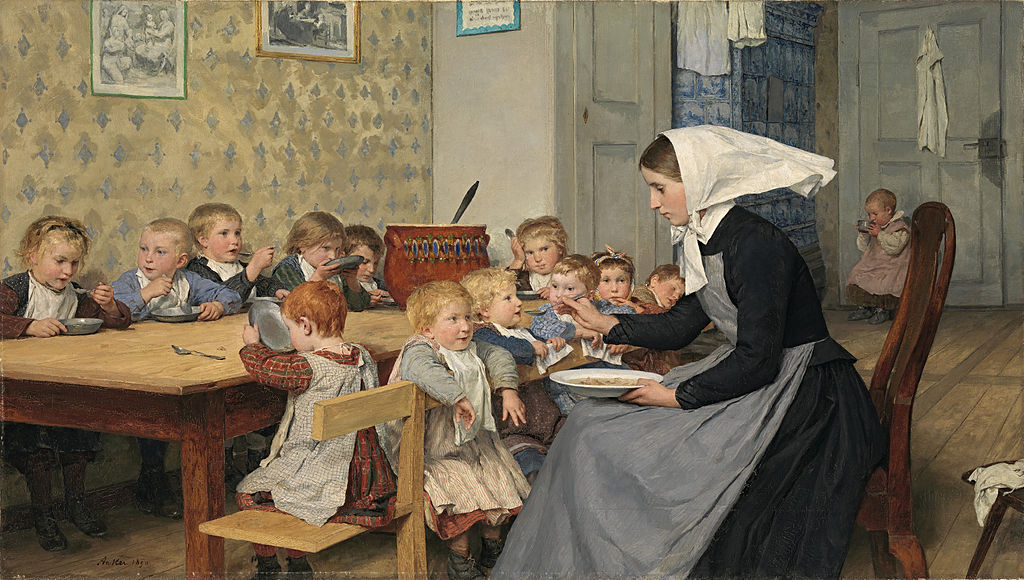
 Ideological rhetoric not only lionizes heroes but also deplores villains. It tells us what we should like and what we should hate. Neoliberal ideologues, in this regard, typically praise deregulation, privatization, and the market economy while condemning the “nanny state” as especially villainous. If we reflect critically on the nanny-state rhetoric, we might be able to limit the persuasiveness of one of neoliberalism’s most-favored notions and in the process recognize who is most powerful in our society.
For starters, casting anything related to a nanny in a negative light is curious. Popular culture, after all, includes an abundance of perky, resourceful, and indomitable nannies, all of whom are devoted to the well-being of those under their care. Thoughts of Mary Poppins, Fraulein Maria in “The Sound of Music,” and Nanny McPhee win a warm spot in just about everybody’s hearts. I always enjoyed the resourcefulness of Fran Fine, who was played by the feisty Fran Drescher in the popular 1990s sitcom “The Nanny,” while my favorite boyhood nanny was the large anthropomorphic dog Nana in the Peter Pan stories. She wore a charming bonnet, built castles out of toy blocks, and lovingly made the beds for the Darling children.
How and why does the image of a nanny become a negative one for the neoliberal ideologue? The threshold problem with suspect nannies from the neoliberal perspective is that they somehow oversee not children but rather adults. In fact, according to neoliberal rhetoric, these nannies treat those adults as children, giving them more advice than they need and suffocating them with over-attentiveness. Villainous nannies become mini-dictators in the lives of those they look after.
Apparently, coordinated bands of raging nannies are even able to take over the government and establish a menacing and freedom-denying “nanny state.” According to the ideological rhetoric of the Cato Institute, a neoliberal think-tank that spends a great deal of time attempting to direct the nation to the right:
One of the most disturbing trends in government over the last 30 years has been the collection of laws, regulations, and binding court decisions that make up the “nanny state.” These laws represent government at its most arrogant. Their message is clear: politicians and bureaucrats know more about how to live your life than you do.
The laws and regulations of the “nanny state” that are cast as especially alarming and over-protective are often found in the public health area. These laws and regulations purportedly dictate such things as speed limits, motorcycle helmets, informative cigarette- packaging, and bans on the consumption of large sugary soft drinks – the proverbial “Big Gulp.”
If we reflect on the nanny-state rhetoric, we might quickly recognize how misleading it is. The last time I looked, nannies for adults were hard to find. Laws and regulations of the sort noted above do not truly control people’s lives rather promote the health and well-being of adults and children alike. Sophisticated business interests rather than wild-eyed nannies are actually the most powerful forces in our political economy.
Indeed, it might bear underscoring that business interests themselves provide crucial financial support for the neoliberal campaign against the nanny state. Exploiters and profit-seekers, after all, have the most to gain if laws and regulations promoting the public’s health are removed from the books and suspected nannies are driven from the halls of government.
This is great that you provide a space to comment, but please attend to my criticism of your article above.
The nanny states laws about what we eat and wear are suffocating but not the big issue. These annoying little laws however have set the culture too far to the left so that now, simply being a proud, able man is villianized while thugs and criminal behavior is unchallenged because the nannies don’t want to appear racist and they don’t have enough testosterone to accomplish an arrest.
Quite simply, the nanny state is over-policing the gentle people who do not flee from police while letting truly violent behavior go thereby increasing crime and establishing an atrocious sub-culture in Western societies.
The “nanny state” laws do not have much to do with conventional policing. Some think they infringe personal liberty, but in my opinion the connection to hard-nosed policing that you suggest is weak.
A line between nanny-like prohibitions and legal protections of the commons (including taxpayer cost-avoidance) may be more precisely drawn if we look at proposed legislation objectively to weigh whether and to what extent it protects society at large (and taxpayers, specifically) versus protecting only individuals “from themselves” (rather than protecting them from each other). “Big Gulp” prohibitions are pretty invasive upon individuals, yet yield little or no protection of society at large, and therefore, I would place them in the nanny-state category. Smoking bans, in PUBLIC spaces, on the other hand, provide absolutely reasonable protection of non-smokers from smoke (now that smoke has been proven to be carcinogenic). Motorcycle helmets are closer to the “line” because on one hand, if someone doesn’t care about their own skull, who am I to insist that it be protected? On the other hand, if a motorcycle rider’s head injury is likely to cause additional expense from any public treasury, then a helmet law is reasonable. Further, if a rider wants insurance, the insurer ought to be allowed to specify terms that do not pay at least certain portions of claims if an accident were to increase a claim for medical expense that would have been avoided by using a helmet. So, legislators ought to evaluate what ox may be gored, how much it will cost, and who must pay for the repair.