
Do Video Games Dream of Electric Speech?
 Tim Wu had an interesting op-ed column in Wednesday’s New York Times: Free Speech for Computers? Wu’s op-ed is in part a response to a paper co-authored by Eugene Volokh, entitled “First Amendment Protection for Search Engine Search Results.” (See also Volokh’s response; criticism by Tim Lee and Julian Sanchez.) Volokh and his co-author, Donald Falk of Mayer Brown, argue that search results, for example those produced by Google (which commissioned the paper), should be treated as speech worthy of First Amendment protection. (Hail, Search King!) Wu argues that this argument threatens to “elevate our machines above ourselves” by “giv[ing] computers . . . rights intended for humans.” The purpose of the First Amendment, Wu writes, is “to protect actual humans against the evil of state censorship.” But computers don’t need that protection: “Socrates was a man who died for his views; computer programs are utilitarian instruments meant to serve us.” Wu concludes: “The line can be easily drawn: as a general rule, nonhuman or automated choices should not be granted the full protection of the First Amendment, and often should not be considered “speech” at all.”
This debate intrigues me, not so much for how it applies to Google (although that is interesting too), but for how it applies to video games.
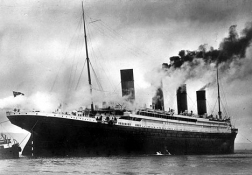 One hundred years ago this weekend, the RMS Titanic hit an iceberg off the coast of Newfoundland and sank. The event was big news then and has remained so for a century, due in no small part to the number of wealthy people who died or were aboard:
  As Professor Mazzie