
A Modest Proposal for Ending Gridlock in Washington
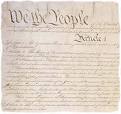 I have a proposal to vastly improve politics in Washington, and it should have bipartisan appeal—or, at least, it should appeal to one party this year and to the other party 2 or 4 years from now. Given the new practical reality that it takes 60 votes to get anything done in Washington, and that there are never 60 votes for anything useful, it seems like a perfect time to consider a new amendment to the Constitution. It would need to be proposed by a convention called for by 2/3 of the states, as the other method probably wouldn’t work:
RESOLUTION
Proposing an amendment to the Constitution of the United States
relating to the legislative power.
Resolved by this Constitutional Convention assembled (a majority of the delegates concurring therein), That the following article is proposed as an amendment to the Constitution of the United States, which shall be valid to all intents and purposes as part of the Constitution when ratified by the legislatures of three-fourths of the several States:
Article —
Section 1. All legislative powers granted by this Constitution shall be vested in a Congress of the United States, which shall consist solely of a House of Representatives.
 This week: Those who don’t do, can’t teach? Also, an unconstitutional village ordinance on real estate for-sale signs may serve as a symbol of racial integration; the surprising stem cell research injunction; and is there a “private action” requirement in the Constitution?