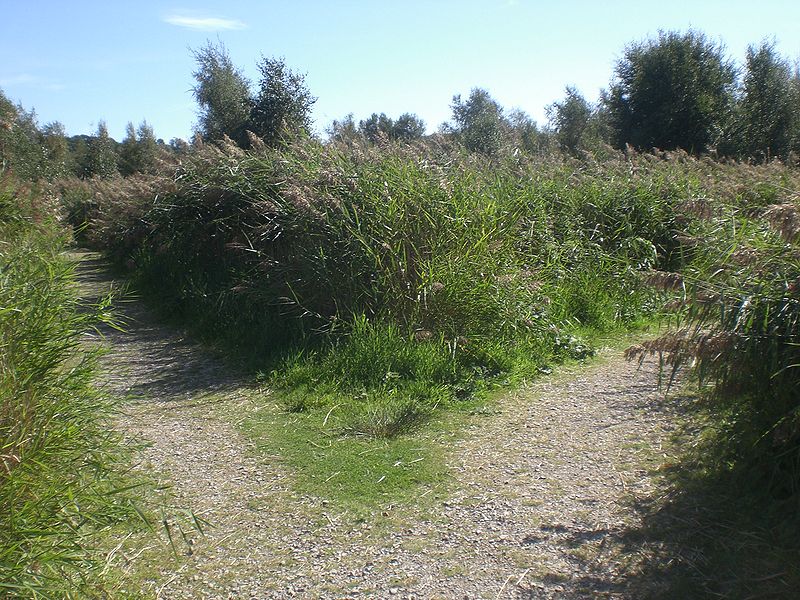
Finding Your Own Path

Life sometimes turns out not at all as we planned.  And that can be a very good thing.

Take my life, for example.  As an undergraduate, I had it all planned:  I was going to be a career woman in corporate public relations or a professional writer, living in a large city — Chicago, perhaps — unencumbered by family demands because I decided I did not want children.  Fast forward a couple of decades and here I sit, in the living room of my home in suburban Madison, Wisconsin, a mother of two sons, a lawyer, and a law professor.

How and when did that master plan change?  As I think it must be for most people, there wasn’t necessarily one grand event that put me on a different path.  Instead, it was little choices I made along the way, little, but, as it turned out, significant choices, such that one day I woke up and realized I was in a place that vastly differed from where I thought I’d be. When I think of it, I am always reminded of something author Marion Winik said in her book Rules for the Unruly:  Living an Unconventional Life: “The path is not straight.”

Continue ReadingFinding Your Own Path

It’s National Punctuation Day

SemicolonToday is National Punctuation Day.  Yes, there really is such a day (it’s the sixth annual one, actually), and grammar geeks like me are celebrating.  There’s even a national baking contest where contestants are supposed to bake something in the shape of a punctuation mark.

Lynne Truss, the author of the best-selling book Eats, Shoots & Leaves:  The Zero Tolerance Approach to Punctuation, says that “[P]unctuation is a courtesy designed to help readers understand a story without stumbling.”  It’s a courtesy that applies not only to stories, of course, but to any written product – letters, articles, memos, briefs, and emails.  Punctuation clarifies the writer’s meaning.  Take these seven words:  A woman without her man is nothing.  There are two very different readings of this sentence, depending on how it is punctuated.  It could be:  A woman, without her man, is nothing.  Or it could be:  A woman:  without her, man is nothing.  What a difference punctuation makes!

What’s your favorite punctuation mark?

Continue ReadingIt’s National Punctuation Day

Lawyers & Social Networking

computer_with_scales3An article in today’s New York Times talks about what can happen when lawyers open up online.  The article begins with the story of Sean Conway.  Attorney Conway took to his blog to state exactly how angry he was with a Fort Lauderdale judge.  He said she was an “Evil, Unfair Witch.”  But because Conway is a lawyer, his online ranting resulted his being reprimanded and fined by the Florida bar.

Of course, lawyers aren’t the only ones whose livelihood is affected by their online postings.  There’s this, and this, and this.  Having one’s online activity be the basis of dismissal has increased so much that a new phrase – “Facebook fired” – has entered our lexicon. 

But being a lawyer means something more.  Lawyers have long been held to a higher standard of conduct than other members of society.  As the New York Times article points out, your “freedom to gripe is limited by codes of conduct.”  Thus, criticizing the court or revealing client details online – even if the lawyer thinks she’s veiled the true subject – can cause trouble for a lawyer because she runs the risk of violating rules of professional responsibility.

Continue ReadingLawyers & Social Networking