Earlier today, in Bond v. United States (No. 09-1227), the Supreme Court ruled that the defendant should have been permitted to raise a Tenth-Amendment challenge to the chemical-weapons statute that she was convicted of violating. In response to her indictment for violating 18 U.S.C. § 229, Bond had argued
that the conduct with which she is charged is “local in nature” and “should be left to local authorities to prosecute” and that congressional regulation of that conduct “signals a massive and unjustifiable expansion of federal law enforcement into state-regulated domain.” Record in No. 2:07-cr-00528-JG-1 (ED Pa.), Doc. 27, pp. 6, 19. The public policy of the Commonwealth of Pennsylvania, enacted in its capacity as sovereign, has been displaced by that of the National Government. The law to which petitioner is subject, the prosecution she seeks to counter, and the punishment she must face might not have come about if the matter were left for the Commonwealth of Pennsylvania to decide. Indeed, petitioner argues that under Pennsylvania law the expected maximum term of imprisonment she could have received for the same conduct was barely more than a third of her federal sentence.
The Third Circuit, however, ruled that Bond lacked standing to raise her constitutional objections.
In reversing this decision, the Court did not address the merits of the objections. As a result, it’s hard to say whether there is any sympathy on the Court for the basic claim that the Tenth Amendment may be violated when a federal law criminalizes conduct that is “local in nature.” Still, it is interesting to put Bond alongside last month’s decision in Fowler, in which the Court cited similar federalism concerns in rejecting an expansive interpretation of a different federal criminal statute. Perhaps the Court is entering a new phase of heightened concern over the federalization of criminal law.
Cross posted at Life Sentences Blog.

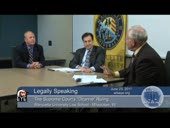 On June 23, I participated in a discussion concerning the Wisconsin Supreme Court’s decision in Ozanne v. Fitzgerald, 2011 WI 43, on the Wisconsin Eye public affairs show “Legally Speaking.” Rick Esenberg and I continued our ongoing difference of opinion regarding this litigation, which seems to generate an endless supply of novel and contentious legal questions. You can view the program at this link.