An Analysis of the Israel Passport Case, Zivotofsky v. Kerry

Recently the Supreme Court granted certiorari in Zivotofsky v. Kerry to resolve an important question in U.S. foreign relations law: does the power to recognize foreign states and governments belong exclusively to the President, or do the political branches hold it concurrently? More specifically, the case concerns the constitutionality of Section 214(d) of the Foreign Relations Authorization Act of 2003, which requires that upon request from a U.S. citizen born in Jerusalem the Secretary of State must record “Israel” as the place of birth on the individual’s passport. After signing the bill into law, President Bush declined to honor its terms, and President Obama has done likewise. Both have argued that the passport requirement impermissibly interferes with the President’s recognition power because it contradicts a longstanding U.S. policy not to acknowledge the sovereignty of any state over Jerusalem. The Zivotofskys appear to agree that honoring the requirement would amount to U.S. recognition of an Israeli state that includes Jerusalem, but contend that the statute is constitutional and binding on the President because Congress shares in the recognition power. Oral argument is scheduled for the fall. If you’re interested, I wrote a brief analysis of the case over at the international law blog Opinio Juris. You can read it here.

Continue ReadingAn Analysis of the Israel Passport Case, Zivotofsky v. Kerry

Ninth Circuit Rules on Free Speech Issue in Schools

clip_image002Late last month, in Dariano v. Morgan Hill Unified School District, the Ninth Circuit held that the Principal of Live Oak High School properly exercised the school’s rights when he offered students wearing T-shirts bearing the American Flag on Cinco de Mayo the choice to either turn their shirts inside out or go home for the day.  The Principal’s action came on the heels of threats of violence from Mexican-American students earlier in the day and the occurrence of a slight physical altercation on Cinco de Mayo 2009.  The students were not disciplined in any way for their decisions to go home rather than turn their shirts inside out.

The court rested its decision on the First Amendment challenge made by the students on the 1969 Supreme Court case Tinker v. Des Moines Independent Community School District, 393 U.S. 503.  In Dariano, the Ninth Circuit applied Tinker to find that the school could restrict student speech based upon officials’ reasonable belief that the T-shirts would cause a “material and substantial” disruption in school activities.  The Ninth Circuit distinguished the facts of Dariano from those of Tinker by finding that in Tinker, there was no threat of disruption from the wearing of the armbands, whereas there were actual threats of violence throughout the day at Live Oak High School.

Continue ReadingNinth Circuit Rules on Free Speech Issue in Schools

State Legislation on the “Sea of Japan” / “East Sea”

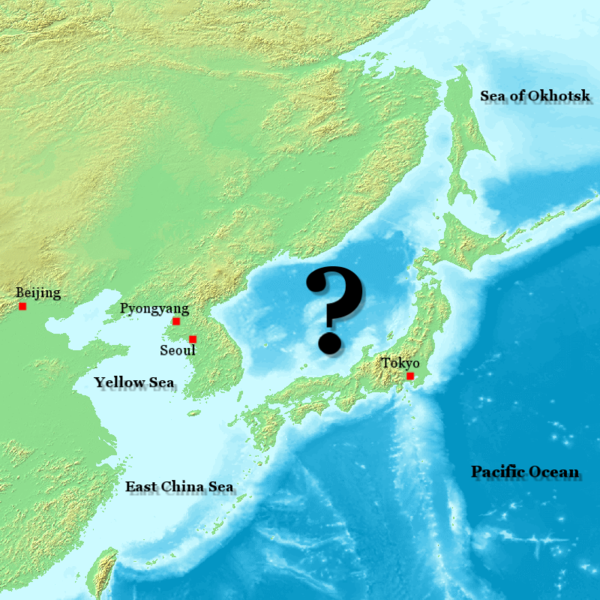
600px-Sea_of_Japan_naming_disputeRecently certain Korean American groups have begun lobbying for state legislation requiring public school textbooks to explain that the “Sea of Japan” is also called the “East Sea.” Japan prefers and uses the former, while South Korea the latter. Bills on this issue are currently at varying stages of adoption in Virginia, New Jersey, and New York, and are part of a broader campaign to raise public awareness about Japan’s colonial and wartime behavior. In this post, I want to address briefly the constitutionality of this legislation under the doctrine of foreign affairs preemption. My view is that the legislation is likely permissible and not preempted.

I’ll begin with the key features of foreign affairs preemption. In American Insurance Association v. Garamendi, the Supreme Court explained that the constitutionality of a state action carrying more than “incidental” foreign policy consequences hinges on whether the action conflicts with federal foreign policy. In the presence of a clear conflict, the state law is invalid. Absent such a conflict, constitutionality depends primarily on the strength of the state interest at stake, as judged “by standards of traditional practice.” This means that non-conflicting state action is likely to be permissible if it falls within a traditional competence of state governments.

Continue ReadingState Legislation on the “Sea of Japan” / “East Sea”