
Simon to Speak on Punishment for Murder
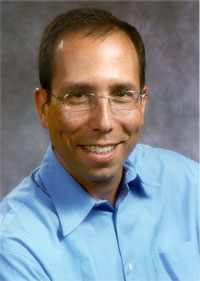
I’m looking forward to the upcoming George and Margaret Barrock Lecture on Criminal Law.  Berkeley Professor Jonathan Simon will be visiting us on January 24 at 12:30 to speak on punishment for murder.  Here is the teaser:

Although the death penalty may be dying out in the United States, the end stage of capital punishment leaves us grasping more than ever for principles that could govern the power to punish those who are convicted of society’s most feared and loathed category of crime. This need is particularly acute in the United States, where the rise of general incapacitation as the dominant purpose of punishment has produced sentences that are far in excess of international and historic American standards. Professor Simon will suggest that these sentences help to anchor an overall structure of imprisonment that appears unjust and unsustainable, argue for a new version of selective incapacitation limited by dignity as the central purpose of imprisonment, and propose a restructuring of the law of murder to effectuate those goals.

More information about Simon’s lecture, including details about how to RSVP, is here

Continue ReadingSimon to Speak on Punishment for Murder

Preview of Sykes, the Supreme Court’s Latest ACCA Case

The Supreme Court will hear argument on January 12 in Sykes v. United States, the latest entry in its recent series of cases on the Armed Career Criminal Act.  This case may provide a good opportunity for the Court to clarify what state of mind is required for a prior conviction to trigger the ACCA’s fifteen-year mandatory minimum.  (For background on the ACCA, see my posts herehere, and here.)

The Court created the state-of-mind problem in Begay v. United States, 553 U.S. 137 (2008), which held that a prior conviction does not count as a “violent felony” under the ACCA unless the crime was “purposeful, violent, and aggressive.”  This is a rather mysterious phrase.  Although the word “purposeful” is a familiar culpability term, it is not clear what “violent” and “aggressive” are meant to connote in this context.  And even “purposeful” has some ambiguity, as any law student who has ever wrestled with the elusive distinction between “general intent” and “specific intent” will tell you.

Begay itself indicated that DUI does not satisfy the PVA test because DUI is a strict liability offense.  This teaches that some culpability is indeed required for an offense to count as a “violent felony,” but Begay provided little guidance beyond that.

Then came Chambers v. United States, 129 S. Ct. 687 (2009).  

Continue ReadingPreview of Sykes, the Supreme Court’s Latest ACCA Case

Does the Constitution Protect the OWI Suspect?

No. I am willing to argue that no other crime has caused lawmakers and courts of this land to bend the Constitution more than drunk driving. The traditional ideals we have in criminal law of a defendant’s Constitutional protections, such as your right to be free from illegal stop, search, or seizure; your right to fully cross examine your accuser; your right to present a defense; and your right to due process, have been slowly eroded away over the years to the extent that many of these defenses and rights are extinct.

The problem traces its way back to the legislature’s constant bogeyman, the need to protect the public, an important and serious role. Drunk driving has been a danger to society in the United States since there has been alcohol (I would guess long before 1776) and modern automobile transportation (let’s just go back to 1908 and the Model T). Safe to say, it has been a while. What we may think of as the modern attitudes and laws about drunk driving really only stretch back 30 years. In this vein, let’s take a modern look at drunk driving law and policy as it stands today.  

Continue ReadingDoes the Constitution Protect the OWI Suspect?