
Seventh Circuit Criminal Case of the Week: Yes, Eco-Terrorists Are Real Terrorists
 On the night of July 20, 2000, Katherine Christianson, Bryan Rivera, and two companions damaged or destroyed more than 500 trees at a United States Forest Service facility. Was it a prank? A dare? A harvest for the thneed industry? No, Christianson and Rivera were members of the eco-terrorist group Earth Liberation Front, and their target was the Forest Service’s genetic-engineering experiments on trees in Rhinelander, Wisconsin. ELF issued a press release the next day claiming responsibility for the attack and asserting that “the Forest Service, like industry, are [sic] capitalists driven by insane desire to make money and control life.”
Eight years later, Christianson and Rivera pled guilty to destroying government property and were sentenced to two and three years of prison, respectively. On appeal, Rivera challenged the district judge’s decision to apply the terrorism enhancement of the sentencing guidelines. He argued that he was not a terrorist because his motivation was “the hope of saving our earth from destruction.” The Seventh Circuit, however, rejected his argument and affirmed the sentence in United States v. Christianson (No. 09-1526) (Manion, J.).
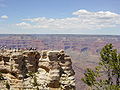 Many people value certain environmental resources even if they have never actually visited or “used” those resources. For example, a person might assign what economists call “nonuse values” to the Grand Canyon, the Great Barrier Reef, or a particular endangered animal species even if she has never hiked the Canyon, gone scuba diving on the Reef, or personally encountered that endangered species. Some scholars have categorized nonuse values into three types: the “option value” is the value a person places on preserving an environmental resource so that she has the option of using it in the future; the “bequest value” is the value the person places on being able to preserve the resource for the enjoyment of future generations; and the “existence value” is the value the person places on the mere knowledge that the resource exists.
  Since early 2008, there has been an interesting project in IP philanthropy. At that time, the World Business Council for Sustainable Development (WBCSD) established an initiative called