
Farewell to Professor Julian Kossow
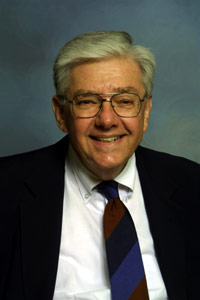 Many of us on the Marquette Law School faculty were saddened to learn of the death earlier this month of Professor Julian Kossow. Julian had a long and varied career, primarily in academia and real estate. As he recounted in this blog post, Julian went to law school because of his frustration as a developer in dealing with lawyers. Once in law school, though, he found that he was fascinated by the law as a field of study. Legal academia was so much to his liking, in fact, that he returned to it as a professor after graduation and a clerkship on the D.C. Circuit, joining the Georgetown faculty in 1970. Later, he practiced as a real-estate lawyer and then resumed his career as a developer.
Julian could not resist the call of law-teaching indefinitely, though. In the 1990’s, he began a second career as a law professor, teaching at St. Thomas and Stetson in Florida, and then landing at Marquette in 2004. We were delighted to have him as a faculty colleague for the next decade.


 My grandfather recently passed away. It wasn’t Covid; not directly at least. A lifetime of kidney problems and other assorted ailments weren’t helped by the pandemic-induced lock-down. Rather than go out to eat or graze at the local grocery store buffet, as he normally would, he dined on pre-cooked meals and unsurprisingly his health suffered for it. So no, Covid didn’t kill him, but it certainly helped. In legal-speak it was more of a proximate cause.