
Priorities for the Next President: Don’t Change a Thing About Tort and Insurance Law

I am very happy with the state of tort and insurance law. Thus, my message to the new president would be: Don’t change a thing.

I suspect that will be true if a Republican is elected president. If a Democrat is elected, I also suspect there will be little change in tort law brought about by Congressional action, especially when one considers the financial support the organized plaintiffs’ bar is providing to the dems, particularly to their presidential candidate.

However, if the November election results in the continuation of Democrat control of Congress and puts a Democrat in the White House, there could be a significant impact on insurance law. That impact could well be a switch from state to federal regulation of insurance.
Continue ReadingPriorities for the Next President: Don’t Change a Thing About Tort and Insurance Law

Legislative Usurpation of Jury Deliberations

It is now beyond question that the use of automotive safety belts goes a long way to reducing the number of injuries and deaths occasioned by auto accidents. When those belts are combined with the air bags in newer models of motor vehicles, the survivability of motor accidents increases greatly.

It is somewhat of an historical anomaly that while auto manufacturers were required by law to install safety belts in new vehicles starting about the middle of the last century, the same laws did not mandate the use of those belts by vehicle occupants. A strong case can and has been made that regardless of statutory mandate, a reasonable person of ordinary prudence would make use of available automotive belts. Since most states now require safety belt use, e.g., Wis. Stat. § 347.48(2m), that argument is no longer necessary. Thus the legislatures have established a standard of care.

However, an example of the lobbying power of the plaintiffs’ personal injury bar may be seen in the fact that many state belt use statutes contain provisions limiting reduction of an auto accident victim’s damages if he or she did not use an available safety belt. For example, Wis. Stat. § 347.48(2m)(g) provides that damages may not be reduced by more than fifteen percent.

Continue ReadingLegislative Usurpation of Jury Deliberations

Economic Loss: Learning From Insurance Law

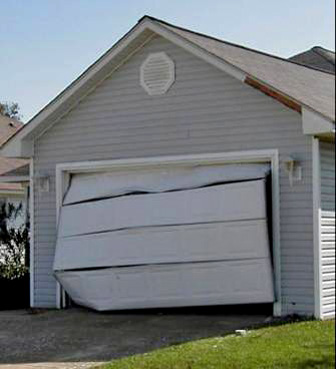
My colleague Ralph Anzivino has a helpful new article that explores the fine line between contract law and tort law: The Economic Loss Doctrine: Distinguishing Economic Loss from Non-Economic Loss, 91 Marq. L. Rev. 1081 (2008). As developed by Wisconsin and many other states, the economic loss doctrine indicates that purely economic losses are recoverable in contract, while non-economic losses are recoverable in tort. The difficulty lies in distinguishing economic from non-economic, particularly with respect to property damage resulting from product failure. (Imagine, for instance, a defective garage door opener that causes a garage door to close on the owner’s car.)

Continue ReadingEconomic Loss: Learning From Insurance Law