Stare Decisis and Fractured Majorities

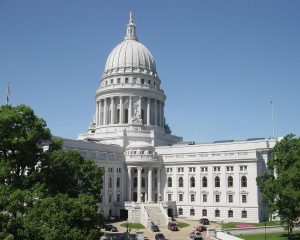
The Wisconsin Capitol in Madison, Wis.[The following is a guest post from Daniel Suhr ’08, a prior guest alumni contributor to the Blog.]

On June 25th the Wisconsin Supreme Court handed down its decision in Koschkee v. Evers, 2019 WI 76, which is in many ways a rerun of questions raised in Coyne v. Walker,  2016 WI 38.  Coyne was, to put it mildly, a jurisprudential mess: “Our mandate resulted from a one-justice lead opinion, a two-justice concurrence, and a one-justice concurrence, all of which agreed only on the outcome of the case” (Koschkee, ¶ 5), plus a principal dissent representing the views of three justices, and a secondary dissent representing the views of only two justices.

Chief Justice Roggensack’s Koschkee majority (which commanded four votes on everything except ¶ 17) briefly discussed the stare decisis weight of Coyne in an early footnote, stating, “When we are asked to overturn one of our prior decisions, lead opinions that have no common legal rationale with their concurrences are troublesome.” (¶ 8, n.5.)  They are troublesome, the Court continues, because it is hard to run their rationale through the traditional stare decisis analysis when there is no definitive rationale to analyze.

Justice Bradley’s dissent, by contrast, says the majority “throws the doctrine of stare decisis out the window.” (¶ 62.) To the Court’s argument from the lack of a common rationale in Coyne, she replies, “[T]he split nature of the Coyne opinion is of no import. The mandate of Coyne was clear despite the fractured nature of the opinions. Although the four justices in the majority subscribed to differing rationales, they agreed on the essential conclusion….” (¶ 73.)

In my view, the Chief Justice has the better of the argument. 
Continue ReadingStare Decisis and Fractured Majorities

Unconscious Mistake: Wisconsin Implied Consent Statute Upheld for Wrong Reasons

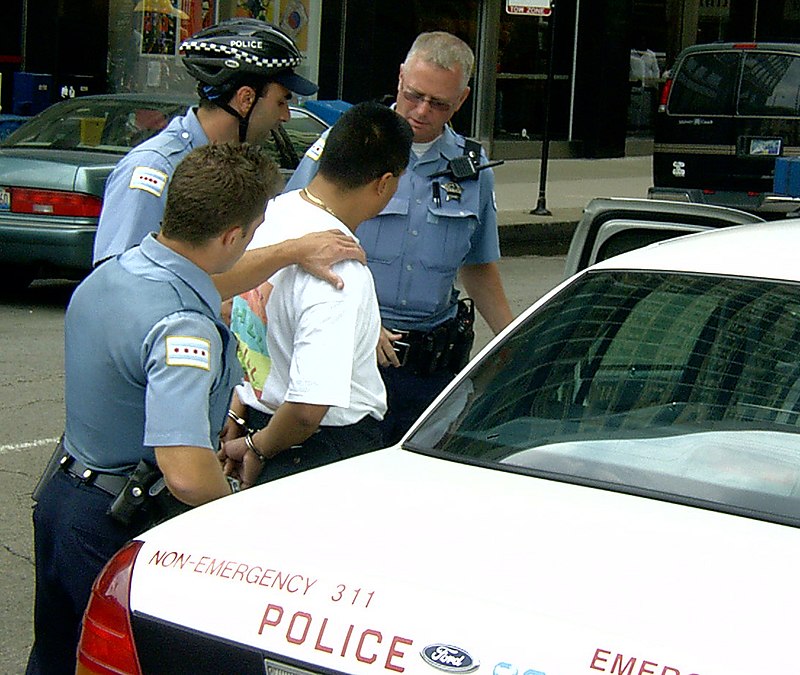
A man being arrested by the Chicago police department.It’s no secret that Wisconsin has long been known for having some of the most lenient drunk driving laws in the country. Throughout the spring semester I saw firsthand just how limited the consequences can be—compared to other states like my native Illinois—as first-time offenders were simply cited for ordinance violations in Milwaukee Municipal Court and not charged criminally. However, there have been efforts in recent years to crack down on drunk driving in a state famous for its beer. State legislators have passed a number of measures to deal help law enforcement, and this past week one such measure found itself before the United States Supreme Court.

In its decision in Mitchell v. Wisconsin, the Court upheld Wisconsin’s implied consent statute and ruled that states are not restricted from taking warrantless blood samples from unconscious drunk-driving suspects by the Fourth Amendment.

In 2013, Mr. Mitchell was arrested in Sheboygan Wisconsin after police, who were responding to reports of an intoxicated driver, found him drunk and disheveled at a local beach. Mitchell stated that he wound up there after he felt too drunk to drive. The officer decided not to preform sobriety tests at the scene because Mitchell’s condition would have made it unsafe to do so. Instead, a preliminary breath test was administered with a resulting BAC of 0.24. While being transported to the police station Mitchell’s condition deteriorated and he was eventually taken to the hospital. Upon arrival, Mitchell was completely unconscious. He was then read the standard Informing the Accused form and a blood sample was taken, all without him regaining consciousness. That sample indicated a BAC of 0.22. While consent to a blood draw is normally withdrawn when the Informing the Accused is read—a form that actually asks if the subject will submit to an evidentiary test—Mitchell was obviously unable to withdraw consent in his condition.

But why was Mitchell required to withdraw consent in the first place?

Continue ReadingUnconscious Mistake: Wisconsin Implied Consent Statute Upheld for Wrong Reasons

Risky Precedents: A Brief Overview of the 2018 Wisconsin Lame Duck Laws & the Separation of Powers Doctrine

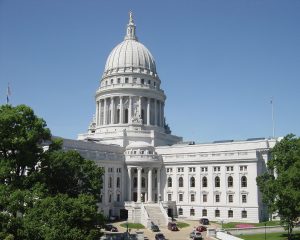
The Wisconsin Capitol in Madison, Wis.On December 14, 2018, outgoing Wisconsin Governor Scott Walker signed into law three bills that were rapidly passed by the Republican-held state legislature during an extraordinary session following the November 7, 2018 election that resulted in Democrats winning each statewide elected seat. Along with serving various other goals of the Republican legislative majority, the trio of so-called “lame duck” laws were designed to curb the powers of incoming Governor Tony Evers’ administration before he took office in the following ways:

  • Transfer control over leadership appointments to the Wisconsin Economic Development Corporation (“WEDC”) from the executive branch to the legislature until September 2019. Then-candidate Evers campaigned on disbanding the WEDC.
  • Grant the legislature power to intervene in lawsuits in circumvention of the Wisconsin Attorney General’s office when state statutes are challenged. This provision of the law provides for the use of taxpayer dollars to pay private lawyers to defend the interests of the Republican legislative majority.
  • Give the legislature the ability to sign off on and decide how to spend court settlements – a power traditionally held by the Attorney General’s Office.
  • Provide the legislature the power to permanently block any regulations written by the state’s numerous administrative agencies, which are part of the executive branch.
  • Require the executive branch to get permission from the legislature to make any policy changes within the state’s health care and public benefit programs.

Since December 14, 2018, several lawsuits have been filed raising various legal challenges to the measures imposed by the lame duck legislation. One of the primary legal challenges to the lame duck legislation is constitutional in nature – i.e., that much of the new legislation’s limiting effects on the executive branch violate the principle of separation of powers embodied in the Wisconsin Constitution.

Continue ReadingRisky Precedents: A Brief Overview of the 2018 Wisconsin Lame Duck Laws & the Separation of Powers Doctrine