
Stanley Kutler, American Legal Historian
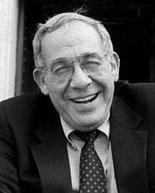 The obituaries for Stanley Kutler, a retired University of Wisconsin professor who passed away on April 7, tended to stress Kutler’s large role in obtaining public access to the Nixon Watergate tapes. Only 63 hours of those tapes had been released before Kutler’s lawsuit against the National Archives and Records Administration, but his efforts resulted in the release of more than 3,000 additional hours. Kutler and other scholars were then able to use material on the tapes to detail the Nixon Administration’s frequent and sometimes shocking abuses of political power.
Unfortunately, the obituaries largely overlooked Kutler’s decades of extraordinary work as a legal historian. His numerous books and articles include Judicial Power and Reconstruction Politics (1969), Privilege and Creative Destruction: The Charles River Bridge Case (1971), and American Inquisition: Justice and Injustice in the Cold War (1984). All of these works explored specific cases in the context of broader historical movements. The facts and social complexities of the cases were always more important for Kutler than were the rules and corollaries spouted from one appellate bench or another.
Kutler’s work as a legal historian placed him at the center of the “new legal history” that emerged during the 1960s.
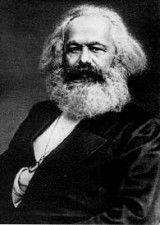 Religious people sometimes express disdain for Karl Marx and his philosophies because he supposedly characterized religion as “the opiate of the masses.” It turns out that this isn’t exactly what Marx said. Furthermore, he wasn’t necessarily negative about religion and its role in social life.
 Those who follow efforts to use law to reduce smoking will be aware the United States Court of Appeals for the District of Columbia found in R.J. Reynolds v. FDA, 696 F.3d 1215 (D.C. Cir. 2012) that mandatory graphic imagery on cigarette packs was a violation of commercial speech rights. As a result of the decision, cigarette packs continue to have only prosaic warnings, which go not only unread but also, for the most part, unnoticed.