
What Difference Did the Constitution’s Three-Fifths Clause Really Make?
 This is one in a series of posts relating to slavery and the Constitution as part of Marquette University’s observation of the sesquicentennial of the Emancipation Proclamation during the 2012-2013 academic year.
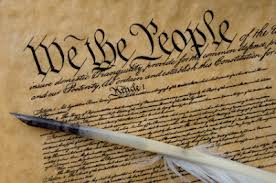
The United States Constitution’s infamous “Three-Fifths Clause” dictated that for purposes of representation in the House of Representatives African-American slaves were to be counted as less than full persons. The somewhat obliquely worded section of Article I, Section 2, provided:
Representatives and direct Taxes shall be apportioned among the several States which may be included within this Union, according to their respective Numbers, which shall be determined by adding to the whole Number of free Persons, including those bound to Service for a Term of Years, and excluding Indians not taxed, three fifths of all other Persons.
Although this provision has traditionally been cited as evidence that the Constitution was a pro-slavery document (though never actually using the term “slavery”), historians have more recently begun to emphasize the “anti-slavery” aspects of the clause, or at least to argue that it reflects an ambivalence toward slavery among the document’s drafters. Since white women and children, free blacks, and property-less whites were counted as full persons for enumeration purposes, even though they lacked the right to vote, hold office, or serve on juries in most situations, the decision to treat enslaved people differently from others who lacked full citizenship rights was clearly to the disadvantage of those who lived in states with large slave populations.
The actual effects of the Three-Fifths Clause on Southern representation in the House of Representatives were not as significant as one might think. As it turns out, counting slaves as full persons would not have shifted the balance of power in the House of Representatives to the South at any point between the ratification of the Constitution and the onset of the Civil War.
In 1820, for example, 47% of the U.S. population lived in Southern states (i.e., states below the Mason-Dixon line and the Ohio River). Had slaves been fully counted for representation purposes, Southern delegates in the 1820’s would still have been outnumbered in the House of Representatives by a margin of 113-99, or possibly 112-100, rather than the actual 123-89 margin.
One might have thought that even this small difference would have mattered in the Missouri Crisis of 1819-1820, when a North-South division over the future of slavery in Missouri nearly erupted in a major constitutional crisis (which Thomas Jefferson compared to a “fire bell in the night”).
On March 1, 1820, the House of Representatives for the second time passed a Missouri statehood bill that would have admitted the Show Me state to the union subject to restrictions providing for the gradual elimination of slavery in the jurisdiction. The vote on the bill was 91 to 82, with 39 representatives not voting. The division was on a strictly geographical basis with Southerners bitterly denouncing the action.
An additional 10 or 11 Southern representatives in 1820, all voting against the bill, would seemingly have led to its defeat, presumably by a vote of 92 or 93 to 91. However, on March 1, 1820, the passage of the Northern bill was a foregone conclusion. Had there been a chance that the bill would be defeated, a larger number of Northern voters in the House would almost certainly have voted, given that 32 of the 39 abstaining voters were from Northern states.
Since the Northern states would still have had an absolute majority in the House, even if there was no Three-Fifths Clause, the anti-slavery version of the Missouri statehood bill would have passed the House of Representatives, regardless of what formula was used to establish representation.
However, the March 1 vote was ultimately of little consequence. The Senate at the same time endorsed the admission of Missouri as a slave state, as a clear majority of white Missourians wished. The conflicting positions of the two houses were reconciled by House Speaker Henry Clay in what came to be known as the Missouri Compromise.
Under Clay’s plan, Maine, previously the non-contiguous northern part of Massachusetts, was to be admitted as a separate free state while Missouri was to be admitted as a slave state. In addition, slavery was to be prohibited in any future state created out of territory north of the southern border of Missouri (excepting, of course, Missouri), while it would be permitted south of the line, which at that time included only the Arkansas Territory. The House approved this modification the following day by a vote of 90-87, thereby negating the impact of the previous day’s vote.
Moreover, in the years after 1820, the Southern disadvantage grew even smaller. According to the 1850 United States Census, approximately 39% of the United States population, free and slave, lived in Southern states, and that year the South controlled 38% of the seats in the House of Representatives. Although the Three-Fifths Clause reduced the “population” of the South about 1.5 million “persons,” the distribution of the slave population was such that the Clause had very little impact on the assignment of representatives, costing the region only two or three representatives.
When the Thirteenth Amendment was ratified in December of 1865, the Three-Fifths Clause was consigned to the dustbin of constitutional history along with the Fugitive Slave Act and the constitutional provision in Article V prohibiting the abolition of the international slave trade before 1808, all embarrassing reminders that, reluctantly or not, our Founding Fathers accepted the legitimacy of slavery in our nation’s foundational document.
