Victory For ObamaCare!

The decision in National Federation of Independent Business v. Sebelius is a victory for the supporters of the Affordable Care Act, and a fairly broad vindication for the constitutionality of the law.  Here are my initial thoughts:

This is a big win for the Obama Administration.  The only portion of the law struck down is the Medicaid expansion provision, on the grounds that Congress cannot threaten to take away funds previously granted to the States if the States fail to accept new conditions.  This strikes me as a fairly reasonable gloss on the case of South Dakota v. Dole and, at the same time, a constitutional interpretation that still allows Congress a fair amount of flexibility to attach conditions to the receipt of new federal dollars.

I am not persuaded by Justice Robert’s argument rejecting Congress’ power under the Commerce Clause.  It strikes me as primarily conclusory rather than analytical, and my initial reaction is that it should be considered dicta since Justice Roberts upholds the ACA on other grounds.  Of course, I have already made clear that I am inclined to agree with Justice Ginsburg that the Court’s precedent under the Commerce Clause provides ample support for the ACA’s constitutionality, as I argued in previous posts here and here.

Nor am I convinced by Robert’s tax argument.  He labors a great deal to make the case that the ACA does not impose a “tax” for purposes of the statutory Ant-Injunction Act but nonetheless imposes a “tax” under Congress’ constitutional taxing authority.

It appears to me that Roberts tried to split the baby in a statesman-like way, by giving victory to Obama but by using reasoning and language designed to placate President Obama’s critics.  Am I the only person who read Justice Robert’s opinion and thought of Marbury v. Madison?

Continue ReadingVictory For ObamaCare!

Is There a Female Bloc on the U.S. Supreme Court?

For several decades commentators have referred to the United States Supreme Court as being divided into liberal and conservative blocs. Now, suddenly, it looks like there may be male and female blocs as well.

(Since a “bloc” normally has to have at least three members, the possibility of a female bloc came into existence only with the 2010 appointment of Justice Elena Kagan.)

In the Court’s recent decision in Blueford v. Arkansas, the court decided by a vote of 6-3 that the Constitution’s Double Jeopardy Clause did not prevent the State of Arkansas from retrying the petitioner Bluefield on capital murder charges.

Blueford was accused of killing his girlfriend’s young child and was indicted for capital murder. During his trial, the Arkansas jury was instructed to consider also the lesser included offenses of first-degree murder, manslaughter, and negligent homicide. Ultimately, the jury was unable to reach a verdict and it reported to the trial judge that it was deadlocked on the manslaughter charge. The jurors also stated that they had voted unanimously against Blueford’s guilt for the capital murder and first-degree murder charges and did not vote on negligent homicide.

In response, the trial judge declared a mistrial. When the state chose to retry Blueford, his lawyers moved to dismiss the capital and first-degree murder charges, based on double jeopardy considerations. The trial judge denied the motion, and the Arkansas Supreme Court agreed that double jeopardy had not attached.

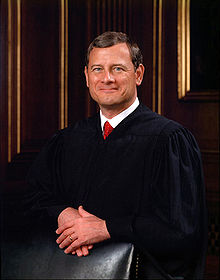
Having granted cert., the United States Supreme Court affirmed the decision of the Arkansas Supreme Court. By a vote of 6-3, the court held that double jeopardy does not bar retrying Petitioner for capital and first-degree murder since the jury had not made a final resolution of the charges in the initial trial. Chief Justice John Roberts delivered the opinion, joined by male Justices Scalia, Kennedy, Thomas, Breyer, and Alito. Female Justice Sotomayor filed a dissent, joined by Justices Ginsburg and Kagan.

Whether or not gender played a role in the 6-3 split is an interesting question, but has not yet been addressed by commentators. Of course, one case does not establish a pattern, but it will be interesting to see if the pattern in Blueford v. Arkansas repeats itself.

Continue ReadingIs There a Female Bloc on the U.S. Supreme Court?

Who Will Lead the Fight for Access to Justice?

Jess Dickinson was on a roll, his Southern delivery infused with force and emotion. The Constitution is meaningless unless it is effective, said the presiding justice of the Mississippi Supreme Court. It is time, he said with rising voice, for judges to “stand up” and help insure that poor people have equal access to the courts.

The audience noted its approval with a standing ovation, but that result was never in doubt. After all, the occasion was the Annual Meeting of State Access to Justice Chairs last Saturday in Jacksonville, a gathering of 168 lawyers, judges and state supreme court justices from over 40 states, Puerto Rico and the District of Columbia, all of whom have signed on to the cause of equal access. There was an understandable enthusiasm for the justice’s remarks.

And the audience included the Honorable Shirley Abrahamson, Chief Justice of the Wisconsin Supreme Court, making a rare but significant appearance at the meeting; significant because in Wisconsin, access to justice has not enjoyed the out-front leadership of the highest court as it has in many other states, including Justice Dickinson’s Mississippi.

The Wisconsin court, principally the Chief Justice, has been active in the cause of self-representation, striving to make the courts more user friendly to those who cannot afford a lawyer. The Court also approved changes to the rules of professional responsibility that paved the way for the expansion of brief advice clinics, and adopted a State Bar petition to create an Access to Justice Commission. The Chief Justice has led the way in promoting the study of limited representation, considered an essential step in addressing the problem of access to the courts.

Most significantly, the court approved the $50 annual assessment that goes to the Wisconsin Trust Account Foundation’s Public Interest Legal Services Fund, providing much needed funds as IOLTA income fell. (One of the more bizarre events I’ve ever witnessed is the State Bar Board of Governors actually debating a proposal to sue the Court because of the assessment.)

But it would be a stretch to say that our Court has been out in front, leading the way on access to justice issues in Wisconsin.

Continue ReadingWho Will Lead the Fight for Access to Justice?