Judge White Visits Her Alma Mater

Yesterday’s On the Issues with Mike Gousha featured a conversation with Marquette Law School graduate and Milwaukee County Circuit Court Judge Maxine Aldridge White. Judge White’s journey from growing up in the Mississippi Delta as the daughter of a sharecropper to her current position on the bench is a compelling and inspiring one. Judge White reflected on her time at the Law School and how her experience here helped shape and influence her career. In particular, she pointed to the support and guidance provided her by Professor Phoebe Williams.
Continue ReadingJudge White Visits Her Alma Mater

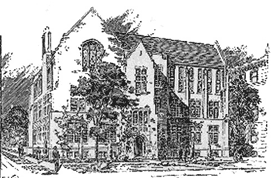
Marquette Law School in the Early Twentieth Century

The second installment of the symposia celebrating the 100th anniversary of the founding of Marquette Law School was convened earlier today. The same panel of scholars from the first session returned to discuss the period from 1908 to 1940.  Joseph Ranney began by explaining how this time period saw the bureaucratization and professionalization of both legal education and the bar, and how these trends shaped the development of the Marquette Law School. In particular, Mr. Ranney noted the importance of the creation of the American Association of Law Schools, which sought to establish an accreditation process for law schools, and the transformation of law school faculties from exclusively part-time/adjunct professors to a combination of full-time and part-time/adjunct professors.

Continue ReadingMarquette Law School in the Early Twentieth Century

Representing the Vengeful Client

At today’s faculty workshop, Robin Slocum, the Boden Visiting Professor Law, gave a fascinating presentation of her latest paper, entitled “The Dilemma of the Vengeful Client: A Prescriptive Framework for Cooling the Flames of Anger” (forthcoming in the Marquette Law Review). Noting that lawyers and the legal system can sometimes become weapons for vengeance in the hands of an angry client, Robin suggested that client counseling can help both the client and the lawyer achieve better outcomes in litigation and avoid the psychological and physiological costs of such vengeance-seeking activity. Effective client counseling, she argued, should focus on uncovering the thoughts and beliefs that underlie anger in order to identify the more rational aims of litigation. In addition, Robin suggested that law schools may consider adopting courses that build lawyers’ emotional competency to engage in this type of counseling.

Continue ReadingRepresenting the Vengeful Client