
Whither the Culture Wars?

A whole lot of people must have been out of the office yesterday because I am quoted in a Foxnews.com article on political clashes between the Catholic Church and the Obama administration. Although I am not sure that it quite captures my remarks to say that “Catholic politicians have been excommunicated in recent years for not supporting positions consistent with the church’s teachings,” I did note what seems to me to be an increased insistence by at least certain Bishops on faithfulness to the Church’s positions on life issues (as opposed to positions generally) and a willingness to enforce that through denial of the Eucharist and cited, for context, New Orleans Archbishop Joseph Francis Rummel’s excommunication of three segregationist politicians in 1962. 

Just how aggressive the Church should be in insisting that Catholic politicians follow Church teachings is a topic that has been debated for as long as I can remember (a period that has come to be distressingly long) and I am not sure that I can add anything to on this cold January morning. I am a confirmed opponent of privileged status for public reason and a staunch supporter of political moderation by the church.

Continue ReadingWhither the Culture Wars?

Faculty Workshop on Criminal Procedure in Russia

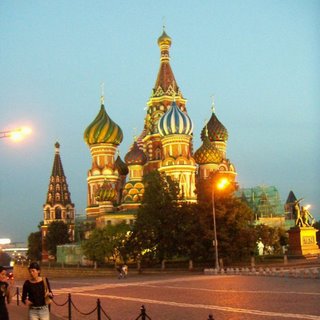
Yesterday, our colleague Professor Olga Semukhina of the Marquette Department of Social and Cultural Sciences gave a presentation entitled Criminal Procedure in Modern Russia: The Path of Reforms as part of our faculty workshop series. She outlined the structure of the Russian Criminal Procedure Code (adopted in 2002), explained how the criminal process works, and offered her sense of the system’s shortcomings. Not surprisingly, the system looks very different from that in the United States. The Russian system has Continental roots, and consistent with that is considerably less adversarial than our own. Indeed, defense lawyers play an almost entirely reactive role. The defense has no ability to gather evidence, and until trial (which is the only adversarial component of the system) is limited to lodging objections to the work of the criminal investigator (a lawyer who is in theory an independent investigator, but whose physical location amongst the police and prosecutors tends to generate an affinity for the state). Plea bargaining is non-existent. Every case goes to trial, and 99 percent of those result in convictions.

For me, the presentation underscored the value of the comparative perspective. It is easy to conflate familiarity with necessity, and exposure to the workings of another system has the tendency to dislodge some of our assumptions about the way the world works. Another example: in Russia, a crime victim’s claim for restitution is part of the same case as the criminal prosecution, and the victim has a right to appeal the verdict in the criminal portion of the appeal. It’s an intriguing process to someone, like me, who is interested in the boundaries between the civil and criminal processes.

Continue ReadingFaculty Workshop on Criminal Procedure in Russia

It’s a Rap. Really.

In Advanced Legal Writing class, students discuss different persuasive techniques that lawyers and judges use in their writing.  We debate the pros and cons of using literary references, illustrative narratives, pop culture references, historical examples, and unusual formats and organizations.

I never once, however, discussed (or even considered) the possibility that a litigant would submit a brief in the form of a rap.   The pro se litigant submitted the “rap brief” and won.

As professional writers, should we lawyers be concerned?  I can’t imagine this form of writing starting a trend, but does its use suggest something about a changing level of formality in court documents?

I’m not sure.  I think it may be a fluke, but I’m troubled.   

Continue ReadingIt’s a Rap. Really.