
Liberals and conservatives both perceive the Supreme Court as acting against their preferences

The latest Marquette Law Poll found that approval of the U.S. Supreme Court fell by 11 percentage points from July to September. This change was driven by a 22-point decline among Democrats and a 10-point decline among Independents. Republican approval stayed about the same.

This follows the Court’s narrow September ruling declining to halt Texas’ ban on abortions after six weeks of pregnancy. Other recent controversial decisions included striking down the CDC’s eviction moratorium and preventing the Biden administration from ending Trump’s “remain in Mexico” policy for asylum seekers.

Majorities of Republicans approved of all three of these decisions. Democrats disapproved of each, but more of them lacked an opinion about the CDC moratorium decision and the remain-in-Mexico decision.

Attitudes to Supreme Court decisions
Marquette Law School Supreme Court Poll, September 2021, n = 1,411
Heard nothing at all Heard of but not enough for an opinion Favor Oppose
End CDC moratorium
Republican 18% 20% 57% 5%
Independent 13% 34% 39% 14%
Democrat 17% 33% 22% 27%
Reinstate remain-in-Mexico policy
Republican 13% 8% 76% 2%
Independent 21% 24% 34% 20%
Democrat 14% 25% 17% 43%
Uphold 6-week abortion ban
Republican 11% 15% 57% 17%
Independent 10% 16% 27% 47%
Democrat 7% 12% 9% 71%

In light of this, it makes sense that Democratic approval of the court plummeted, but why didn’t Republican approval grow?
Continue ReadingLiberals and conservatives both perceive the Supreme Court as acting against their preferences

A Tenancy in Common Tragedy

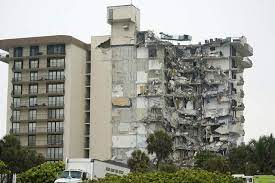
pic of Surfside, Florida condo building, showing collapseThere is lots of blame to go around for the horrifying collapse of the Champlain Towers condominiums complex in Surfside, Florida, in June 2021:

(1) Engineers’ reports on structural flaws in Champlain Towers could have been more forceful and explicit,

(2) Members of the Champlain Towers condo board could have been more attentive and willing to act regarding the dangerous conditions, and

(3) State and local governments could have made inspections earlier and warned that the residents of Champlain Towers of their vulnerability.

Add to the list of causes for the disaster the tenancy in common (TIC) and the modern-day attitudes about ownership of property that the TIC brings to the surface.

Many will recall from first-year Property that a TIC is a shared tenancy in which each owner has a separately transferable share of the property but may not claim ownership of a specific part of the property.  All of the tenants in common are able to use the whole property.  TICs emerged in early-modern England and were much treasured by the gentry as a way to consolidate family interests.  Family bloodlines, after all, were often indistinguishable from family property lines.

A variety of the TIC has lived on into the contemporary United States and is common in what seems sometimes like our ubiquitous condominium complexes.

Continue ReadingA Tenancy in Common Tragedy