
Knowledge, Intent, and Knowledge of Someone Else’s Intent
As yesterday’s post explained, contributory copyright liability emerged in the nineteenth century, but was not given a determinative test until 1970, in the Second Circuit’s opinion in Gershwin Publishing Corp. v. Columbia Artists Management, Inc. Under that test, a secondary actor could be held contributorily liable for someone else’s infringement if the actor had knowledge of the infringing activity and materially contributed to it.

That test was difficult enough to apply consistently on its own. But in 2005, the Supreme Court threw a further monkey wrench into the works when it resurrected Gershwin’s use of the term “inducement.” In a case involving the distribution of filesharing software to a group largely consisting of infringers, the Court stated the test for contributory liability as follows:

One infringes contributorily by intentionally inducing or encouraging direct infringement, see Gershwin Pub. Corp. v. Columbia Artists Management, Inc., 443 F.2d 1159, 1162 (C.A.2 1971)…. [T]hese doctrines of secondary liability emerged from common law principles and are well established in the law, [Sony Corp. v. Universal City Studios, 464 U.S.,] at 486 (Blackmun, J., dissenting); Kalem Co. v. Harper Brothers, 222 U.S. 55, 62–63 (1911); Gershwin Pub. Corp. v. Columbia Artists Management, supra, at 1162; 3 M. Nimmer & D. Nimmer, Copyright § 12.04[A] (2005).

MGM v. Grokster, 545 U.S. 913, 930–31 (2005).

For the past two decades it’s been unclear what the Grokster Court meant to do here. Was it reformulating the traditional test for contributory infringement to focus only on intentional inducement, rather than knowledge and material contribution? If so, then why the unqualified citations to Gershwin? If not, did this passage just add inducement as an additional form of indirect liability, or did it change Gershwin somehow?

Lower courts, for the most part, read Grokster the last way—inducement was not a complete substitution for the traditional material contribution test, but the traditional test didn’t come through unscathed either. If Grokster was just resurrecting “inducement” as a way of satisfying the second element of Gershwin, then why does Grokster talk about intent? There’s no mention of intent in Gershwin, only knowledge. If Grokster instead intended to add a third form of indirect liability to copyright law, why does the Court call it “contributor[y]” infringement?
Continue ReadingKnowledge, Intent, and Knowledge of Someone Else’s Intent

Contributory Copyright Liability Back Before the Supreme Court

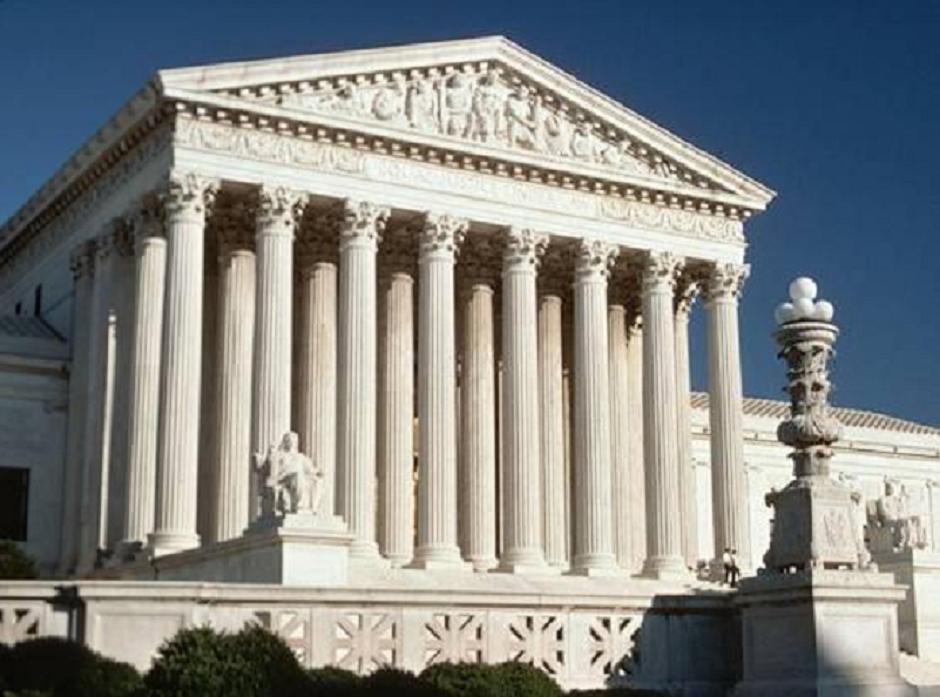
The exterior of the U.S. Supreme Court building with white stone columns and a white facade.

On Monday, the Supreme Court is going to hear oral argument in a significant copyright case, Cox Communications v. Sony Music Entertainment. The issue before the Court is the extent of contributory copyright infringement liability, something the Court has considered twice in recent decades, in the famous Betamax case (Sony v. Universal) in 1984, and in MGM v. Grokster in 2005.

I’m interested in almost any appellate case on copyright law, but I was interested enough in this one that I submitted an amicus brief to the Court arguing how it should come out. This post will introduce the dispute in Cox case and how it emerges from the history of contributory liability; tomorrow I’ll explain how the Supreme Court’s prior intervention in Grokster has added to the doctrinal confusion; and finally on Sunday I’ll explain why I decided to take the time to write an amicus brief. Hopefully on Monday I’ll have time to do a quick review of the argument.

The Cox case represents yet another battle between content owners and technology companies over the extent of indirect liability for copyright infringement, that is, liability internet service providers might have for the infringing acts of their users. For the past two decades, much of that fight has been over the conditional immunity for ISPs provided in 1998’s Digital Millennium Copyright Act, but the Cox case returns the debate to the underlying obligations imposed by copyright law itself: when does an intermediary like Cox have to stop infringers from using its service, and when can it safely regard those infringements as Somebody Else’s Problem?

The legal question here quickly enters some deep policy waters. Intermediary liability is recognized in many areas of the law, from torts to securities fraud to criminal law to all areas of intellectual property. To be effective, intermediary liability needs to strike a careful balance. First, the direct wrongdoers have to be, in some way, difficult to pursue—if they aren’t, then there’s no need to impose liability on someone else. And second, the intermediary has to have both the knowledge and the ability to narrowly target the bad acts without causing unnecessary spillover harms to beneficial activities.

Part of the problem in achieving that balance in the modern era is that the very notion of case-by-base balancing—by courts, by regulators, by almost anyone—has gotten a bad name. As I argued in my recent article The Grapes of Roth, that style of decision-making has faded, replaced by attempts to limit judicial discretion by rigidly following the text of either statutory provisions or multi-part tests.

Recently, however, I thought I detected some inclination by some of the justices to cut back against that trend and instead emphasize that the overall balance of intermediary liability emerges from the interplay of various considerations. So I decided to give that inclination whatever additional nudge I could with my brief.

Continue ReadingContributory Copyright Liability Back Before the Supreme Court

What Might Explain D.C. Grand Juries’ Failures to Indict?

chairs for the jury

I once had the privilege of serving on a federal grand jury in Washington DC. I describe it is as a “privilege” not out of any reflexive paean to the criminal justice system, which has many flaws, and not because I was especially thrilled to have been selected. My service was particularly arduous; we met from 8am to 4pm five days a week, after which I would complete all of my work each day as a full-time law firm associate. And that continued for five weeks straight, leaving me, by the end, completely exhausted. The sense of privilege I felt came not from the system or the process, but from having the experience of serving with a group of fellow citizens from all walks of life who were all dedicated to completing one task: determining if the government had enough evidence to prosecute someone.

Based on that experience, it was with considerable interest that I read news reports that several grand juries in the District of D.C. have recently refused to return indictments in high-profile cases involving protesters. Three successive grand juries, for example, refused to indict protester Sydney Reid on charges of assaulting a federal law enforcement officer, when an FBI agent assisting in blocking Reid from interfering with an arrest suffered cuts or scrapes on her hand. Why did they refuse? Over on the Volokh Conspiracy, Prof. Josh Blackman suggests that while it’s possible DC grand juries “are carefully attuned to the gradation between felonies and misdemeanors,” he offers an apparently more plausible explanation: DC jurors are a bunch of hacks. DC US Attorney Jeanine Pirro has a similar view.

There’s a temptation, famously mocked by film critic Pauline Kael, to think that the things you and your friends care about are the things that everyone cares about. But despite the attention law professors and lawyers generally pay to politics, much of the rest of the US population is far less interested. I would hesitate to assume that the average grand juror in DC, or LA or Oklahoma City or anywhere else is as steeped in partisan politics as your average social media poster, or law school denizen, or avid consumer of news.

I don’t know what happened in these three grand juries, or in the others that have refused to indict protesters in DC and LA. I did see firsthand however that it is really hard for a requested indictment to fail. There were jurors on my grand jury that were more skeptical of the police, and there was at least one juror who had qualms about the over-criminalization of drug possession. Some defendants were more sympathetic than others. But the few “no” votes on an indictment almost never came anywhere near the 12 necessary to refuse to return a true bill. If the government had evidence on each element, we voted to indict.

Continue ReadingWhat Might Explain D.C. Grand Juries’ Failures to Indict?