The Importance of Document Design

helvetica-1

Jim Dimitri’s article, WordWise:  Best Practices in Document Design, is a must read for any lawyer interested in taking advantage of document design in drafting legal documents. Dimitri advises that a writer should “use the most readable font” and “use effective vertical and horizontal spacing” in designing a legal document. Dimitri’s article is useful not only for the advice he gives, but because he defines key concepts in document design, such as monospaced fonts (which “use the same width for each letter”) and proportionally spaced fonts (which use “different widths for different letters”). Dimitri suggests that a writer use proportionally spaced fonts because they are easier to read.
Continue ReadingThe Importance of Document Design

Marquette Law School Wins 2014 Diversity Matters Award

The Law School Admission Council (LSAC) honored Marquette Law School at its spring conference with the 2014 Diversity Matters Award.  The LSAC Diversity Initiatives Office and Discover Law sponsor the award.  The award recognizes Marquette’s commitment to diversity and its programming for high school students and college students from racial and ethnic groups underrepresented in law school and the legal profession.  Marquette received the third place award two years ago.

Continue ReadingMarquette Law School Wins 2014 Diversity Matters Award

Cut It Out

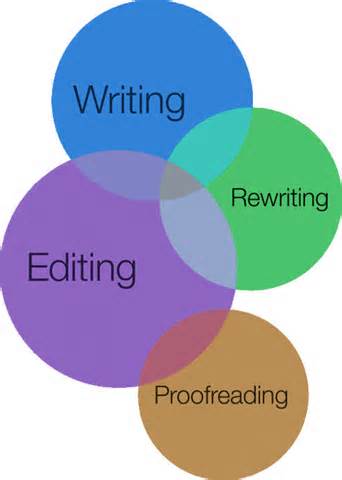
EditingKnow how and when to cut words from your sentences during the editing process?  Here are some links to help.

Bryan Garner’s April 2014 ABA Journal magazine article provides a good list of unnecessary phrases.  Garner recommends “axing” words like “herein” from legal documents.

WordRake is an editing program that allows you to upload a document and receive line edits on concision and clarity.  This blog tested the program on some sample Supreme Court authority with favorable results.  Also check out the WordRake blog for editing advice.

One easy starting point for editing is to look for and eliminate “there is” and “it is” from your sentences.  These phrases add meaningless fluff at the most important point of a sentence—the beginning—and often signal the passive voice and nominalizations.  This blog suggests ways to streamline your writing by eliminating “there is” and “it is” (or the past tense version) or phrases like “given the fact that” or “in light of the fact that.”

Continue ReadingCut It Out