
A Second Look at the Sharia Law Amendment

Last week, the Tenth Circuit issued a decision on Oklahoma’s “Sharia Law Amendment.” A quick summary for those who haven’t followed: In 2010, Oklahoma voters approved a ballot initiative that amended their state’s constitution to prohibit Oklahoma courts from “considering or using” either “international law” or “Sharia Law” in making judicial decisions. A district court issued a preliminary injunction that at least temporarily prohibited the law from taking effect on the ground that its language regarding Sharia Law violates the Establishment Clause. The Tenth Circuit decision held that the district court did not abuse its discretion in issuing the injunction.

Although not yet addressed by the courts, I think it’s worth noting that the Amendment’s language on international law may also be unconstitutional. The reason is the Supremacy Clause. First note that the Amendment explicitly prohibits Oklahoma courts from “considering or using” international law in the form of both treaties and custom. This prohibition is unqualified, and thus at least facially encompasses treaties and custom of all kinds.
Continue ReadingA Second Look at the Sharia Law Amendment

New Database Creates Time-Series Plots of Phrases in U.S. Supreme Court Opinions

Emory and Michigan State Law Schools have teamed up to create a free database that allows you to search for a term or phrase in U.S. Supreme Court opinions (1791-2005) and automatically generate a time-series frequency chart of the phrase’s appearance.

Continue ReadingNew Database Creates Time-Series Plots of Phrases in U.S. Supreme Court Opinions

Why the Permit Policies in the U.S. Capitol Are Irrelevant

Confusion continues over the new Department of Administration rules announced December 1 which require advance permits for many demonstrations held within the Wisconsin State Capitol. Among the more controversial aspects of the policy are its applicability to small groups of protestors and the discretion granted to the State Capitol police to require permit seekers to pay security costs in advance. I have already written about the manner in which this policy goes too far, and how it impermissibly infringes upon the First Amendment rights of protestors.

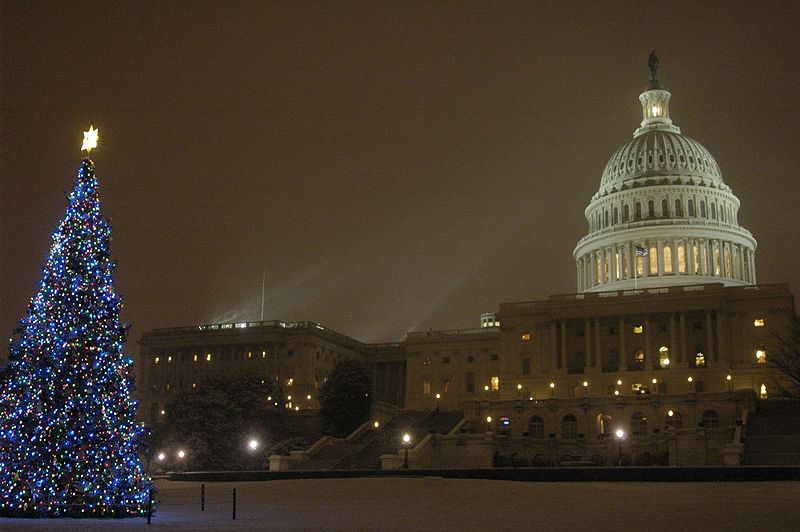
One response to the criticism of the new DOA policy has been to compare the DOA policy to the rules governing demonstrations at the United States Capitol building. At first reading, it appears that protestors are completely banned from the United States Capitol building under guidelines issued by the United States Capitol Police. Those guidelines state that “demonstration activity is prohibited and will not be permitted inside any Capitol buildings.” You can read the U.S. Capitol Police policy here.

At a recent forum to discuss the new DOA policy, one participant asked, if the U.S. Capitol Police can ban demonstrations altogether within their building, why can’t the Department of Administration impose restrictions in the State Capitol building that are something less than a complete ban?  The simple answer to this question is that the U.S. Capitol building is not considered a public forum, while the Wisconsin State Capitol is.

Continue ReadingWhy the Permit Policies in the U.S. Capitol Are Irrelevant