
Perry v. Schwarzenegger and the Slippery Slope

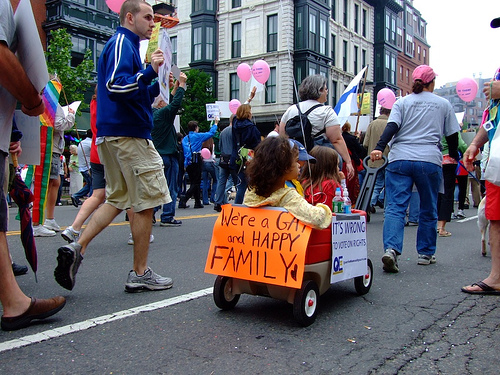
As just about everyone knows, yesterday a Northern District of California judge struck down California’s Proposition 8 as unconstitutional. There has been a tremendous amount of blog commentary on this already, much of it worth reading. (See Orin Kerr (here and here), Dave Hoffman, Eugene Volokh, Dale Carpenter, Howard Wasserman, Rick Hasen.) The one issue I want to comment on is what Perry means for the future of the constitutional treatment of same-sex marriages.

Many advocates for legal recognition of same-sex marriage are deeply worried by Perry. Dale Carpenter, for example, is concerned that the breadth of the arguments considered in Perry could lead to a sharply negative precedent if the case is reversed on appeal. Those fears are legitimate. An Equal Protection or Due Process argument mandating equal treatment for low-status individuals is what might be called “a nuclear bomb of a legal theory” — it applies everywhere, all at once, and obliterates legal distinctions meant to enforce low social status. The same applies, to a lesser extent, to arguments that the Full Faith and Credit Clause mandates recognition of valid same-sex marriages by every other state in the union. Courts might be hesitant to, so to speak, stop worrying and learn to love the bomb. Marched to the precipice too quickly, they might find some way to pull back from the brink.

If that happens, and if American society continues to develop tolerance for same-sex couples, will we be locked into sub-optimal constitutional doctrine? Not entirely. As I argue in my forthcoming article on this subject (in the Alabama Law Review), there is an escape valve.

Continue ReadingPerry v. Schwarzenegger and the Slippery Slope

Best of the Blogs

The first item that caught my eye this week was a little blog our student Priya Barnes is writing as she visits Germany, attending the Summer Session in Giessen, Germany, that Professor Fallone blogged about on Monday.  So far, she’s only offered one entry, about her travels, but I intend to watch for more….

Mark Tushnet (who gave a terrific presentation at Marquette last week, co-sponsored by the student American Constitution Society organization and the local lawyer’s chapter of ACS) raises some interesting questions about Republican-sponsored legislation that would require congressional review of proposed “major regulations.” The idea is that agency rules would be transformed into agency proposals, to be okayed by Congress.  For “non-major” proposals, Congressional silence would equal assent, while majority votes of both chambers would be required for adoption of new “major regulations.”  

Continue ReadingBest of the Blogs

“Past Formalities” and “Present Realities”: Why Wendy Isn’t a Parent at All

On June 24th, the Wisconsin Court of Appeals ruled against a woman seeking legal recognition of her parental rights for the two children she adopted with her ex-partner. The two women adopted their children in 2002 and 2004 from Guatemala. The woman appealing, known in the record as Wendy, stayed at home with the children, while her partner, recorded as Liz, worked as an attorney. Liz was the legal adoptive parent so that the children could be on her healthcare plan. When the couple split up, the two women agreed to an informal custodial arrangement, but Wendy has no legal rights over or to her children. When Liz stopped allowing Wendy to see the children, Wendy lacked any legal recourse.

Wisconsin law does not permit same-sex couples adoptive rights; only one parent is the “legal parent.” The court justified its decision on the basis that Wisconsin law defines a “parent” as only the biological or adoptive parent. Wendy is neither of these and thus, at least under the law, not a parent at all.

This leads to questions that are more cultural than legal (though still legal, yes). How do we define parent? How do we define family? The Supreme Court has spoken to these questions, though not in the terms at issue here.

Continue Reading“Past Formalities” and “Present Realities”: Why Wendy Isn’t a Parent at All