
One Class: Deconstructed

eckstein hallIn a previous post, I took an op ed piece that I authored and provided a “deconstruction” of the text that explained the thought process behind the piece’s organization and argument.  In today’s post, I propose to take one class period from my Constitutional Law course and to deconstruct the class in a similar fashion.  Readers of this blog may find my thought process surprising, appalling, or some combination thereof.

The class period in question deals with the constitutional doctrine of standing in the federal courts.  Because federal courts only possess the power to hear cases described in Article III of the Constitution, standing doctrine has been developed by the Supreme Court to differentiate “cases” and “controversies” from disputes that are merely hypothetical, or that request an advisory opinion, or that are better left to family or political decision makers.  The case in the textbook that provides an entry way into a discussion of standing doctrine is Friends of the Earth v. Laidlaw Environmental Services, Inc., 528 U.S. 167 (2000).

In that case, the plaintiff was a member of an environmental group who wanted to sue a polluter who had dumped mercury into a South Carolina river.  Congress had passed the Clean Water Act, which creates a cause of action in federal court for any person “adversely affected” by a violation of the statute.  The issue was whether the plaintiff in this case, who alleged that he no longer swam in the river or picnicked along its shore due to a fear of contamination, had suffered a sufficient “injury in fact” to have standing to sue.
Continue ReadingOne Class: Deconstructed

More on Citizens United

I have a column on Citizens United in the Crossroads section in yesterday’s Milwaukee Journal Sentinel.

Taking the other side, Noah Domnitz wants to argue the the decision was “judicial activism” because it overruled existing precedent and restricted the application of long standing laws prohibiting the spending of corporate treasury money on elections. (I say “restricted” because, after Citizens United, corporations still can’t use treasury funds for contributions or coordinated expenditures.)

I disagree. Mr. Domnitz does not define “judicial activism” but seems to equate it with departure from precedent and overturning laws.

This oversimplifies the concept.

Continue ReadingMore on Citizens United

Justice Kennedy Goes to the Movies

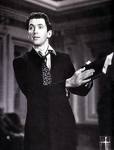
smith goesThose industrious enough to reach the final paragraphs of the recent opinion of the Court in Citizens United v. Federal Election Commission (2010) might have been surprised to find Justice Kennedy discussing Mr. Smith Goes to Washington (1939).  A Hollywood classic directed by Frank Capra, the film is the fictional story of a handpicked bumpkin Senator played by Jimmy Stewart, who sees the light, dramatically filibusters, and in the end teaches the Congress how to behave.  Justice Kennedy’s argument seems to be that if the campaign-related indictment of Hillary Clinton in the film titled Hillary: The Movie could be suppressed, the same fate could befall a beloved work such as Mr. Smith Goes to Washington.

The two films’ only similarity seems to be that they are indeed films.  One film is fictional, but the other attacks an actual Senator and Presidential candidate.  One is designed to entertain, but the other is designed to influence an election.  And most importantly, one is a work produced by the culture industry designed to make a profit, but the other is a work funded from corporate profits designed to change opinions. 

Are Justice Kennedy and the other members of the Supreme Court majority incredibly unsophisticated in their understanding of popular culture and politics, or is their analogy disingenuous?  Extending the inquiry, might a comparable question be posed regarding the Citizens United opinion as a whole?  The Supreme Court’s majority might be so oblivious as to think that corporations have the full panoply of First Amendment rights and that their financially self-serving broadsides are matters of free speech that enrich democracy.  Then, again, the majority might simply hope it can trick us into believing that.

Continue ReadingJustice Kennedy Goes to the Movies