
Self-Defense: Sending a Moral Message

What kind of message should the law send when it comes to a woman who kills a man who has been abusing, assaulting, or threatening her?

“I think it is important that we send the right moral message in the law,” Joshua Dressler, a respected authority on criminal law and procedure said in a lecture at the Marquette University Law School. 

In the annual Barrock Lecture at the Law School last week, Dressler said that even as some feminists advocate for expanding what is justifiable under the label of self-defense, the law should proceed cautiously. 
Continue ReadingSelf-Defense: Sending a Moral Message

Capital Punishment and the Contemporary Cinema

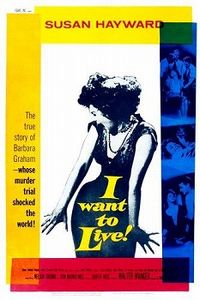
American cinema of the last century includes a large number of films with major characters on death row.  James Hogan’s silent film “Capital Punishment,” for example, screened in 1925.  During the 1950s, the death penalty was at the forefront in such respected films as Fritz Lang’s “Beyond a Reasonable Doubt” (1956), Robert Wise’s “I Want to Live” (1958), and Howard Koch’s “The Last Mile” (1959).  The late 1990s and the first decade of the twenty-first century saw an even greater number of films inviting contemplation of the death penalty.

The latter flurry of films perhaps relates to the period’s especially pronounced campaign to end capital punishment.  In keeping with the often-heard assertion that Hollywood leans to the left politically, most of these films seem opposed to the death penalty.  Some express their opposition in the fashion of a “message film,” while others proffer more subtle dramatic narratives.

Continue ReadingCapital Punishment and the Contemporary Cinema

When Battered Women Kill . . .

Do feminist concerns regarding violence against women justify expanding the self-protection defense in criminal law?  This was the topic of the second annual George and Margaret Barrock Lecture on Criminal Law, which was delivered Thursday afternoon by Professor Joshua Dressler of Ohio State.  Dressler left no doubt about where he stands on the issue: whether motivated by domestic-violence concerns or otherwise, recent proposals to expand the right to use deadly force are inconsistent with a due regard for the value of human life.  To be clear, Dressler would not deny the right to use deadly force when a woman is actually being attacked or threatened — his focus is more on cases in which a sleeping or otherwise nonthreatening batterer is killed. 

The webcast of Dressler’s provocative lecture is available here.   The lecture will also be published later this year in the Marquette Law Review.

Continue ReadingWhen Battered Women Kill . . .