
The Notorious R.B.G.

20150103_135911-1Those of us who teach in gender and feminist studies have long been familiar with Justice Ruth Bader Ginsburg; we regularly deal with her work as both a lawyer and as jurist. This past January, I had the honor of hearing her speak at a conference in Washington, D.C., and was awed by her. So over spring break, I decided to start reading a new book, The Legacy of Ruth Bader Ginsburg, edited by Scott Dodson. I’m not that far into the book yet, but what I’ve read has only made me admire her more.

I’m far from being Justice Ginsburg’s only admirer. She has quite the following, including this woman, who had a portrait of Justice Ginsburg tattooed on her arm. One man put her 35-page dissent in Burwell v. Hobby Lobby to music. Another admirer dubbed her “The Notorious R.B.G.,” a take-off on rapper The Notorious B.I.G, and there’s a whole blog devoted to all things R.B.G. Google “Notorious R.B.G.” to find t-shirts and other merchandise. It’s a title the Justice herself seems to enjoy. (Listen to the video clip here.)

Ironically, while I was starting my book over spring break, Justice Ginsburg celebrated her 82nd birthday. She seems in no way ready to step down from the court. After all, she reminds us, Justice John Paul Stevens served until he was 90. In honor of her birthday, one site gathered some of her best quotes. My favorite: “People ask me sometimes . . . When will there be enough women on the court? And my answer is: When there are nine.”

Wouldn’t have expected anything less from her.
Continue ReadingThe Notorious R.B.G.

Discerning the Relationship Between Bankruptcy Judges and Article III Judges

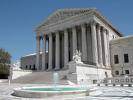
supreme courtThis summer, the United States Supreme Court handed down a decision in the case of Executive Benefits Insurance Agency v. Arkison that changed how bankruptcy judges, covered under Article I (the Executive Branch) of the Constitution, and district court Article III judges work together. Arkison helped clarify nagging procedural issues between district and bankruptcy courts. At the same time, Arkison verified a significant reduction in the ability of bankruptcy courts to resolve common claims arising in bankruptcy proceedings.

Arkison began as a seemingly conventional case. In 2006, Bellingham Insurance Agency filed for Chapter 7 bankruptcy. Peter Arkison was assigned as the trustee. Mr. Arkison filed a fraudulent conveyance complaint against Bellingham, something not uncommon in a bankruptcy proceeding. In fact, Title 28 specifically grants bankruptcy courts the ability to hear and determine such claims. The bankruptcy court granted summary judgment on Mr. Arkison’s claim.

The black letter language in Title 28 and Supreme Court precedent contradict each other.

Continue ReadingDiscerning the Relationship Between Bankruptcy Judges and Article III Judges

Supreme Court Roundup Part Two: Burwell v. Hobby Lobby Stores, Inc.

the bosses of senateOn October 30, I participated in a presentation entitled “Supreme Court Roundup” with Ilya Shapiro of the Cato Institute.  The event was sponsored by the Law School chapters of the Federalist Society and the American Constitution Society.  We discussed three significant cases from the 2013-2014 Supreme Court term: McCutcheon v. FEC, Burwell v. Hobby Lobby and Harris v. Quinn.  It was a spirited discussion, in which Mr. Shapiro and I presented opposing views, but I want to thank Mr. Shapiro for taking the time to visit the Law School and sharing his perspective with the students.

This is the second of three blog posts on the presentation.  Readers can find the first post here.  What follows are my prepared remarks on Burwell v. Hobby Lobby.  Readers interested in Mr. Shapiro’s position on the case can refer to the amicus brief that he filed on behalf of the Cato Institute.

The legal issue in Burwell v. Hobby Lobby Stores can be described simply.  Under the provisions of the Affordable Care Act, the Department of Health and Human Services requires employers to provide health insurance plans making contraception available to their female employees at no cost.  In the NFIB v. Sebelius decision in 2012, the Supreme Court upheld Congress’ power to pass the Affordable Care Act as an exercise of its taxing power.  But even if Congress has the power to pass the law, can a for profit corporation nonetheless avoid following the law by arguing that the contraception provisions burden the corporation’s free exercise of religion in violation of the Religious Freedom Restoration Act (RFRA)?

The rights of the individual shareholders that own the corporation were not at issue.  The law does not act on the individuals, and does not require these human beings to do anything.  The only legal requirement imposed by the law is imposed on the corporate entity.

So what did Congress intend to do when it passed RFRA in 1993?  As I will explain, the Hobby Lobby case presents two opposing views as to what Congress attempted to accomplish by passing that law.  The dissent by Justice Ginsburg argues that the intent of RFRA was to create a statutory remedy for burdens on religious expression that adopted the standard for evaluating First Amendment violations prior to the 1990 Employment Division v. Smith case. The majority opinion by Justice Alito argues that by passing RFRA Congress created a statutory remedy that protected more “persons” than the pre-Smith caselaw protected and that granted them greater protections than the pre-Smith caselaw granted.

Continue ReadingSupreme Court Roundup Part Two: Burwell v. Hobby Lobby Stores, Inc.