
Chilean Delegation Observes Criminal Trial Motion to Suppress Evidence
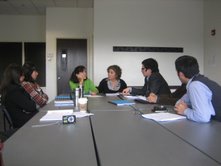 On Thursday morning, October 1, the Chilean students participated in a mediation training on foreclosure hosted by MULS Professors Andrea Schneider and Natalie Fleury. Afterwards, they met with Professor Schneider who, with the help of attorney and translator Cynthia Herber, did a great job keeping up with their many questions. The students found it remarkable that mediation has become a regular feature of the U.S. legal system, and asked how this came about. Professor Schneider explained that the participation of judges, who refer litigants to this resource, has made mediation a more regular feature of resolving conflicts.
In the afternoon, the students visited the Milwaukee Courthouse, and received a tour by Felony Court Coordinator Mary Jo Swider, including a stop to observe the intake court in action. Commissioner Julia E. Vosper came out to greet the group and give them a brief explanation of this first steps in the criminal justice process: verifying the probable cause basis for the arrest, setting bail and scheduling a trial date. The students were stunned when one man was escorted into the courtroom handcuffed and wearing the orange prison garb. This condition did not seem to correspond to his crime for driving without a license.
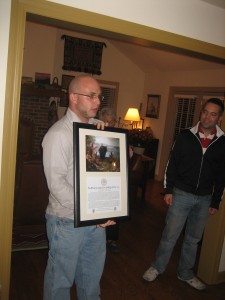 On Wednesday, the Chilean students began their day with Professor Irene Calboli, who spoke to them about the experience of being trained in a civil law tradition only then to work in a common law system. The students also discovered a common interest in patent law and the conversation soon turned to that topic.
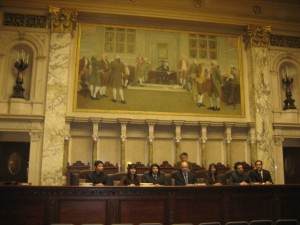 Yesterday was another full day for the