An Election Day Primer for Wisconsin Voters*

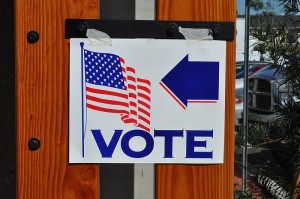
Voting_United_StatesTomorrow is Election Day. It’s important to vote, so make sure you know where and when you can cast your ballot. New for Wisconsin voters this year is a photo identification requirement. I break down the voting process below to demystify and clarify it.

The main thing, though, is to vote. Even if you don’t like your choices for president, there are down-ballot races, including a state-wide U.S. Senate race between Russ Feingold and Ron Johnson and any number of races for federal or state representatives and other local officials, for which your vote matters.

Continue ReadingAn Election Day Primer for Wisconsin Voters*

Calling 911 in the Wake of Police Violence

black_lives_matter_sign_-_minneapolis_protest_22632545857Amanda Seligman is a Visiting Fellow in Law and Public Policy at Marquette University Law School.

How does racially-tinged police violence toward civilians affect city residents’ willingness to summon aid in an emergency? A study in the October 2016 American Sociological Review asks what happened to the number of 911 calls after the public revelation that off-duty white Milwaukee police officers beat Frank Jude in 2004. In “Police Violence and Citizen Crime Reporting in the Black Community,” Matthew Desmond, Andrew V. Papachristos, and David S. Kirk find that in the year after the initial publicity around the beating, Milwaukee residents placed 22,000 fewer 911 calls than might have been expected, resulting in a total of 110,000 calls. Although white neighborhoods saw a spike in 911 calls and then a long but shallow dip, the loss of calls was especially pronounced in black neighborhoods. The authors found no such loss of calls reporting traffic accidents.

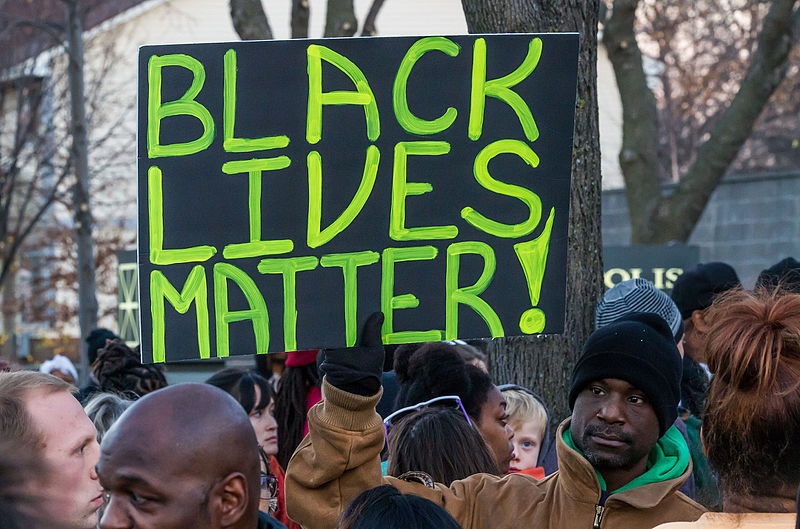
Desmond et al.’s 911 study received extensive mass media coverage. Juleyka Lantigua-Williams wrote about the study in The Atlantic, and the New York Times’sThe Upshot” column reported the findings. The study was the subject of two articles in the Milwaukee Journal Sentinel, one reporting on the findings and one offering responses from District Attorney John Chisholm and Milwaukee Police Chief Edward Flynn. Two of the authors, Desmond and Papachristos, also published an Op-Ed piece in the New York Times commenting on the significance of their research. A small host of other reports suggest broad interest in the study’s implications in the context of the Black Lives Matter movement and widespread coverage of police shootings of African American civilians.

Sociologist Desmond is one of our most thoughtful observers of the cultural significance of the 911 emergency call system. In Evicted, his 2015 ethnographic study of housing and poverty in Milwaukee, Desmond observed how victims of domestic violence put themselves at risk for losing their homes if they call the police too often.

Continue ReadingCalling 911 in the Wake of Police Violence

Conference Offers Light — and Some Heat — on Gamut of Crucial Water Issues

To the general public, water is “an issue that’s obscure under normal circumstances,” Charles Franklin, director of the Marquette Law School Poll and professor of law and public policy, said at the end of the major conference on water issues this week (Sept. 7, 2016) at the Law School.

Franklin was commenting on the relatively mixed level of concern about water issues found in responses to several questions in the Law School Poll’s results from late August. For many people, you turn on the faucet, drinkable water comes out, and you’re likely to pretty much take this for granted.

But then, Franklin said, there are disasters that demand great attention and drive perceptions.

The Law School’s conference, “Public Policy and American Drinking Water,” drew a capacity audience to the Appellate Courtroom of Eckstein Hall. Both among the speakers and members of the audience, the room was filled with experts and leading activists on water issues – as well as interested members of the public, Marquette undergraduate and graduate students, and a dozen high school students.

And as Franklin suggested, the conference offered some controversial content of great public interest – namely, discussion of issues around lead in drinking water in Flint, Mich., Milwaukee, and elsewhere – and quite a bit of lower-key discussion around important water issues that don’t attract so much attention (the state of groundwater supplies, pricing and valuation of water, and the role of private ventures in water delivery systems).

Continue ReadingConference Offers Light — and Some Heat — on Gamut of Crucial Water Issues