
Immigration Reform and the Challenge of Democratic Self-Government
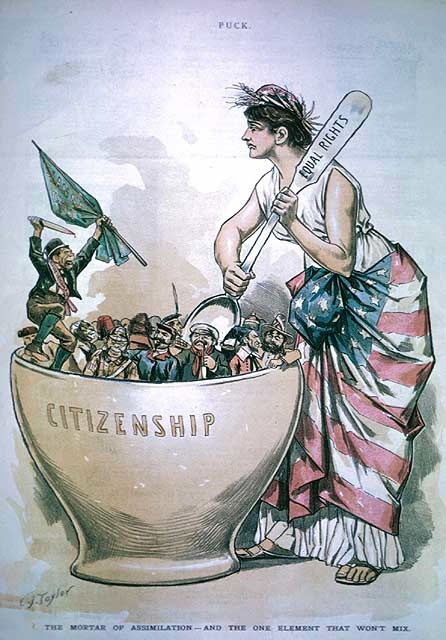 News reports indicate that President Obama will soon announce how he plans to use Executive Orders to implement some aspects of Immigration Reform, due to the failure of Congress to address the subject legislatively. I recently had the opportunity to participate in a program on Immigration Reform at the Law School on November 5, 2014, along with Stuart Anderson, the Executive Director of the National Foundation for American Policy and an Adjunct Scholar at the Cato Institute. The event was sponsored by the Law School Chapter of the Federalist Society, the Marquette Immigration Law Association, and the International Law Society. I want to thank Mr. Anderson for sharing his insights with the law students. Interested readers can click here to find a recent article by Mr. Anderson. What follows are my prepared remarks.
I have a daughter who is turning 21 next month. When a child reaches that age, parents start to ask themselves questions. Will my daughter bring someone home with her one day, and announce that she is engaged? How will I react if the person she brings home belongs to a different faith? How will I react if he is of a different race? How will I react if “he” is a “she?”
These are questions that tap into deep emotions, even if my rational brain tells me that the answers to these questions don’t matter. I know that my response to such a situation should be compassionate, and loving, and focus on my daughter’s happiness. But I also know that I may feel threatened or hurt or disappointed, without consciously wanting to. Maybe part of the problem is that I can’t control who my daughter brings home. To a certain extent, who becomes a member of my family is her choice, not mine.
Immigration is about membership in our national family. It raises the same deep emotions that marriage raises within the family. And just as we can’t always choose who our children will marry, we also can’t always control who joins our national family. And Immigration policy needs to be rational, data-driven, and compassionate, and not based on knee jerk emotions.
Simple answers to complex social and economic problems don’t work. One challenge we face as a nation is that we share a longstanding geographic connection with Mexico. U.S. employers have turned to Mexican citizens for seasonal labor needs for a very long time. People have established migration patterns that persist through generations of the same family. These behaviors won’t change just because we tell people to stop. We need to address the underlying incentives and motivations for these behaviors.