 During the recent Wisconsin gubernatorial recall election, commentators frequently noted that the effort to remove Governor Scott Walker from office was the third attempt to recall a governor in American history. Less frequently mentioned were the names of Walker’s two unfortunate predecessors, Gray Davis of California and Lynn Frazier of North Dakota.
Davis is by far the more recent of the two, and many Wisconsin voters probably remember his 2003 recall, which led to the election of the “Governator,” Arnold Schwarzenegger. Frazier, on the other hand, appears to be a virtually forgotten historical figure.
This is unfortunate because the story of Frazier’s recall and his subsequent career is one of the most fascinating chapters in American political history.
In 1921, Frazier became the first American governor to be removed from office through the mechanism of the Progressive Era reform, the recall. Although many of the advocates of the recall saw it as a useful tool against corruption, neither Frazier nor Davis (or for that matter, Walker) were targeted because of personal corruption. While Davis was removed for what was widely believed to be the mismanagement of the California economy, Frazier, like Walker, drew the ire of opponents primarily because of the supposedly radical nature of the policies that he had implemented after winning office.
While Davis was a Democrat, Frazier and Walker were both Republicans, but the similarity between the two men ends there. Walker has been strongly associated with the right wing of the Republican Party and has become something of a darling of the Tea Party Movement. In his time, Frazier was identified with the Progressive wing of the Republican Party and was regularly accused of being sympathetic to socialism, charges that Frazier did not necessarily deny.
Lynn Joseph Frazier was born in 1874 in Minnesota, but when he was six years old his family staked out a homestead in northeastern North Dakota, near the town of Hoople. Other than the years spent in college and in Bismarck and Washington as an elected official, Frazier lived on this farm throughout his life.
After graduating from nearby Grafton High School in 1892, Frazier obtained a teaching certificate from Maryville Normal School in 1895, and for the next two years combined careers in public school teaching and farming. However, in 1897, he enrolled at the University of North Dakota with the intention of becoming a physician.
At UND, he played on the football team and earned a bachelor’s degree in 1901. Unfortunately, his plans to study medicine had to be abandoned, after the deaths of his father and older brother required him to return to the family farm. He married shortly afterwards, and he and his wife had five children. For the fourteen years between 1902 and 1916, Frazier devoted his efforts to agriculture.
However, concern over the fairness of the policies of the North Dakota state government led him to become involved in the Nonpartisan League, a political movement begun in 1915 by North Dakota farmers who felt that they were being exploited by railroads, Wall Street, and out-of-state corporations. With intellectual ties to both the Populist Party of the 1890’s and the American Socialist Party, the Nonpartisan League sought to use the power of the state to protect the interests of farmers and workers.
Unlike the Populists and Socialists, the members of the Nonpartisan League decided not to organize a third party, but instead sought to take control of the North Dakota Republican Party, which had been the traditional political home of many of its members. In 1916, the party chose the 42-year old Frazier as its candidate for governor, primarily because it wanted to run “a real farmer” and not a lawyer or professional politician for the state’s highest office.
In his first run for political office Frazier entered and won the Republican gubernatorial primary, defeating the incumbent Republican, Howard Wood. In the ensuing general election, he was elected to a two-year term as governor with an overwhelming 79% of the popular vote. In the same election, the Nonpartisan League took control of the lower house of the North Dakota legislature and came close to taking control of the Senate as well. Also elected in 1916 was the Nonpartisan League candidate for Attorney General, William Langer.
In 1918, Frazier was reelected by a comfortable margin (receiving 60% of the vote) as the League took control of the Senate as well as the lower house. At this point, the Nonpartisan League was able to enact its agenda into law. Under Frazier’s direction North Dakota established a state-owned grain elevator, a state-owned Bank of North Dakota, and made plans for a state-owned railroad. (The grain elevator, the North Dakota Mill and Elevator, consisted of seven milling units, a storage elevator, and a warehouse and, at the time that it opened, was the largest milling operation in the United States.)
In addition, the legislature approved women’s suffrage, adopted a graduated income tax, created a state hail insurance fund and enacted a workers compensation law. Somewhat ironically, it also adopted a provision allowing for the recall of elected officials.
Unfortunately for Frazier and the Nonpartisan League, the bottom dropped out of the North Dakota economy at the end of the 1910’s. Fueled by the general deflation in commodity prices that occurred in the aftermath of World War I, agricultural income declined significantly in the state, and the process was further aggravated by the onset of the drought that would plague the states of the Great Plains for more than a decade.
Although many North Dakotans blamed the state’s Nonpartisan League government for the economic downturn, the reforms of the Nonpartisan League remained popular with North Dakota farmers. In spite of growing criticism, Frazier was elected to a third term in 1920, although his percentage of the popular vote fell to just 51%.
By 1921, the situation seemed dire. A shortfall in tax revenue forced the Frazier Administration to borrow money to cover the cost of government, but the state’s private banks refused to assist the state government in the refinancing of the debt.
Furthermore, the Nonpartisan League’s relative lack of political experience made its efforts to deal with the economic crisis seem clumsy and inept, and many of the state’s newspapers turned against Frazier and the party. When it became apparent that the state-owned Bank of North Dakota was bordering on insolvency, Frazier’s opponents began to campaign for his removal.
The recall event was led by the North Dakota Independent Voters Association, which had been organized in 1918 by ousted Republican state representative E. E. Everson as a means for conservative Republicans and Democrats to join forces against the Nonpartisan League. In a campaign that blamed Frazier for the state’s economic woes and which highlighted his anti-war stance during World War I, Frazier was voted out of office and replaced by Republican and Independent Voters Association member Ragnvold A. Nestos. (Nestos had beaten out former Attorney General William Langer who had also sought to challenge Frazier for the governorship. Langer had been dropped from the Nonpartisan League ticket in 1920 because of his refusal to support certain of the movement’s policies.)
The October election was close, but the conservative challenger Nestos edging Frazier by a margin of 4000 votes (111,000 to 107,000). Less than a month later, Nestos assumed the office of Governor.
In addition to Frazier, also removed from office were new state Attorney General William Lemke and Commissioner of Agriculture John Hagan. With Frazier, the two men made up the North Dakota Industrial Commission which operated as a board of directors for the new state-owned businesses.
The recall of Frazier, Lemke, and Hagan did not turn out to be as devastating a defeat for the Nonpartisan League as it probably seemed in October of 1921. Nestos, the new governor, did not attempt to dismantle the state bank and grain elevator, as many of those in the Independent Voters Association had hoped, but instead committed himself to returning them to full operation. Moreover, in other areas, Nestos continued the reform efforts begun by Frazier, as a state registry of births and deaths and a state health department were both created during his governorship.
Nor was the recall the end of Frazier’s political career. The following year, he brashly challenged incumbent United States Senator Porter J. McCumber in the Republican Primary. Although McCumber had represented North Dakota in the Senate since 1899 and was Chairman of the powerful Senate Finance Committee, Frazier bested him in the Republican Primary and then won election to the Senate in November. He would also be reelected to the Senate in 1928 and 1934.
In 1932, he was joined in Congress by his former Attorney General William Lemke, and the two were the sponsors of the controversial Frazier-Lemke Farm Mortgage Act of 1934, which was enacted by Congress despite the reservations of Franklin Roosevelt, who feared that it was too radical. (As feared, the act was declared unconstitutional by the Supreme Court the following year).
In addition, following the onset of the Great Depression in 1929, the Nonpartisan League regained political control in North Dakota under the leadership of former apostate William Langer, who had rejoined the Nonpartisan League in the late 1920’s. The Nonpartisan League programs of the early 1930’s, which included mortgage relief measures and a ban on corporate farming, were highly reminiscent of the programs of a decade earlier. Also returning to power in the 1930’s was Frazier’s former Agriculture Commissioner John Hagan who was reelected to his former post.
Although a Republican senator, Frazier generally supported the domestic programs of the New Deal. However, he bitterly opposed the idea of U.S. involvement in the Second World War and was an early critic of Roosevelt’s foreign policy.
Frazier somewhat unexpectedly lost his Senate seat in 1940, when he was defeated in the Republican primary by his sometimes rival William Langer who went on to win the seat in the general election. Langer’s decision to challenge Frazier appears to have been more personal than political, as the two men largely saw eye-to-eye on most issues. (If anything, Langer, who served in the Senate until his death in 1959, was even more of an isolationist than Frazier, and in 1945 was one of only two Senators to vote against the United States ratification of the United Nations Charter.
After leaving the Senate, Frazier returned to North Dakota, where he lived until his death in 1947. Only time will tell if the post-recall career of Scott Walker turns out to be as fascinating as that of Gov. Lynn Frazier.
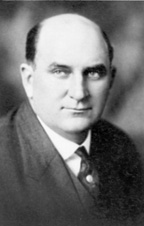
This is a picture of Lynn Frazier as an adult. When he was elected Governor at age 42, the University of North Dakota student newspaper described him as “a physically rugged man, a bit portly and quite bald.”

 In my previous post, I discussed some of the fascinating results from the recent Marquette University Law School Poll, in which about 700 Wisconsin residents were asked various questions about crime and punishment. In this post, I’ll consider what the Poll results have to say about a crucial question for sentencing policy and politics: do costs matter, or are the interests served by punishment of such overriding social importance that expense is no object at sentencing?