
McCormick on the Persistence of Ex Parte Young
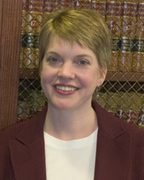
The faculty at Marquette Law School welcomed Professor Marcia McCormick of the Samford University’s Cumberland School of Law to a faculty workshop this past Tuesday.  Professor McCormick, who focuses on the law of federal courts and employment discrimination, among other areas, discussed her new paper on the persistence of the case of Ex Parte Young in the face of the Federalism Revolution of the last two decades or so.

In her presentation, Professor McCormcick described the large number of U.S. Supreme Court decisions in the last twenty-five years that have touched on the relationship between the federal government and the states. In this time, the Court seems to have substantially limited the power of the federal government and expanded that of the states, as many Commerce Clause, Tenth Amendment, and Eleventh Amendment cases suggest.

She also maintained that despite what were seen by many to be revolutionary shifts, two doctrines that provide great power to the federal government seem to have survived so far with little or no change: Congress’ power under the Spending Clause to require states to engage in or refrain from engaging in certain conduct; and the federal courts’ power under Ex Parte Young to hear suits by private parties to force state officials to follow federal law, including laws created under the Spending Clause. The combination of these two doctrines provides for quite a bit of federal power, she argued, and it is the extent of that power which makes the continued survival of the doctrines so surprising.

Professor McCormick then explored the extent of power the federal courts and Congress can exercise over the states through the use of those combined doctrines and suggested some reasons the Court has not removed that power.  In this vein, she argued that it was likely that the Court sees this limited federal power as a necessary check on the states to ensure the supremacy of federal law, to maximize the efficient use of both federal and state power, and to maximize accountability and the rule of law for both the states and federal government.

A lively question and answer session followed Professor McCormick’s talk.   I have it on good authority that Professor McCormick’s favorite culinary adventure involved Kopp’s Custard in Greenfield.


Continue ReadingMcCormick on the Persistence of Ex Parte Young

Is Governance Reform in the Future for Milwaukee Public Schools?

There is growing consensus that the Milwaukee Public Schools are at a critical moment in their history.  Faced with daunting fiscal challenges last year, some school board members talked openly about dissolving the district, only to later amend their comments.  It was a symbolic protest, they said, an attempt to draw attention to the district’s dismal financial outlook.  But the horse was out of the barn. The board’s “dissolution discussion” opened the door to new debate about MPS’s future.  An independent review of the district’s fiscal situation, paid for by local foundations, was commissioned and should be made public soon.  Once that happens, Governor Doyle is expected to weigh in on the district’s future course.  What that path will be is still uncertain, but last week, we had a fascinating discussion here at the Law School about the possibility of changing the way MPS is governed.

The event was co-sponsored by the Greater Milwaukee Foundation, and came on the heels of a study that examined five other districts that had changed their governance.  The study was funded by the GMF and conducted by the Public Policy Forum.  We’ve posted a transcript of the event, which featured MPS Superintendent Bill Andrekopoulos, former Superintendent and Distinguished Professor of Education at Marquette University Howard Fuller, Metropolitan Milwaukee Association of Commerce President Tim Sheehy, Milwaukee School Board Director Jennifer Morales, State Representative Polly Williams, Milwaukee Teachers’ Education Association President Dennis Oulahan, and Milwaukee Common Council President Willie Hines.

You can always listen to the webcast of our event, but the evening had a revealing dynamic to it that makes for equally interesting reading.

Continue ReadingIs Governance Reform in the Future for Milwaukee Public Schools?

It Was a Tulip Craze

This article from Wired Magazine (somewhat similar to this article from the N.Y. Times a month ago) seems to me to confirm that the present financial meltdown was caused by a sort of modern tulip mania, this time for collateralized debt obligations. A taste:

What is the chance that any given home will decline in value? You can look at the past history of housing prices to give you an idea, but surely the nation’s macroeconomic situation also plays an important role. And what is the chance that if a home in one state falls in value, a similar home in another state will fall in value as well?

Enter [David X.] Li…. Using some relatively simple math—by Wall Street standards, anyway—Li came up with an ingenious way to model default correlation without even looking at historical default data. Instead, he used market data about the prices of instruments known as credit default swaps. . . . It was a brilliant simplification of an intractable problem. . . .

Continue ReadingIt Was a Tulip Craze